There was a version of this trip on paper: Rome, southern Italy, an island escape, the Amalfi Coast, then Sicily. And there was the version we actually lived: cooking in Naples, exploring Ischia by scooter, staying above the coast in Scala, tasting wine around Mount Etna, hopping over to Lipari and Vulcano, and ending in Ortigia.
Somewhere in between, a flight meant for Catania landed in Trapani instead. A four-hour bus journey across Sicily became part of the itinerary. Etna, which we had planned to visit, had already changed the trip before we reached it.
That is the Italy story we want to share. The famous sights belong here, of course. So do the places we stayed, the meals and wine experiences, the beach stops, and the less photogenic details that make a busy route work: luggage, parking, tickets, transfers and knowing when to stop adding things to the day.
Looking back at our eighteen-day adventure, would we repeat every part exactly the same way? No. We would leave more room in a few places and make some travel days simpler. But the variety was the reason we chose this route. Rome opened the story with ancient history. Campania brought island life and the coast. Sicily gave us a volcano, vineyards, more islands and a final old-town stay beside the sea.
This is our complete journey, with advice for building your own version.
The itinerary tells you where to go. The trip teaches you how much time to leave between those places.
The route at a glance
We left Canada on September 16 and travelled into early October. Our outward journey took us from Kelowna through Calgary to Rome with WestJet. From Rome, the trip continued south to Naples, Ischia, Pompeii, Sorrento and the Amalfi Coast. Our mainland chapter finished around Seiano and Herculaneum before the flight from Naples to Sicily.
In Sicily, we explored Catania, Mount Etna and the wine country around Feudo Vagliasindi, then Milazzo. Milazzo became our base for a hydrofoil day to Lipari and Vulcano. The final stretch linked Messina, Taormina and Ortigia, with Syracuse archaeology and beach time before heading home.
| Chapter | Places and experiences | Planning priority |
|---|---|---|
| Rome | Pantheon, Trevi, Villa Borghese, Colosseum, Forum, Vatican, basilica and Castel Sant'Angelo | Reserve major entries and group sights by neighbourhood |
| Naples and Ischia | Cooking class, Castello Aragonese, Sorgeto, Casa D'Ambra and scooter exploration | Match ferry ports and leave room for island travel |
| Pompeii and Sorrento | Archaeology, town walks and the transition to the coast | Start ruins early and avoid an overloaded transfer day |
| Amalfi Coast | Amalfi, Positano, Scala, Ravello, Praiano, Maiori, Minori and the Emerald Grotto | Parking and road conditions matter more than distance |
| Mainland departure | Seiano, Herculaneum and Naples airport | Protect rental return and airport time |
| Catania and Etna | City architecture, street life, volcano excursion and Feudo Vagliasindi | Build in flexibility for flights and mountain conditions |
| Milazzo and the Aeolians | Ngonia Bay, castle, waterfront, Lipari and Vulcano | Plan the return hydrofoil first |
| Eastern Sicily finish | Messina, Taormina, Ortigia, Neapolis and beach time | Choose parking before navigating to the attraction |
This is a route through selected parts of Sicily, rather than a complete tour of the island. Palermo, the western coast and the interior deserve another trip. Trapani entered our story because of the diversion; it was not a planned sightseeing stop.
Rome begins the story
The Pantheon and the pleasure of simply arriving
Rome was our introduction to the trip, and the Pantheon belonged to that first chapter. We photographed the columns outside, looked up beneath the dome and made room for gelato while exploring the surrounding streets. It is a good reminder that a landmark does not need a complicated itinerary around it. You can spend time with one building, walk the surrounding streets and let the city settle around you.
Trevi Fountain added another very different kind of spectacle. It is beautiful, famous and often crowded. For photographs, an early visit gives you a better chance of making a composition without a wall of people in the foreground. A later visit has its own atmosphere, but quieter photographs are never guaranteed.
Our advice for arrival day is to keep the commitments modest. A transatlantic flight, an airport transfer and a hotel check-in already use energy. Choose a walkable cluster of sights, leave time for food and avoid making the first afternoon dependent on several timed reservations.
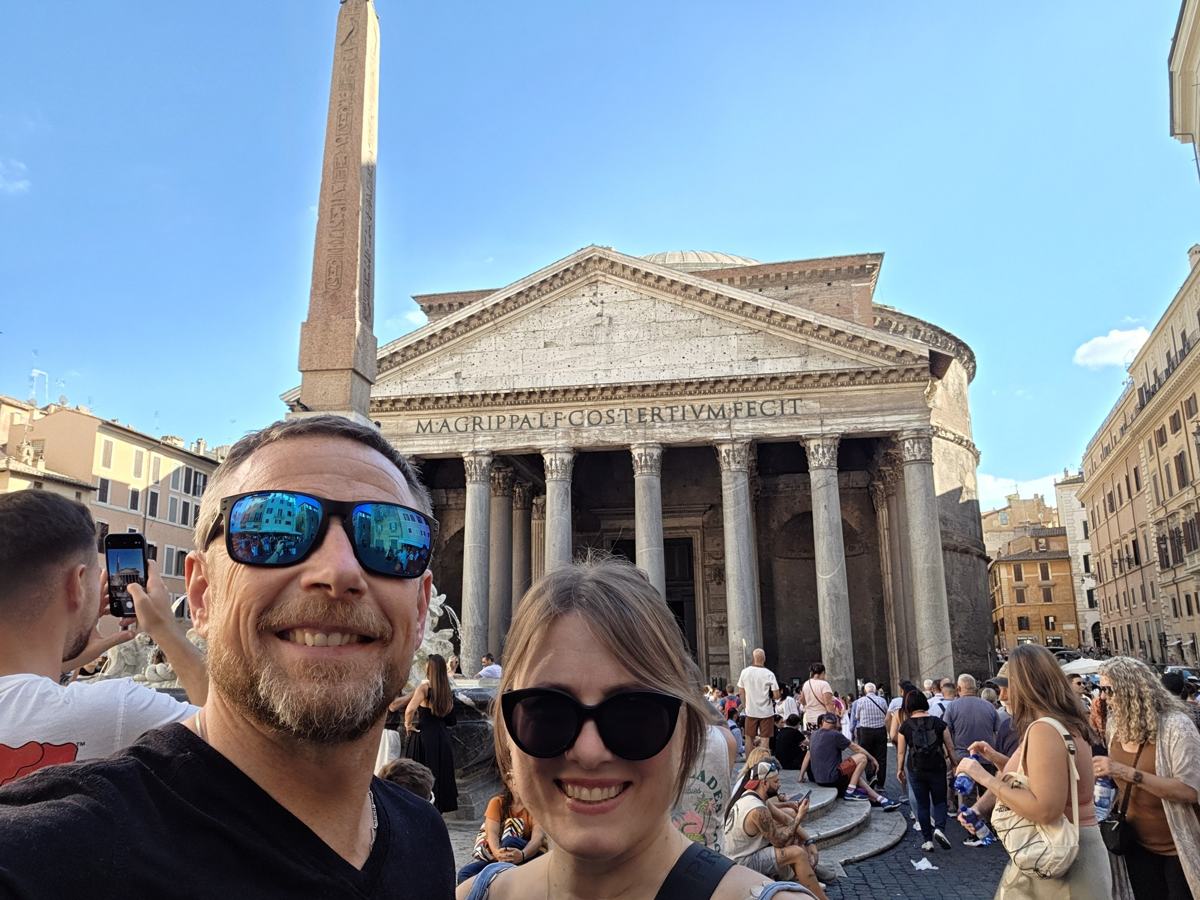
Our first Rome chapter, outside the Pantheon.
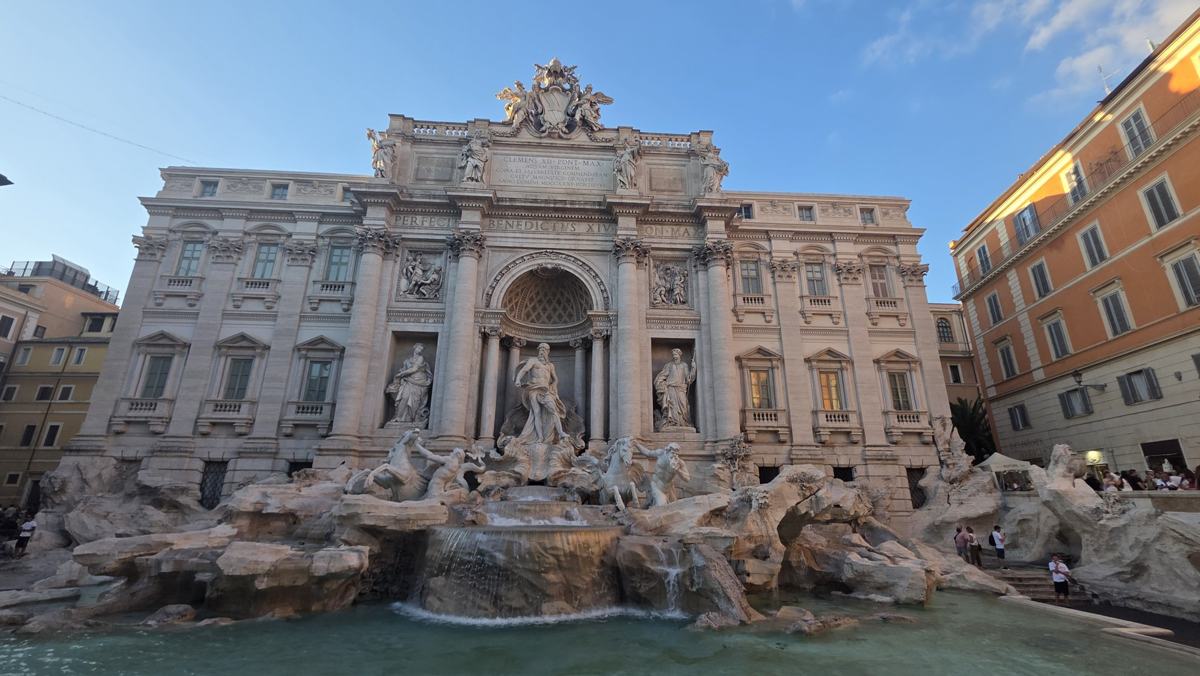
Trevi Fountain in the early evening.
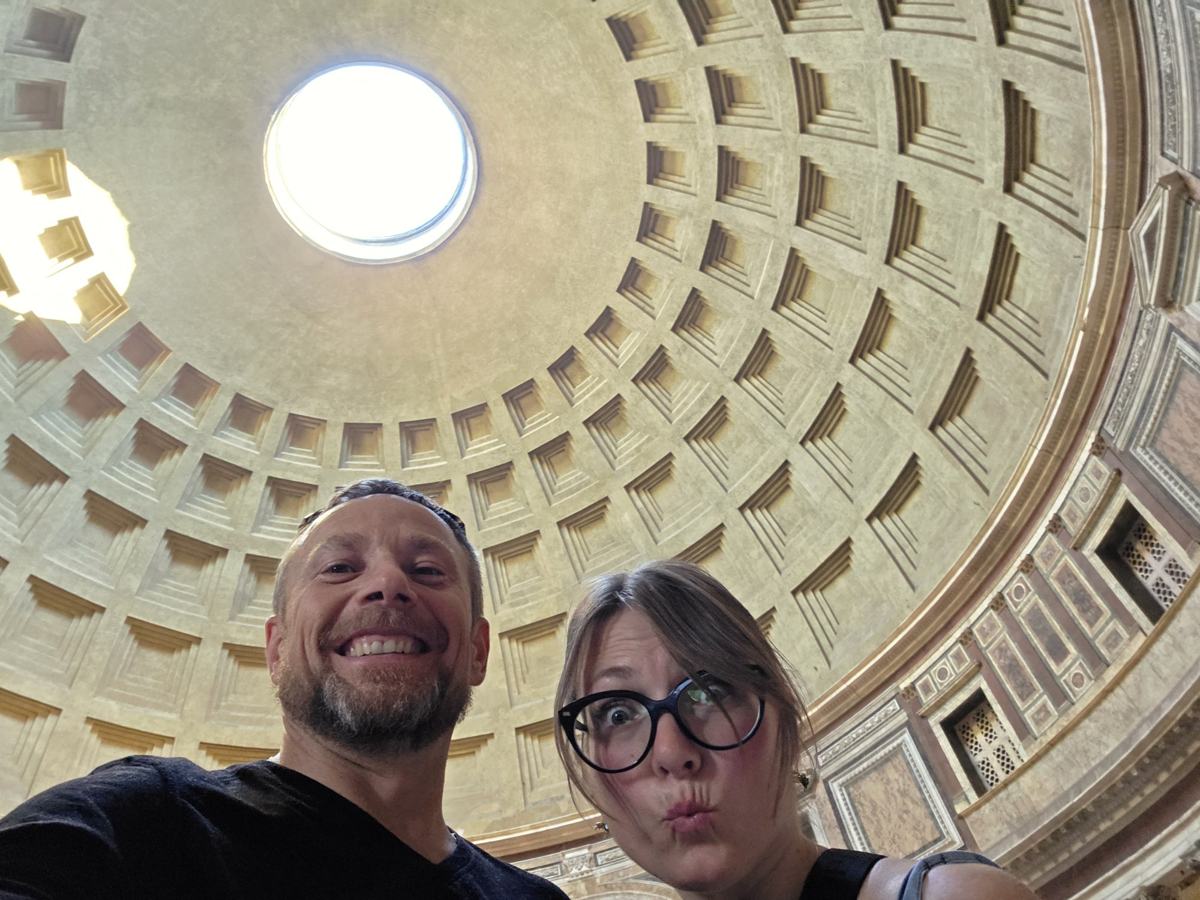
Looking up beneath the Pantheon dome.
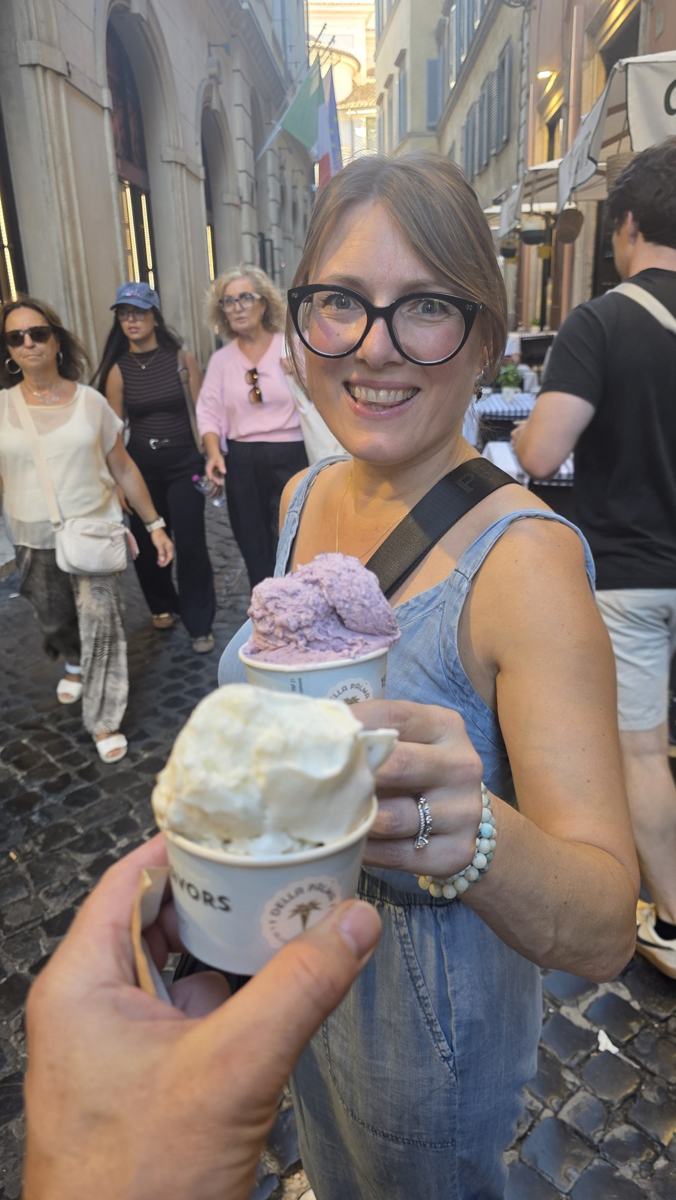
A gelato stop on our first afternoon in Rome.
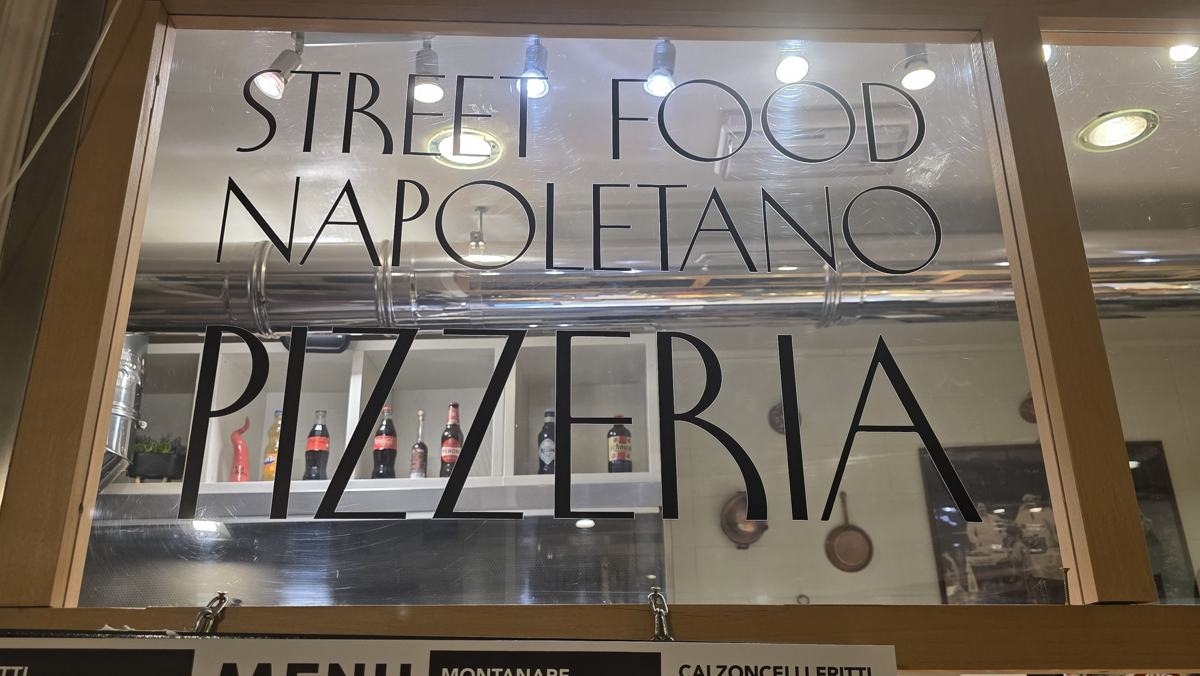
A pizzeria stop in our Rome chapter.
Villa Borghese then the Colosseum and Forum
Our second Rome day began with Villa Borghese, then moved into the Colosseum and Roman Forum. The contrast made sense: green space and a city pause before a much denser afternoon of ancient history.
For anyone following a similar plan, distinguish Villa Borghese's park from the Galleria Borghese museum. A walk in the grounds does not mean you have a museum reservation. If the gallery is on your list, arrange that separately and allow it its own time.
The Colosseum and Forum deserve more than a quick sequence of photographs. The arena gives the day its headline, while the Forum asks you to look more closely: the layout of streets, surviving columns and the relationship between the ruins and the modern city.
Book through the official Colosseum site and read exactly what your ticket includes. Timed entry is compulsory, and the official site currently says sales open thirty days before the visit. Tickets differ in access, including arena and underground options. Bring identification matching the reservation, and allow time for the entry process. [1]
At the Forum, comfortable shoes, water and a hat have more practical value than an ambitious list of extra stops. Stone surfaces can be uneven, shade is limited in places, and an afternoon outdoors can feel much warmer than the morning suggested.
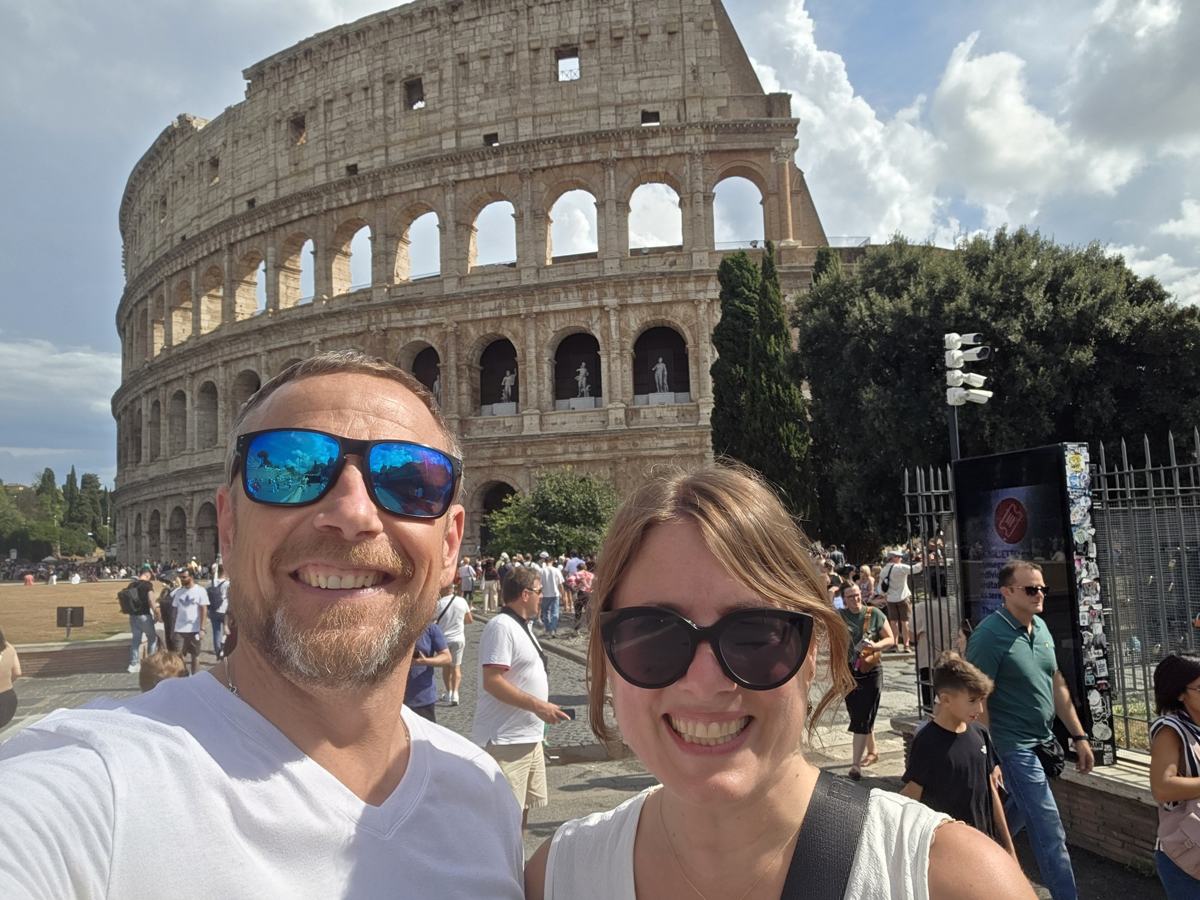
Together outside the Colosseum on our second Rome day.
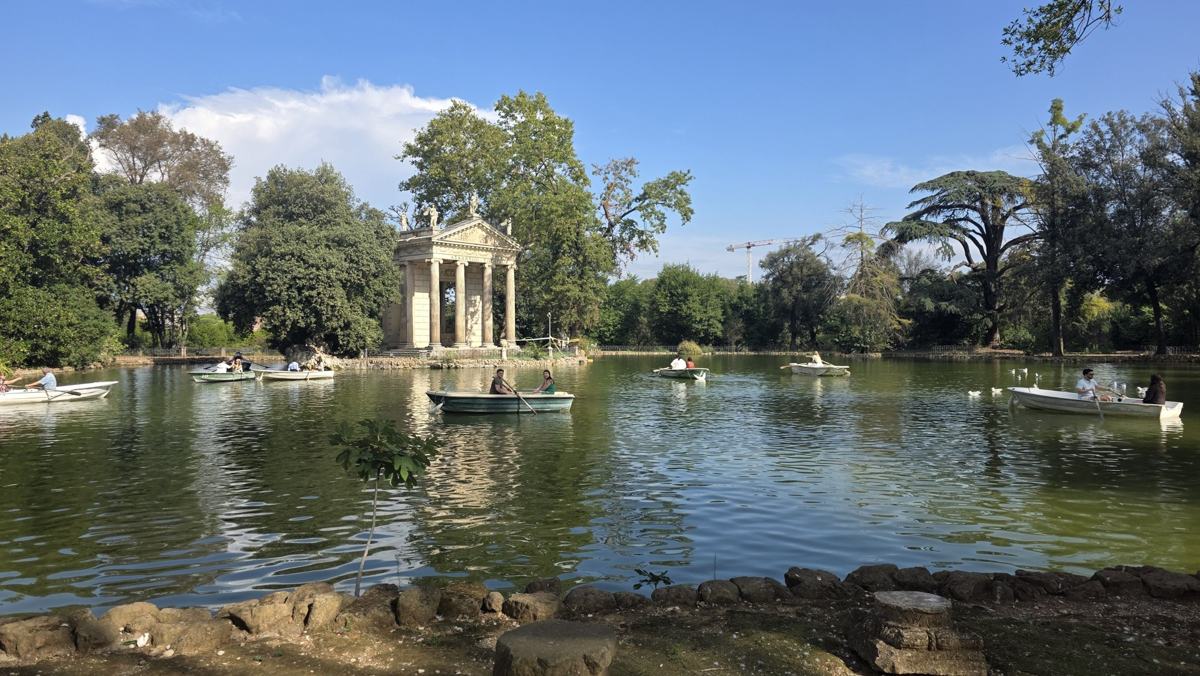
The lake and temple in Villa Borghese.
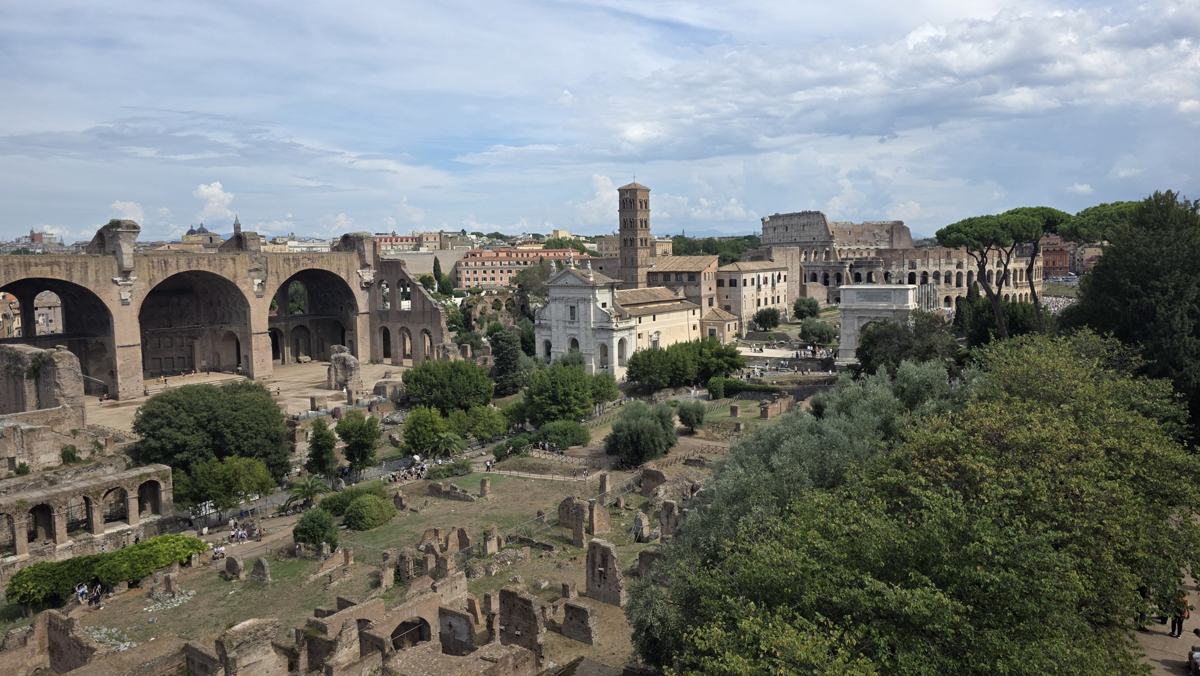
The Roman Forum, with the modern city beyond the ruins.
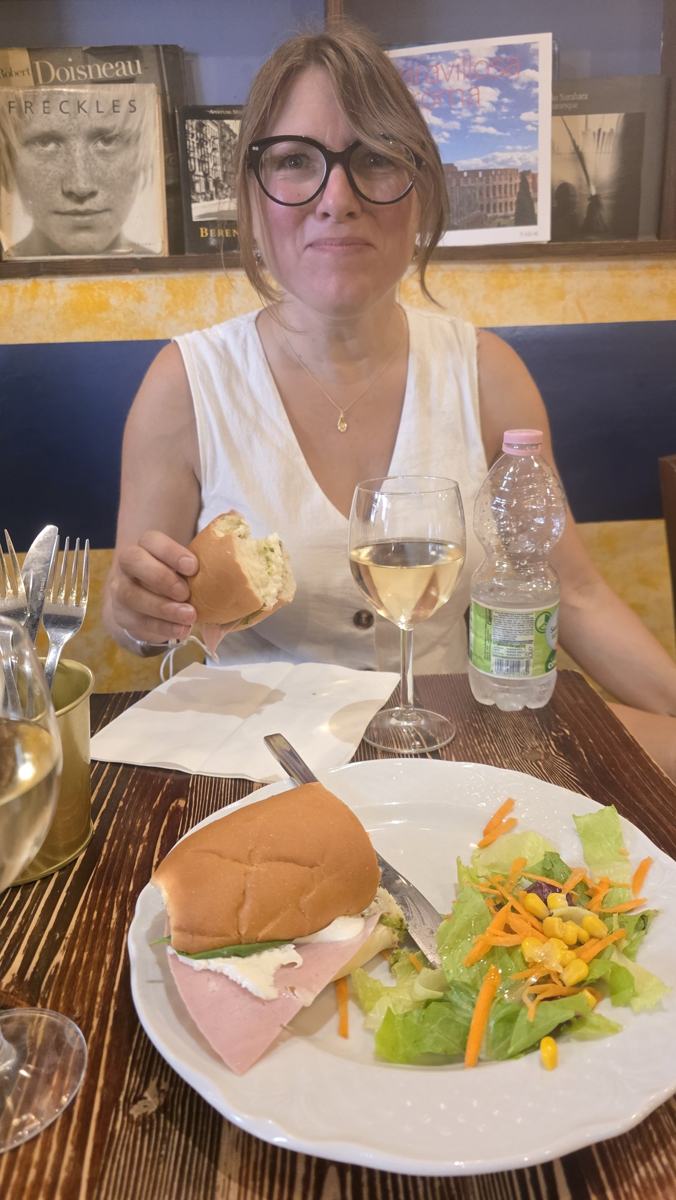
A simple lunch break between Rome sights.
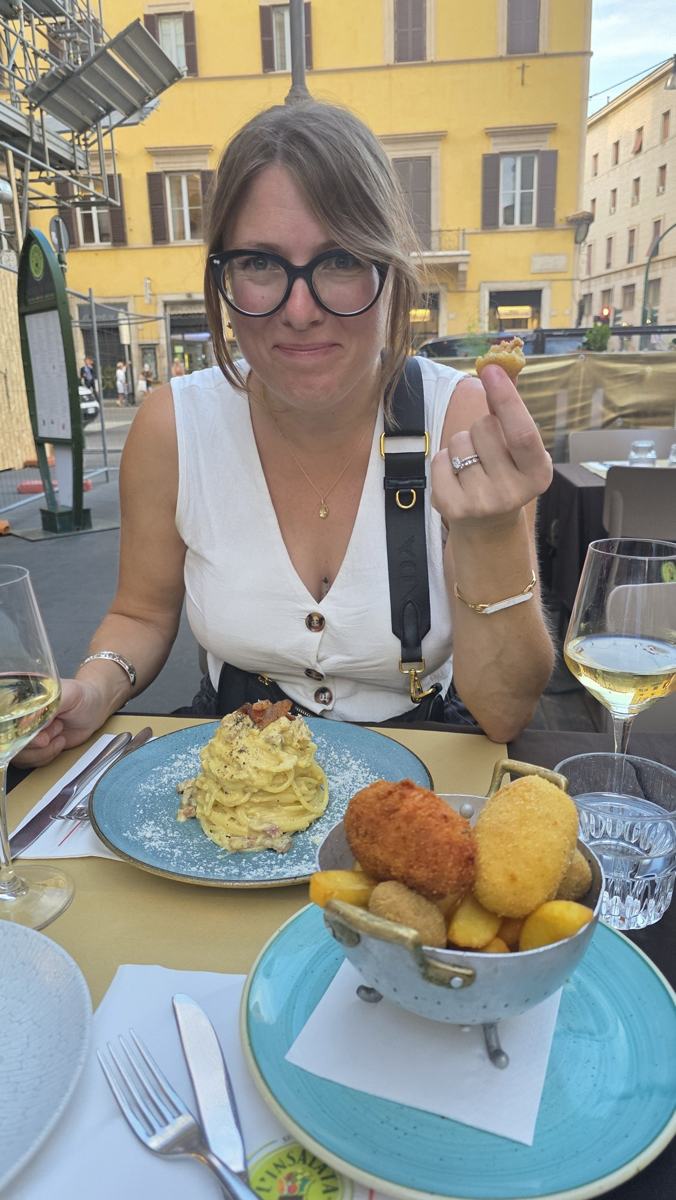
Pasta, wine and a table outside in Rome.
The Vatican day and lunch beside the Tiber
Day three included the Vatican Museums and Sistine Chapel, St. Peter's Basilica, lunch beside the Tiber and Castel Sant'Angelo. It was a day of major sights, but that meal by the river gave the route a useful pause.
The Vatican Museums are not a short passageway to one famous ceiling. The visit involves a substantial route through galleries, corridors and crowds. Keep enough of the day free to experience it without constantly watching the time.
Reserve Vatican Museums tickets in advance through the official portal. Museum admission includes the Sistine Chapel, but do not assume it also provides every other Vatican experience or priority access to St. Peter's Basilica. Read your particular ticket or tour inclusions. Security screening remains part of visiting, even with a reservation. [2]
Dress for the religious sites: covered shoulders and knees are a sensible baseline. The Museums prohibit photography and filming inside the Sistine Chapel. Their other photography permissions are for personal and domestic use, so check publication permission before using museum-interior photographs on a business blog. Exterior images, the square and your riverfront lunch can tell this chapter beautifully. [3]
Castel Sant'Angelo gave us another perspective on the city and a natural continuation toward the river. If you are combining these sights, allow for the walk, the castle visit and a proper break. This is already a full day.
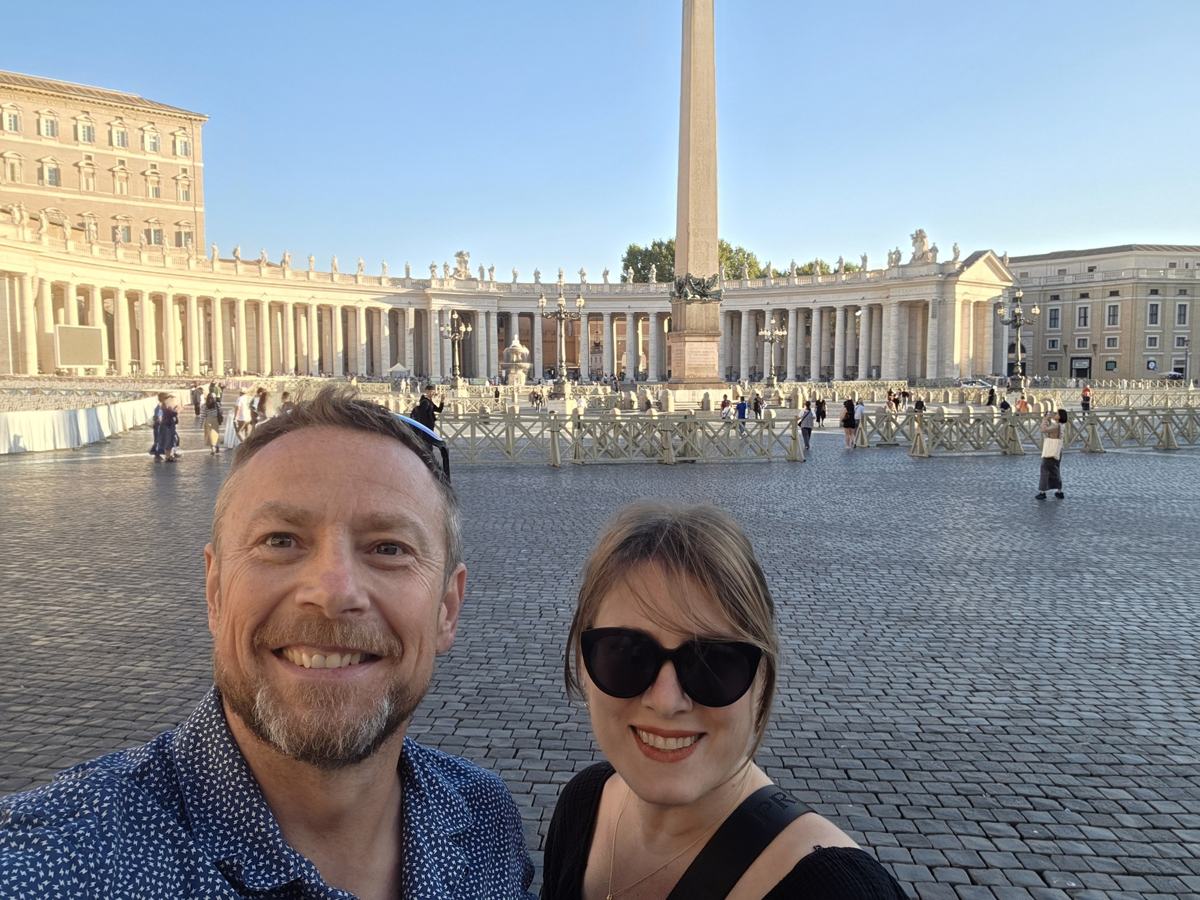
Morning in St. Peter's Square.
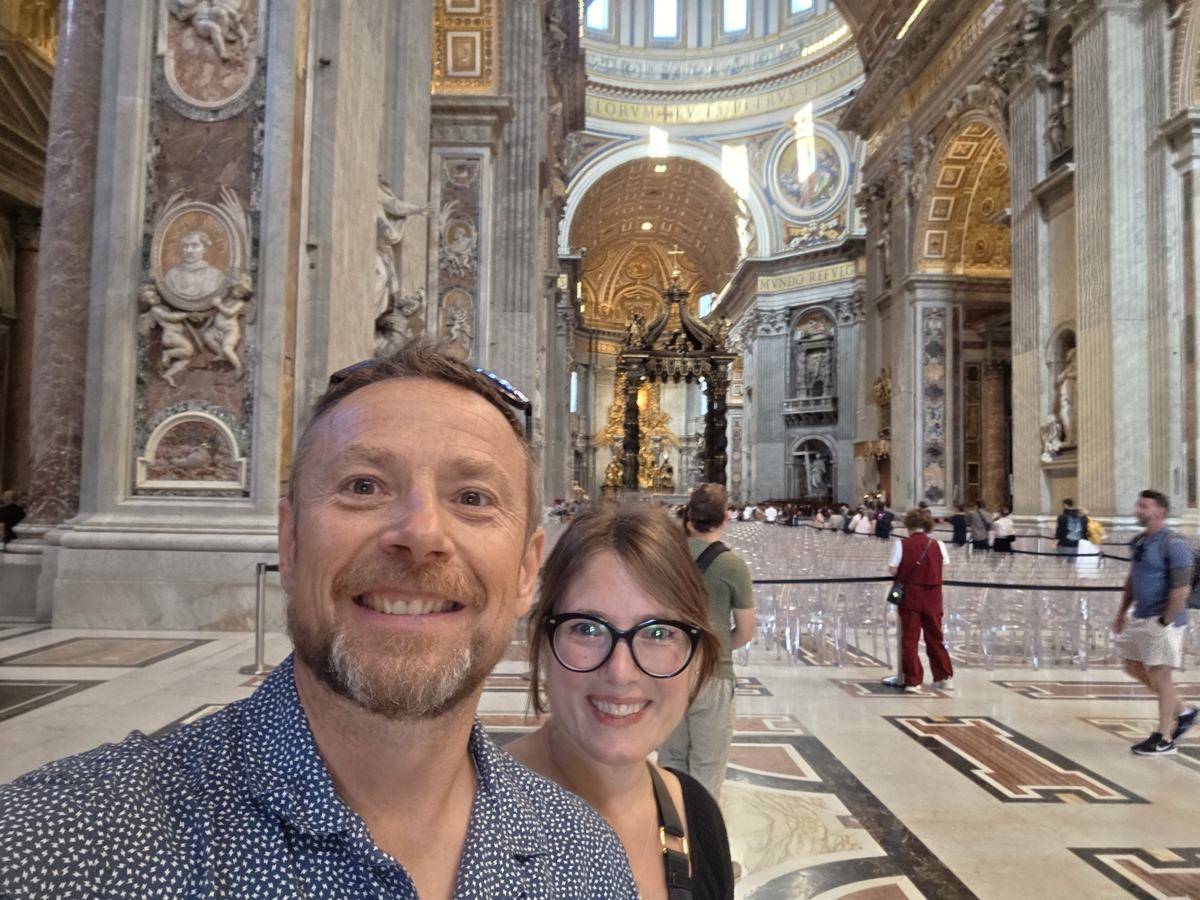
Inside St. Peter's Basilica.
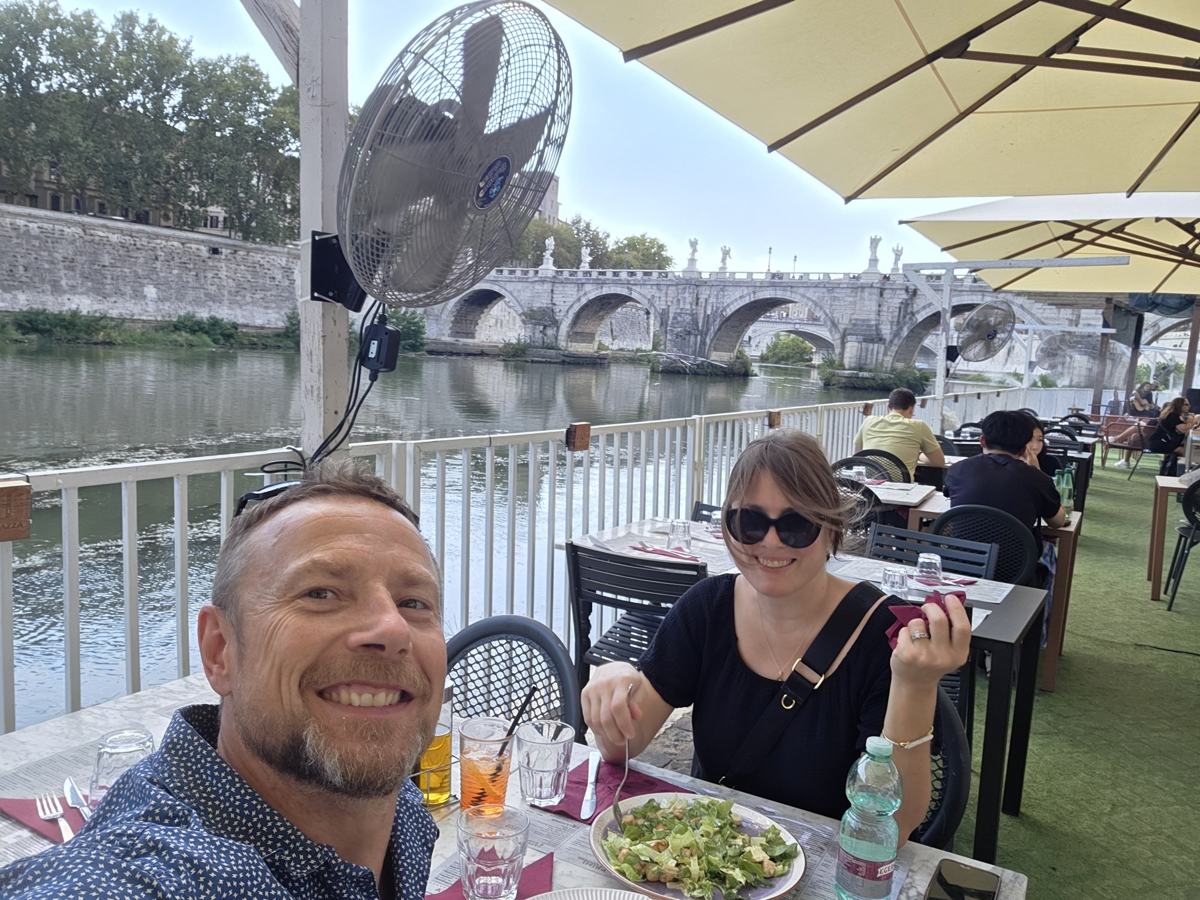
Lunch beside the Tiber, with the bridge just beyond our table.
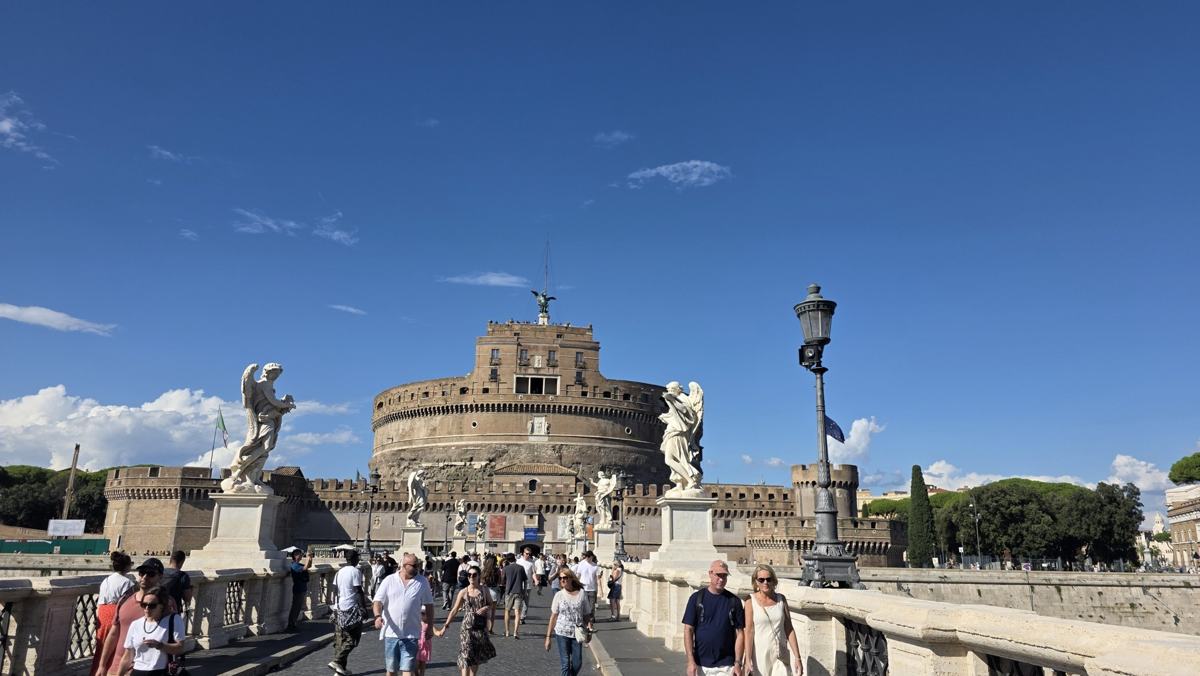
Castel Sant'Angelo under a clear afternoon sky.
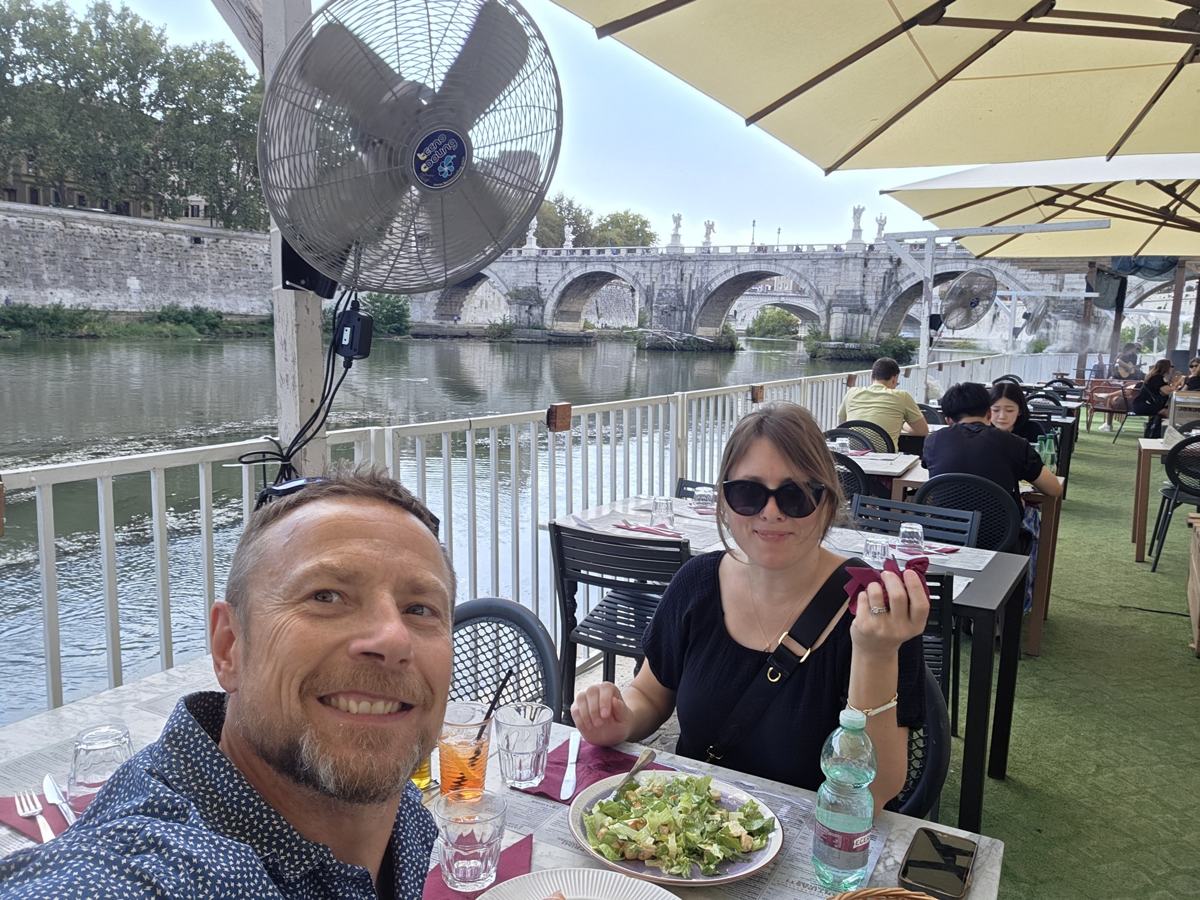
Together over lunch beside the Tiber.
Getting around Rome without a car
For a route like ours, Rome works best with walking and public transport rather than a rental car. Walk between nearby sights, use the metro for longer gaps, and save taxis or arranged transfers for journeys where luggage or fatigue changes the calculation.
ATAC offers contactless Tap & Go on Rome's metro and its surface network. Follow the operator's current instructions, use a separate payment method for each traveller, and retain the same card or device for inspection. A physical card and its phone-wallet version should not be treated as interchangeable ticket identities. [4]
Plan the next stop before entering a crowded station. Keep bags closed and in front of you when practical, and give yourself time to find the correct platform. Saving ten minutes is rarely worth a stressful transfer with luggage.
Naples brings the trip to the table
Our move from Rome to Naples changed the mood of the journey. Naples was also where we took a cooking class, making food an experience in its own right rather than something fitted between sightseeing stops. Our photographs tell that part well: flour on the table, fresh pasta in our hands, then plates of pasta and wine outside in the evening.
A cooking class gives a city a different kind of introduction. You spend time with ingredients, preparation and the people guiding the meal. It is a useful choice early in a trip because it gives you more to notice when you read menus afterward.
For the Rome-to-Naples leg, a high-speed train is a practical option for readers building this route. Compare Trenitalia and Italo, book the departure and fare that suit your plans, and check the actual stations on the ticket. Roma Termini and Napoli Centrale are different from the airport or the ferry terminal; the station arrival is only one part of the transfer.
Allow room for bags when choosing seats and onward transport. We travelled with four bags, and that is worth remembering when imagining an effortless connection between a train, a taxi and a ferry. Every change of vehicle means handling the luggage again.
The food shortlist in Naples starts with pizza, but should not end there. Look for sfogliatelle, simple pasta dishes and seasonal local cooking. These are suggestions for your trip, rather than a claim that we ordered every dish on the list. Choose a few meals you want to plan around, then leave room for what looks good when you arrive.
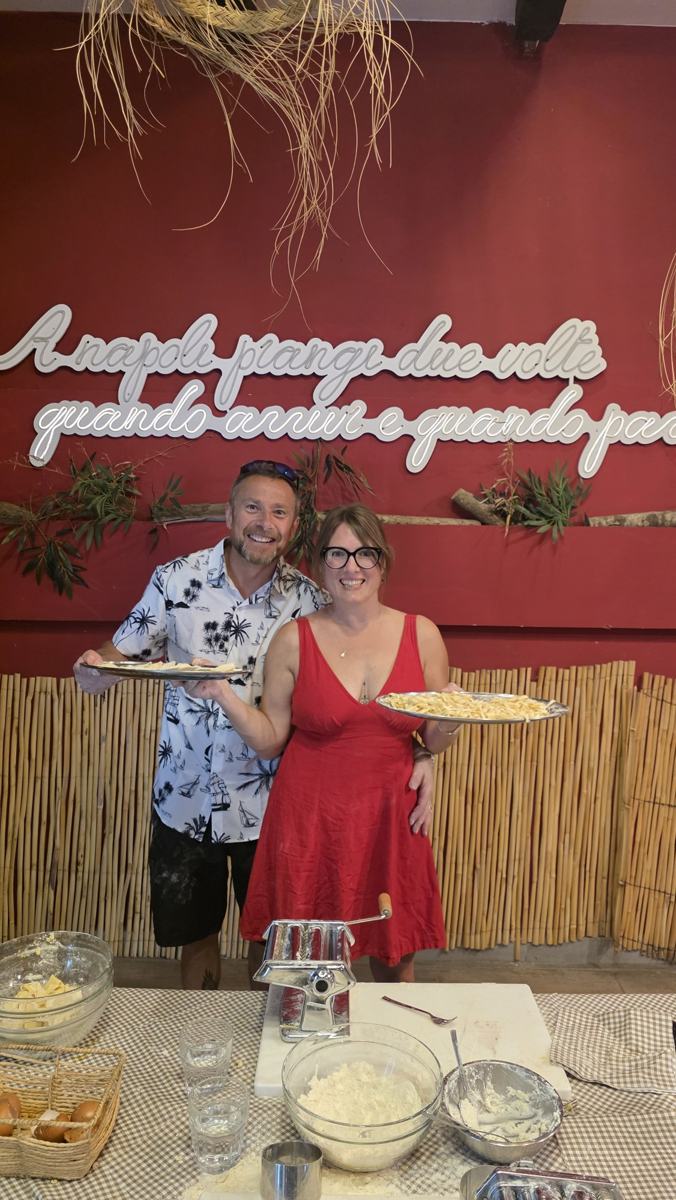
Our freshly made pasta at the Naples cooking class.
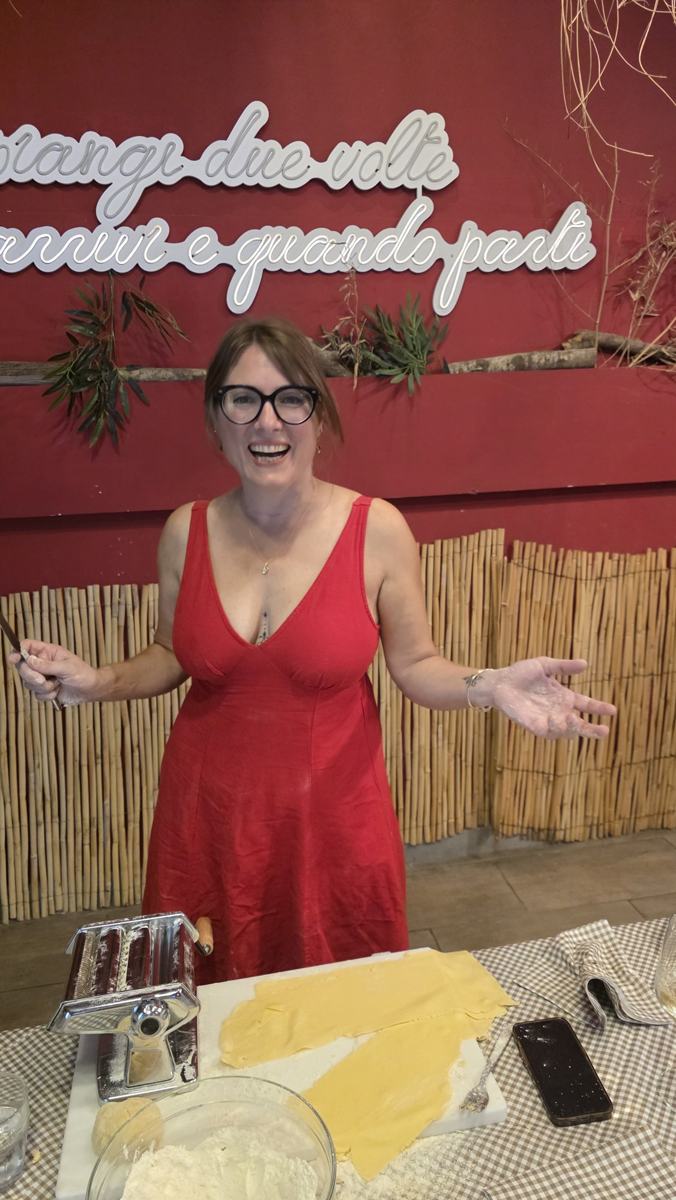
Jenn at the pasta-making table in Naples.
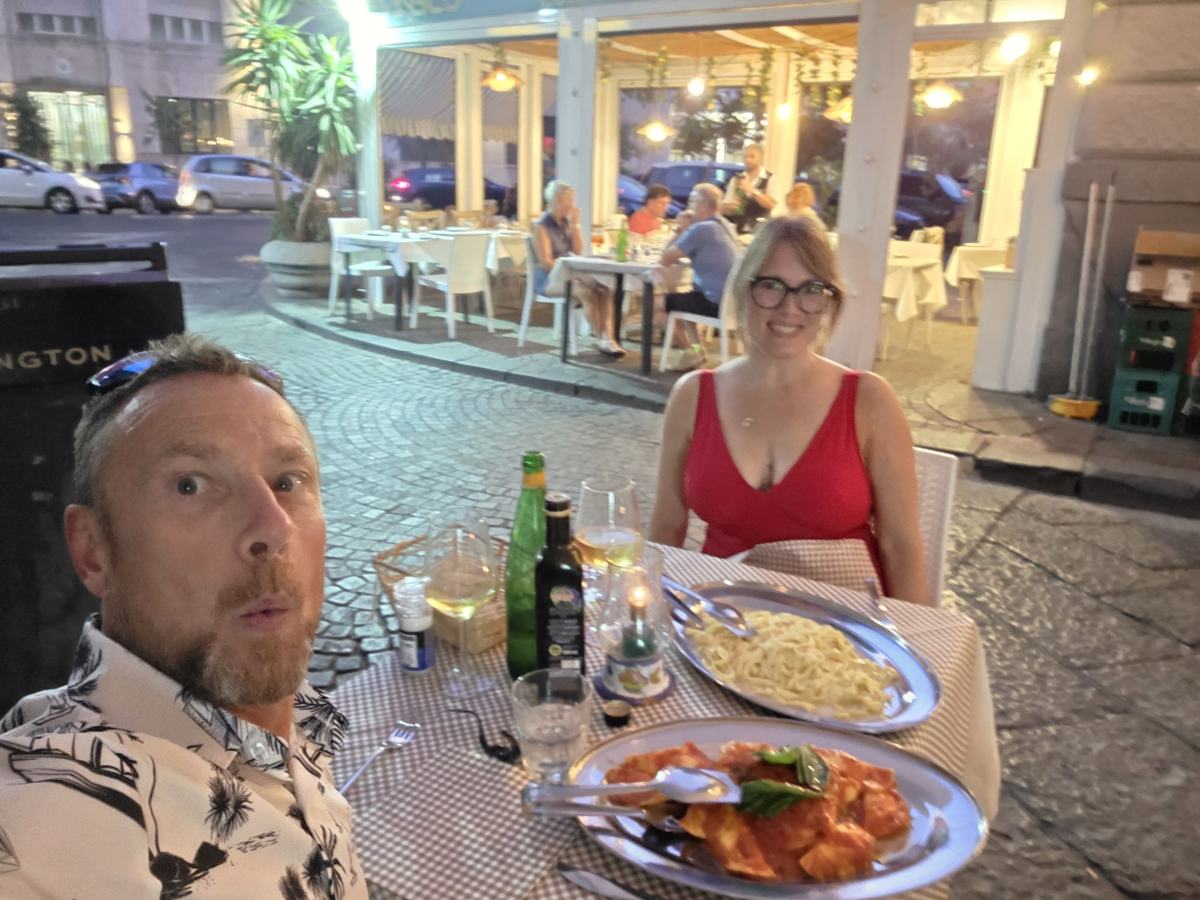
The Naples chapter ends at the table, with pasta and wine.
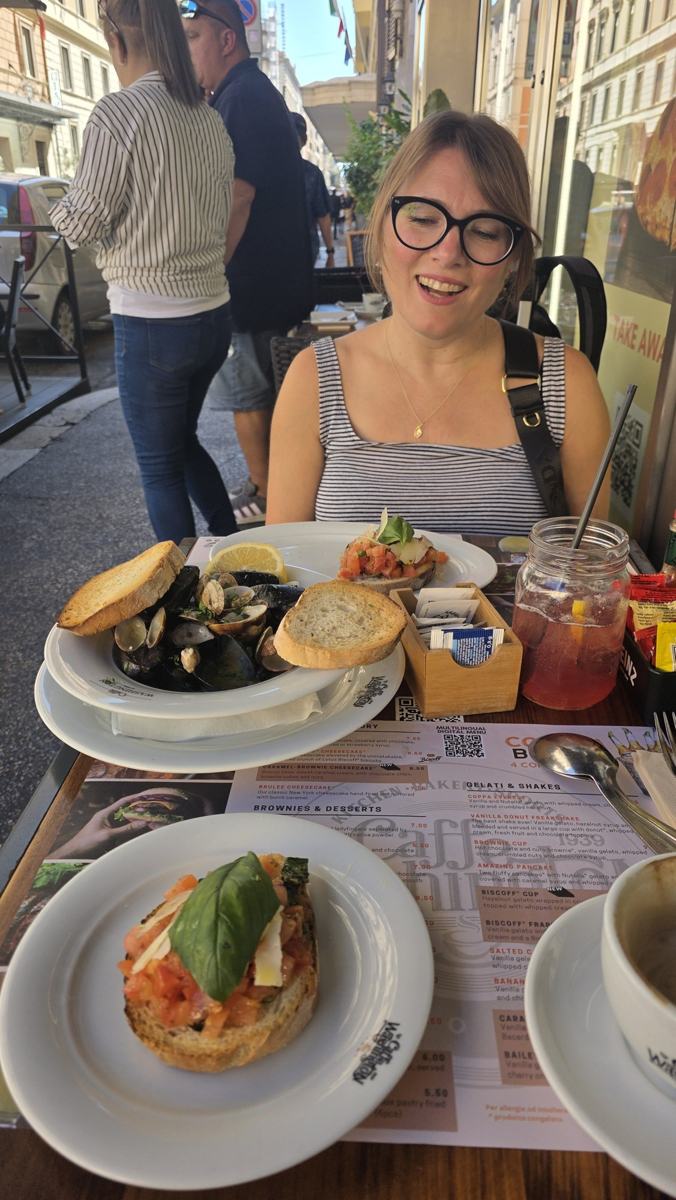
Seafood and tomato-topped bread during our Naples day.
Before you book: Check the cooking class meeting point, language, duration and dietary arrangements. For trains, compare fare flexibility as well as price. A cheaper ticket can be poor value if it is tied to a departure you cannot realistically reach.
Ischia is more than a day trip
Ischia brought a different rhythm: a castle over the sea, thermal water, wine and the freedom of exploring by scooter. It is worth treating the island as a destination, not merely a brief side trip from Naples.
Castello Aragonese
Castello Aragonese was one of our Ischia stops, and its position makes it a natural centrepiece for a photo story. Start with the approach across the causeway, then move into the details: stone, passageways, framed views and the coastline beyond.
Give the visit enough time for the terrain and stops along the way. A map can make a castle visit look like one pin; the actual experience involves movement through a much larger place. Check the official visitor information for current access arrangements if stairs or slopes matter to you. [5]
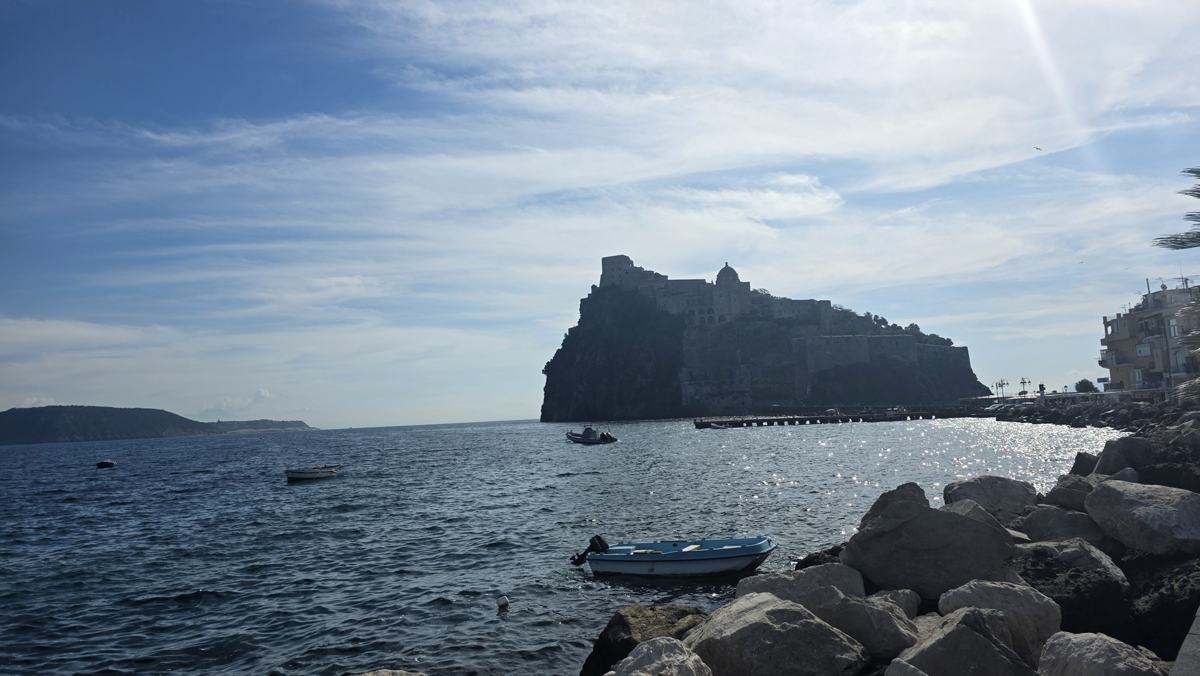
Castello Aragonese across the water.
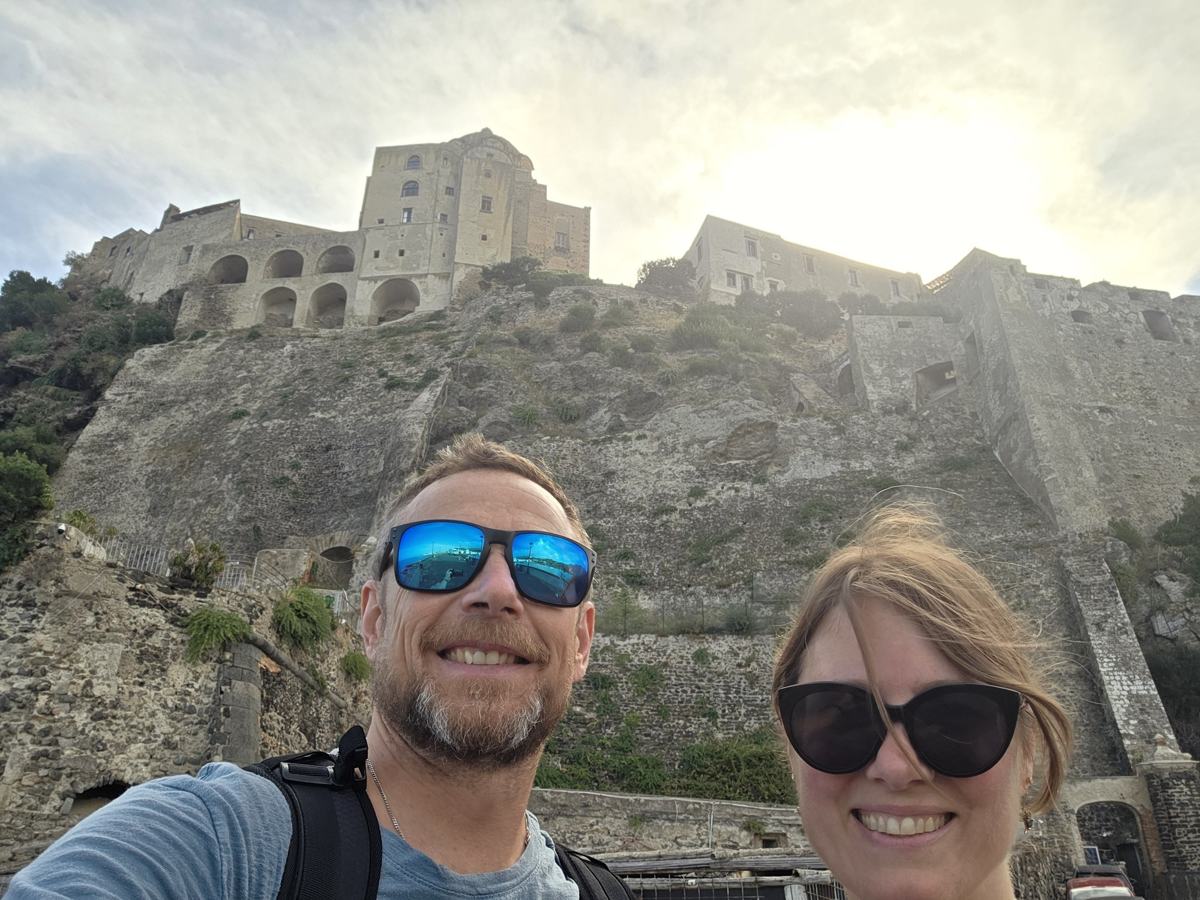
Together below the castle walls on Ischia.
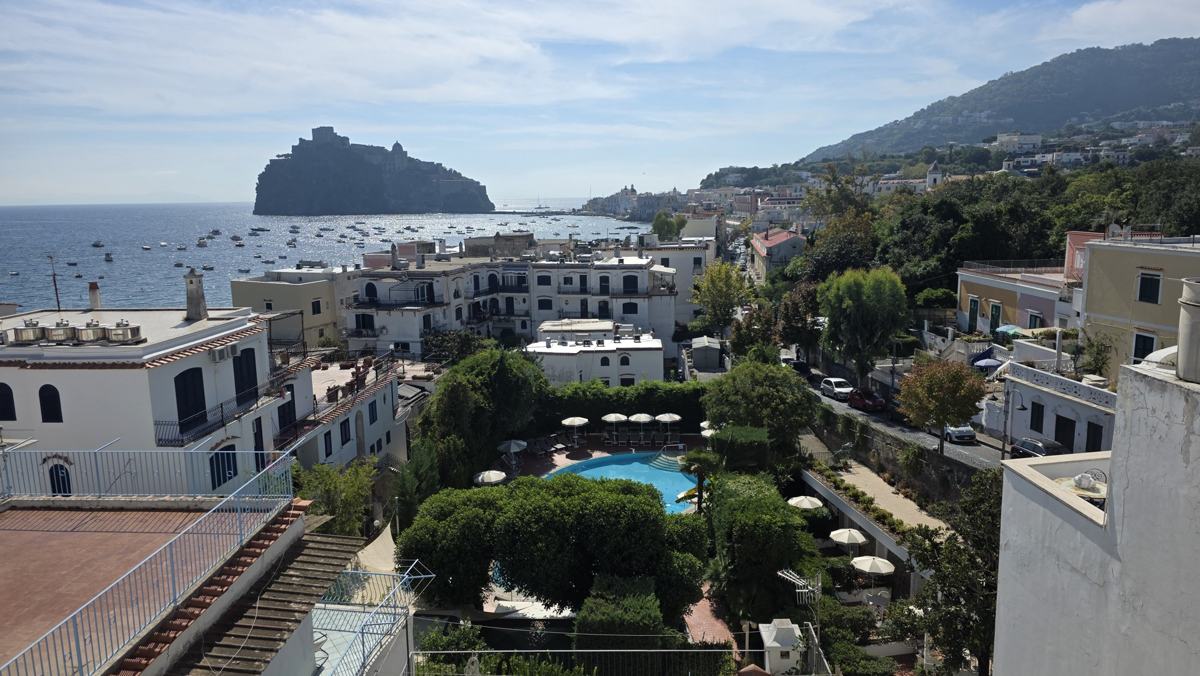
Ischia rooftops, gardens and the castle beyond.
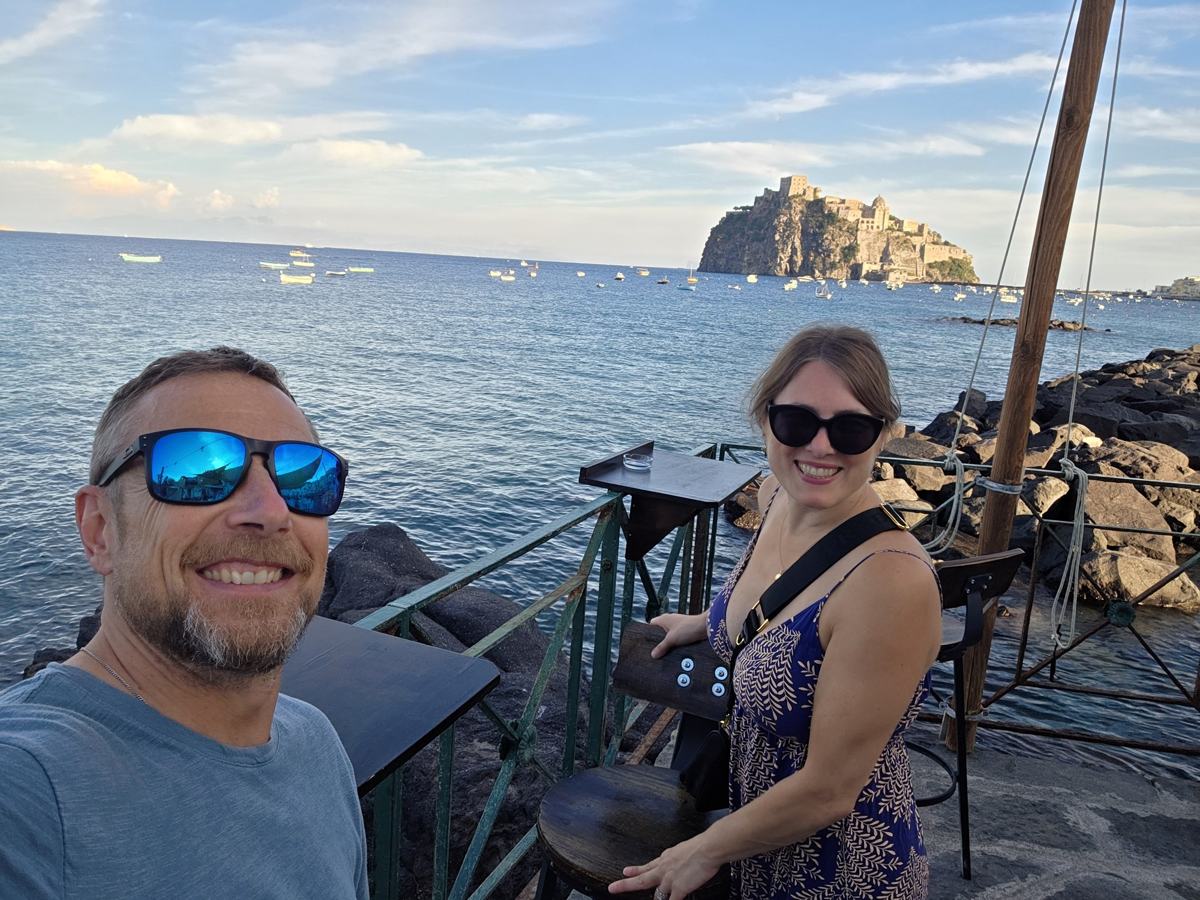
Back beside the water later in the day, with Castello Aragonese behind us.
Sorgeto and the island's thermal coast
Sorgeto was another part of our Ischia experience: a natural meeting of thermal springs and seawater. The island's tourism board explains that the warm water comes from underground volcanic activity. [6]
This is a rocky coastal setting, rather than a conventional pool. Bring water shoes, assess the sea and the footing, and approach hot-water areas carefully. The walk back up deserves consideration before you go down. If the conditions do not suit you, change the plan rather than trying to force the experience.
The photographs should show both the attraction and its setting. A tight image of the water alone does not tell readers about the rocks, the approach or the effort involved.
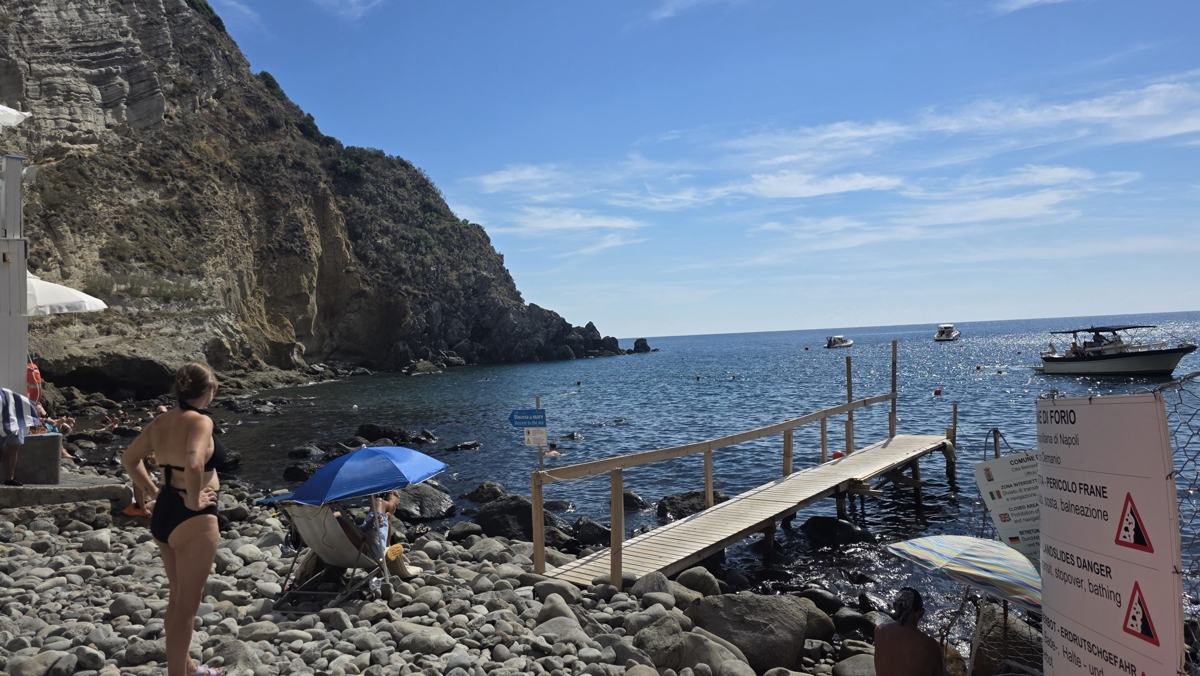
The rocky shoreline and sea access at Sorgeto.
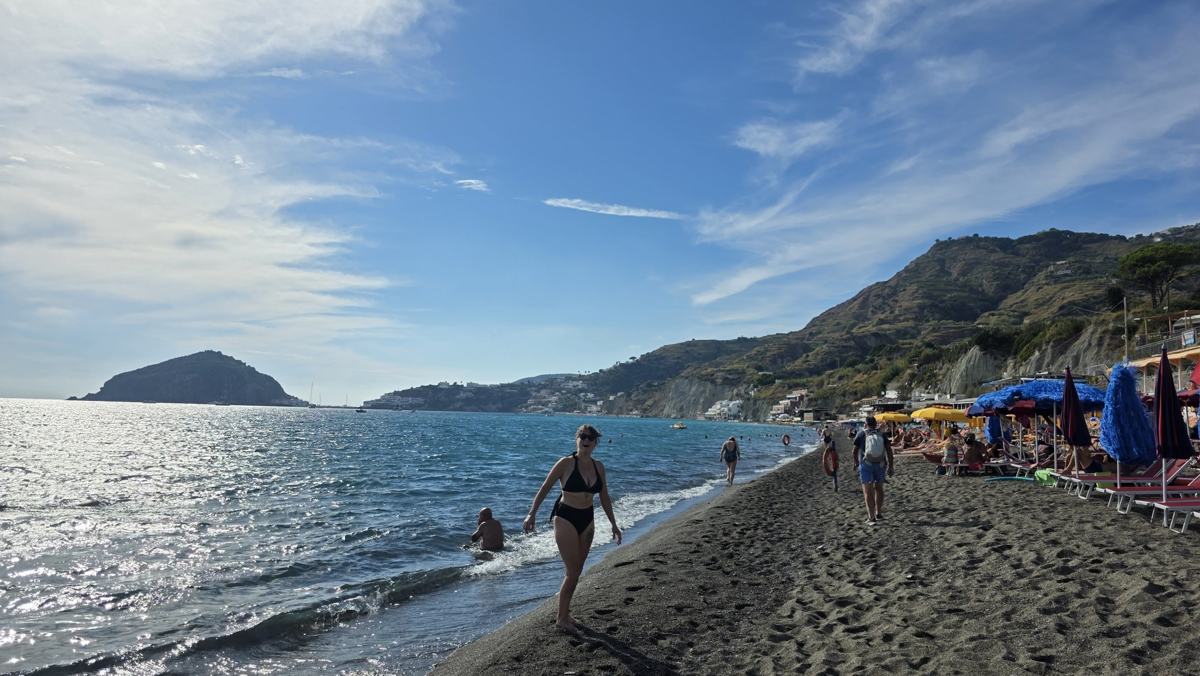
A beach stop while exploring Ischia.
Casa D'Ambra and wine with an island identity
Casa D'Ambra was our favourite wine-and-food experience of the trip. It is the tasting we would put at the top of our list for a return visit to Ischia. Our wine tour added a different layer to the island. Between the castle and the thermal coast, the tasting shifted attention toward the land and the people working it.
Casa D'Ambra's own account places local vineyards and island traditions at the centre of its wines. It is a good reason to include a winery visit here: wine becomes a way of understanding Ischia, rather than simply something served with dinner. [7]
For readers, ask which wines are being poured and what makes each one local. Photograph labels if you want to remember a bottle later. A tasting note does not need technical language; it can begin with what you noticed and what you would order again.
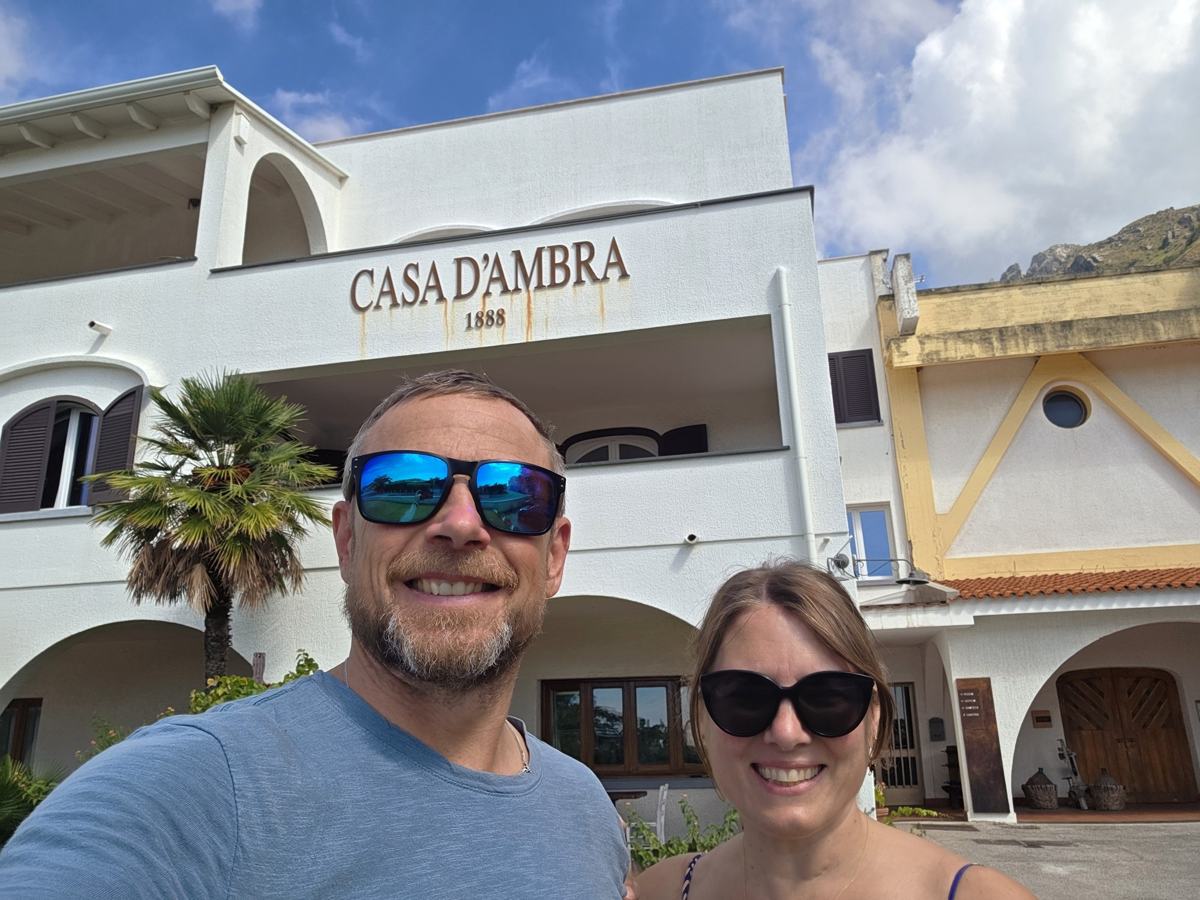
Arriving at Casa D'Ambra.
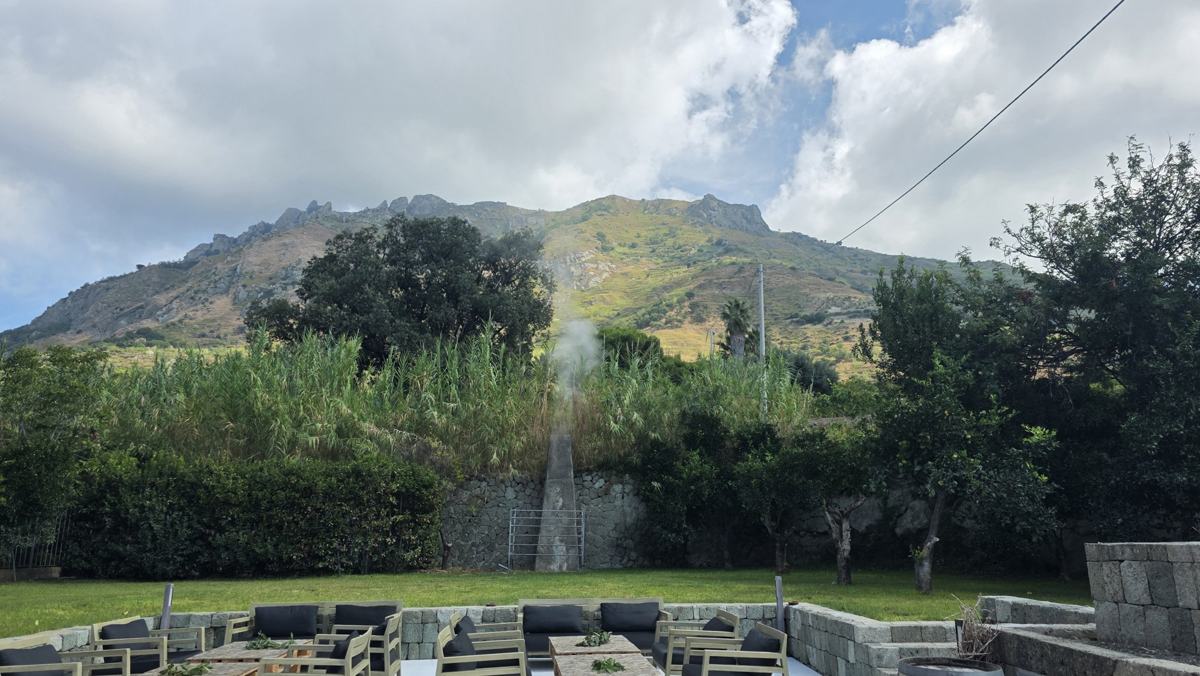
Greenery and the mountain backdrop during our winery visit.
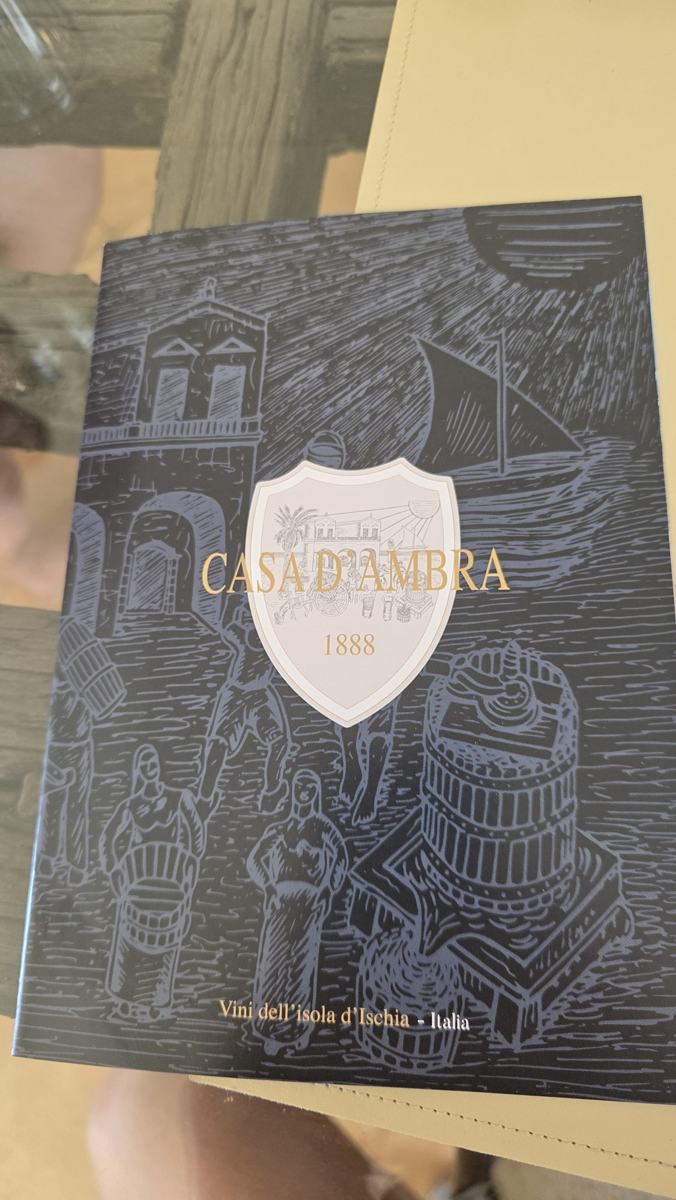
Casa D'Ambra's tasting booklet.
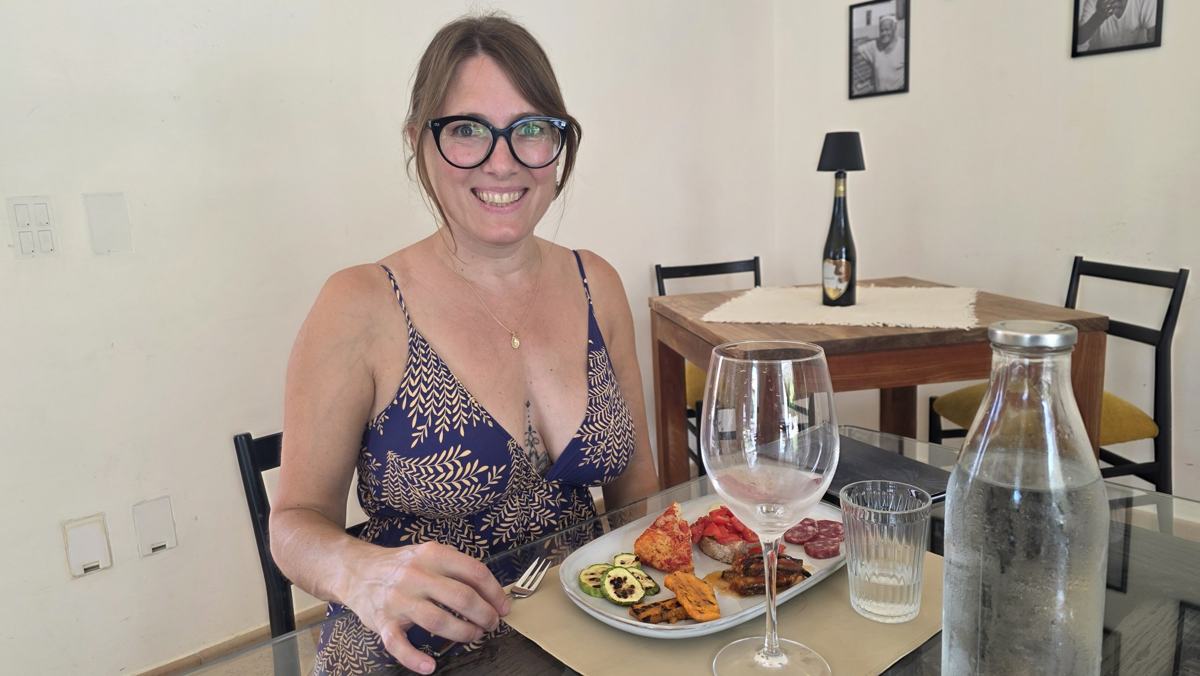
Jenn at the tasting table, with a plate of food alongside the wine glasses.
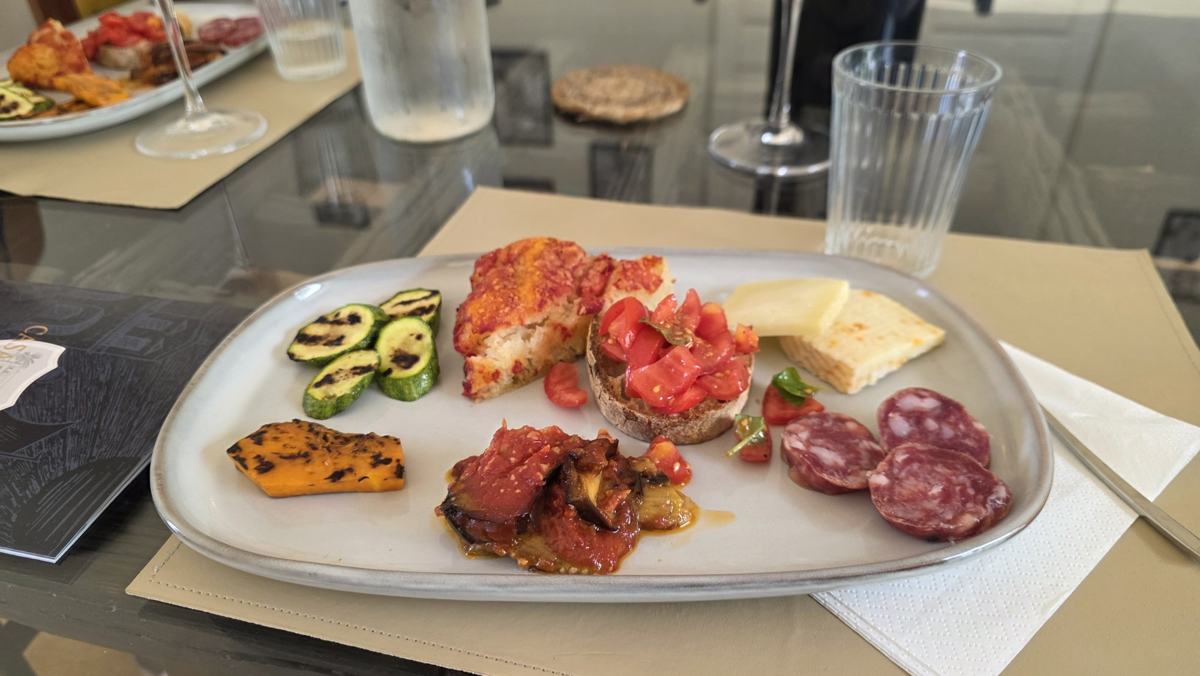
Vegetables, tomato-topped bread, cheese and salami at Casa D’Ambra, our favourite wine-and-food experience.
Seeing Ischia by scooter
Exploring by scooter gave this part of our trip its sense of freedom. It also changes the practical decisions: what you carry, where you stop and how comfortable you are with unfamiliar roads.
Check the vehicle category, licence requirements and insurance before renting. Wear a properly fitted helmet, inspect and photograph the scooter, and agree on the return conditions. A scooter rental is best reserved for riders who are comfortable handling the roads and traffic they will encounter.
Keep sightseeing stops separate from riding. Park legally before taking a photograph, and arrange a non-driving way to enjoy wine. The island is not a place to combine a tasting with a ride back to your accommodation.
For the crossing from Naples, verify the departure port and the arrival port on Ischia. Do not rely on the destination name alone. A passenger hydrofoil and a vehicle ferry solve different needs, and weather can affect service. Confirm luggage rules and allow a buffer between the crossing and the next fixed booking.
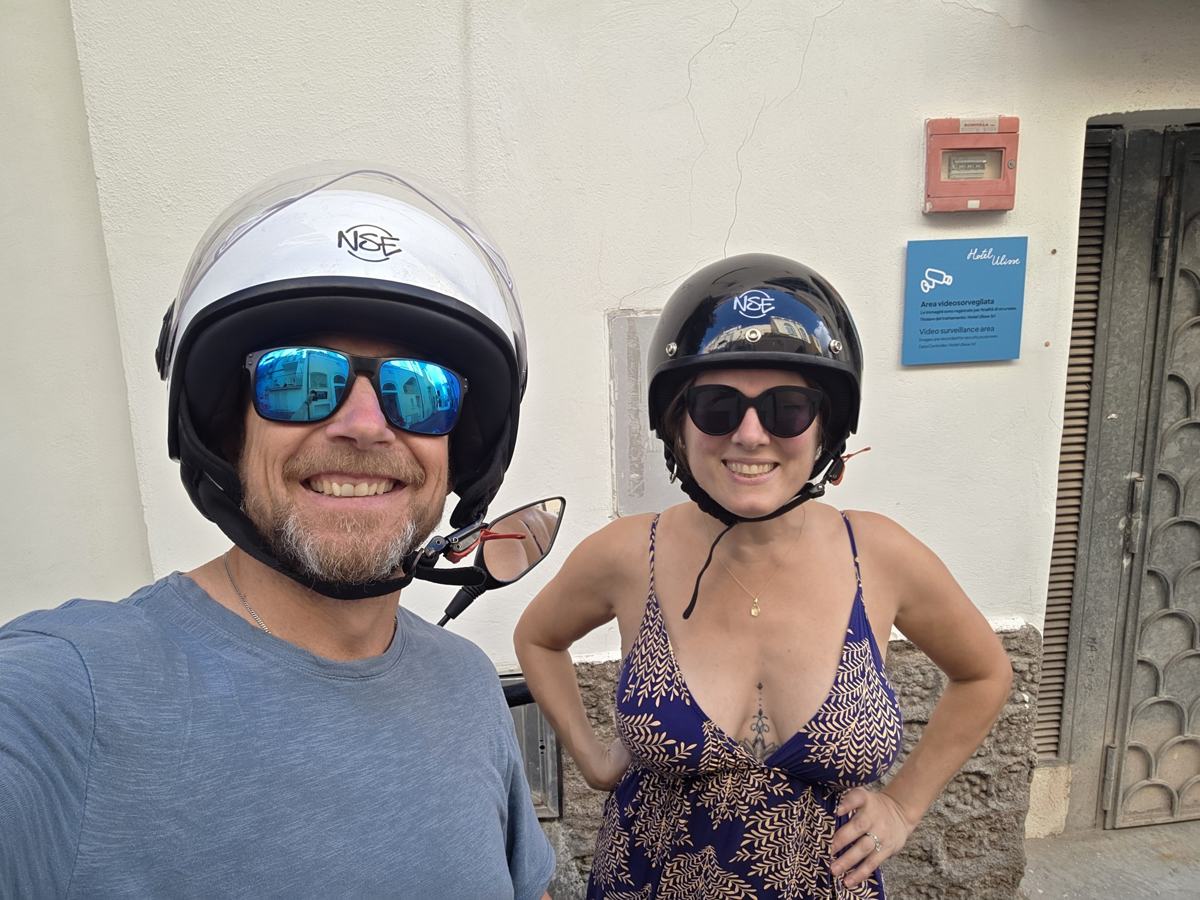
Helmets on for our scooter day around Ischia.
Pompeii and Sorrento
A day inside Pompeii
Pompeii was the archaeology chapter between the island and the coast. It deserves time because its scale is part of its meaning. You are moving through the remains of a city, not visiting a single monument.
The strongest way to tell the day is to combine broad views with details: streets, doorways, surviving decoration and the people moving through them. A guide or a well-prepared audio visit can help turn those fragments into a more coherent picture.
Purchase ahead through the official ticket links and check the entry arrangements for your date. Pompeii uses named tickets and a daily admission limit. Ticket types differ in included areas, so choose based on what you want to see rather than the name that sounds most comprehensive. [8]
Start early where possible. Wear shoes that can handle uneven stone, carry water and sun protection, and choose a manageable route. If this is also a hotel-change day, decide in advance where the luggage will be secured. Do not leave visible bags in a parked car while you explore.
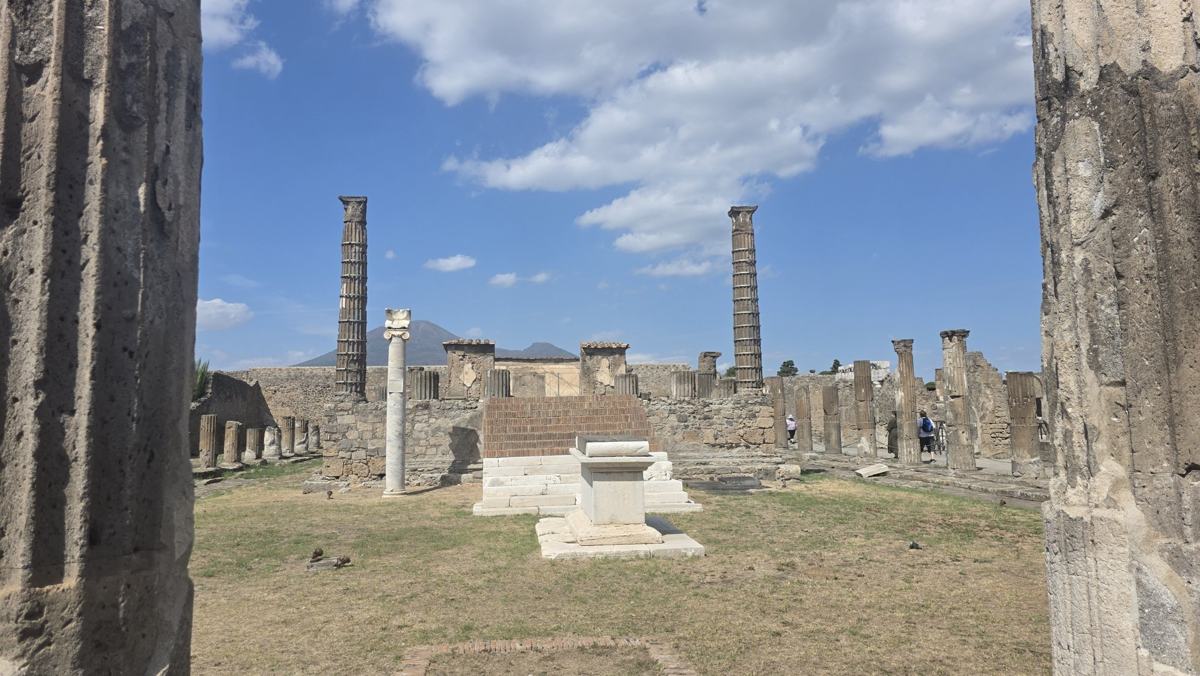
Columns and ancient walls beneath a blue sky at Pompeii.
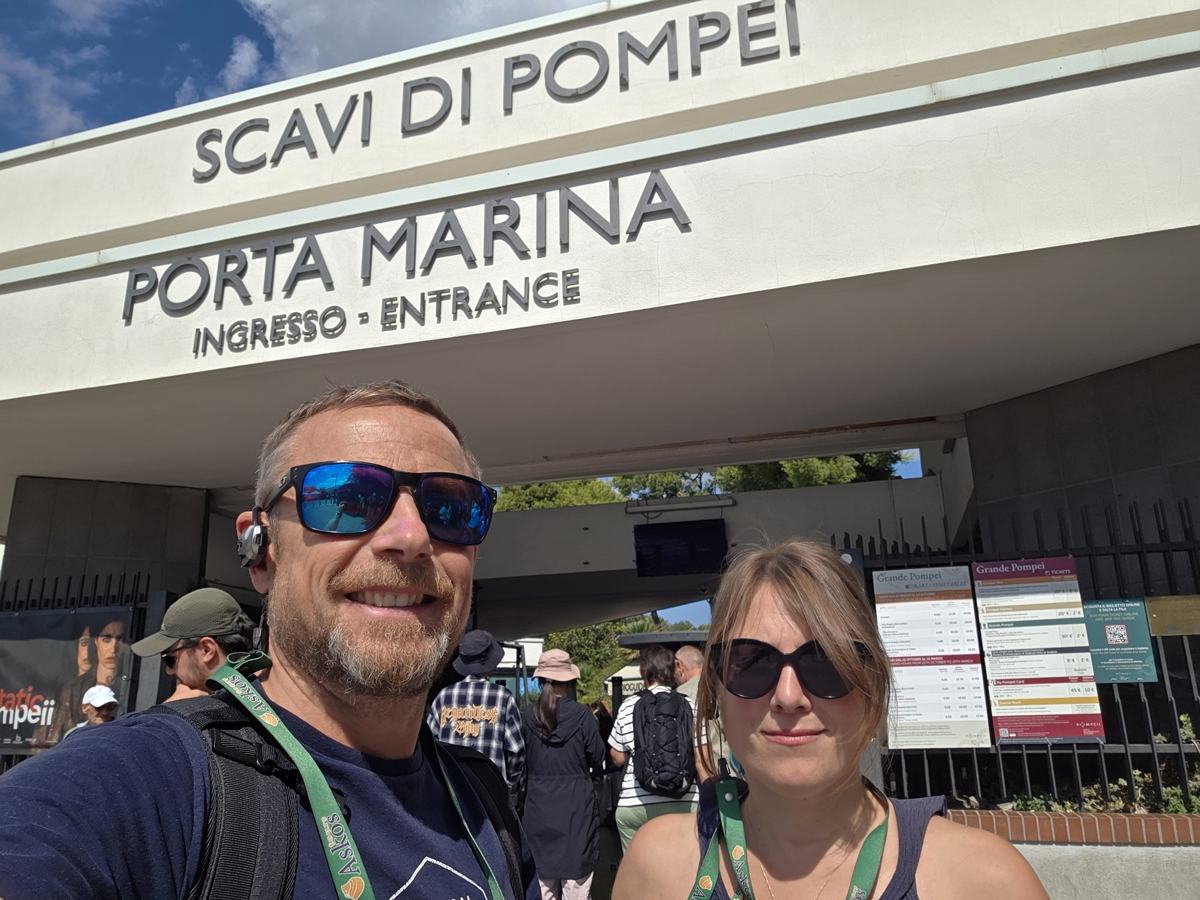
Arriving at the Porta Marina entrance to Pompeii.
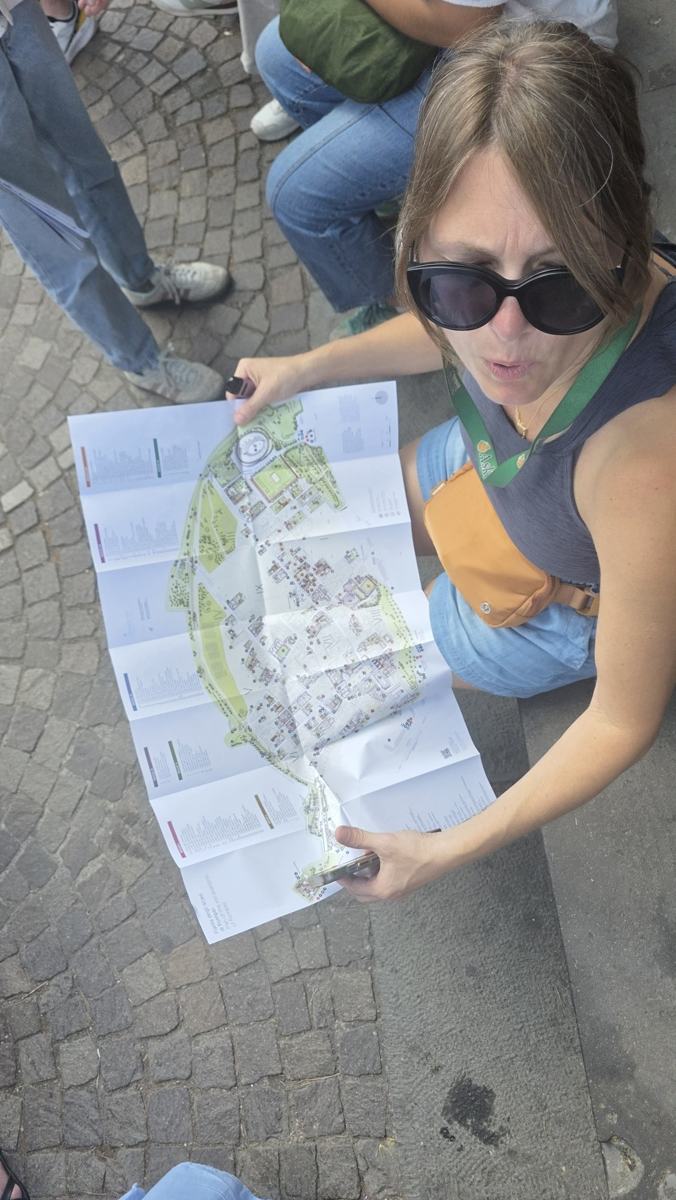
Jenn checking the site map before exploring.
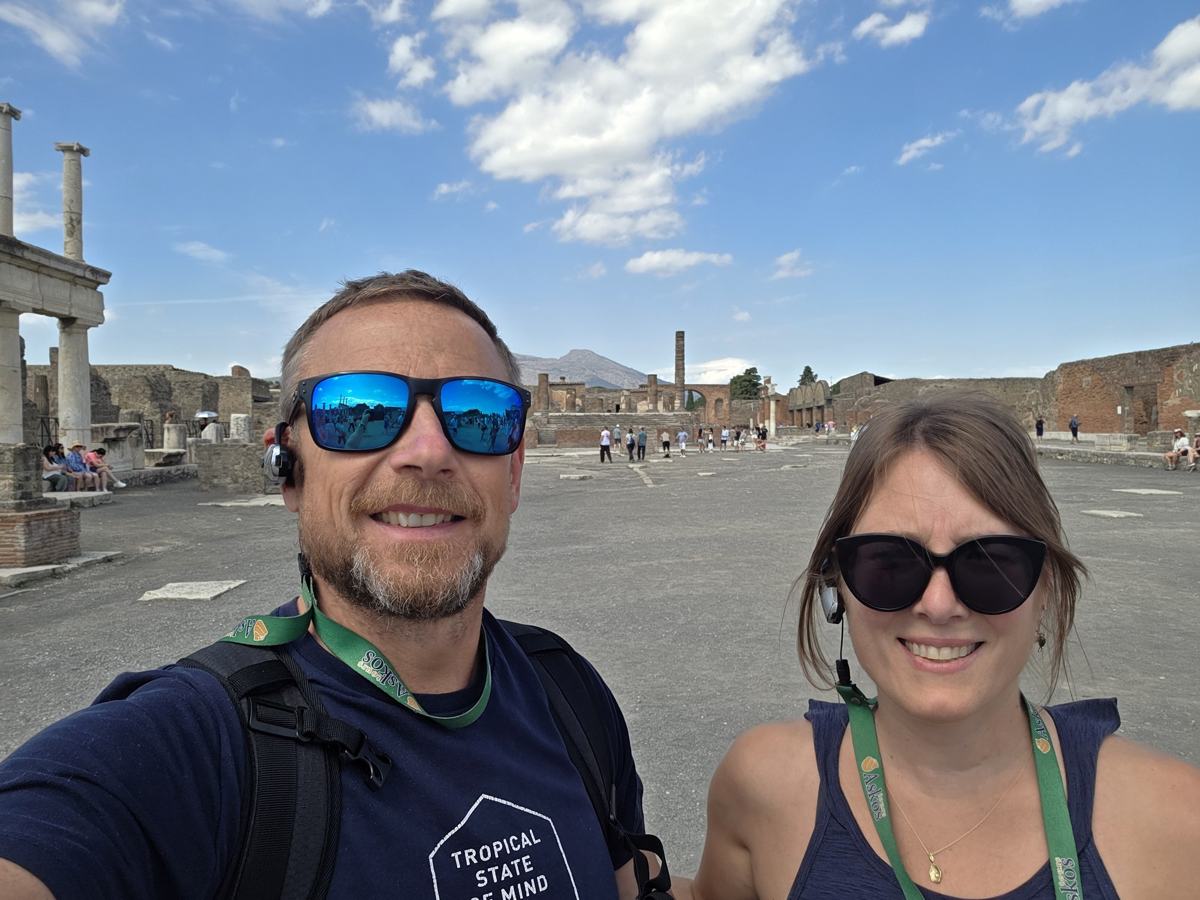
Together in Pompeii, with Vesuvius beyond the ruins.
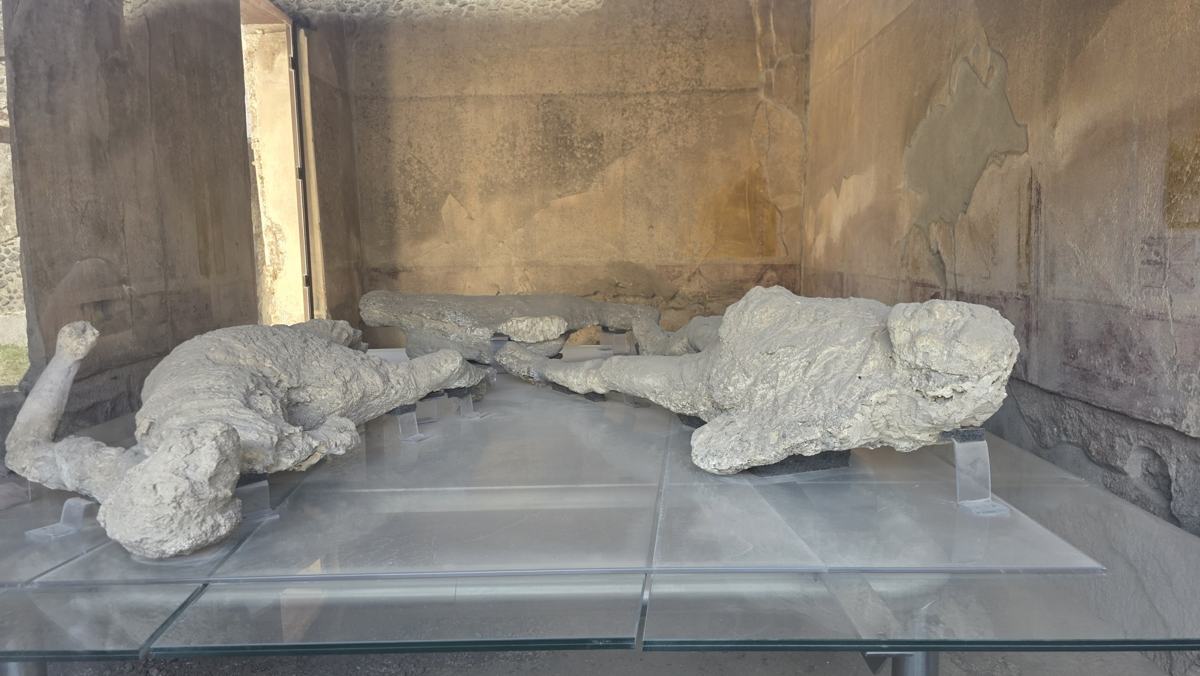
The casts at Pompeii: a sobering reminder of the people behind the ancient city.
Sorrento as a change of pace
Sorrento brought us back toward town life and the sea. Its value in a route like this is partly the contrast: after a day concentrating on archaeology, it is good to walk through a living town, browse, sit down and enjoy the surroundings.
For readers, separate the town centre from the lower waterfront when planning your day. A short distance on the map can still involve a climb, steps or a lift. If you have a car, select parking before approaching the centre and check the permitted route.
Use a Sorrento stop for a meal and a walk rather than automatically filling it with another long list of activities. Lemon products, seafood and a glass of local wine can give this chapter its own identity, without pretending that every attractive shop needs to become a scheduled stop.
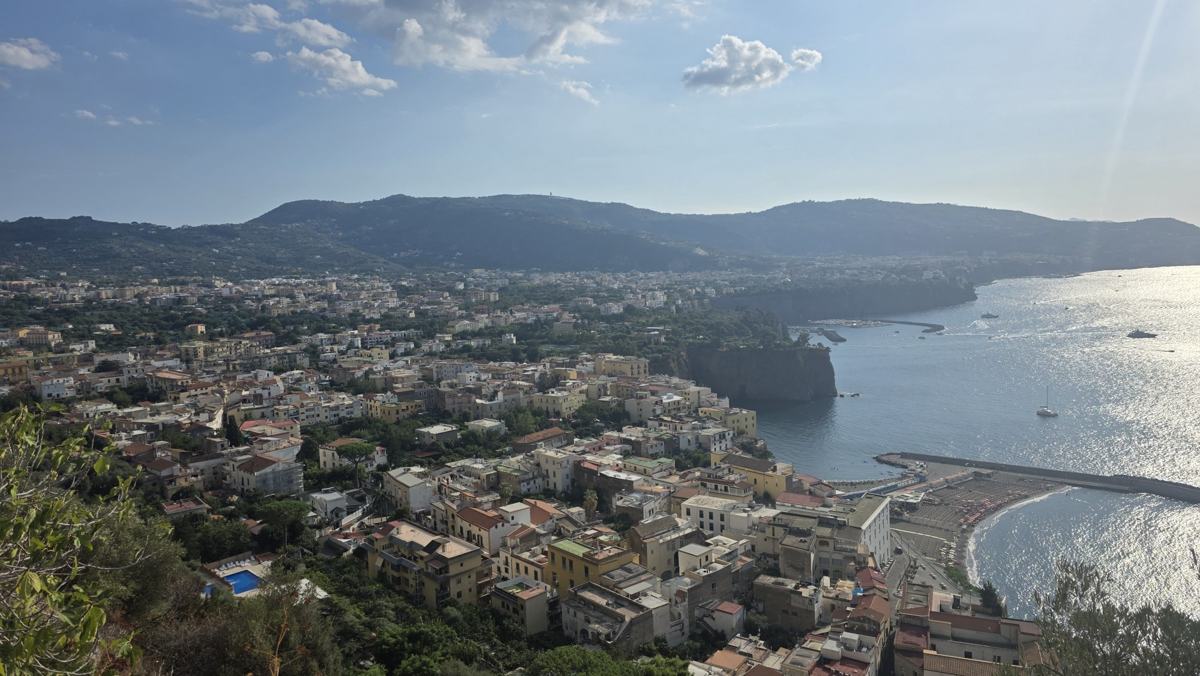
The Sorrento coastline in the afternoon light.
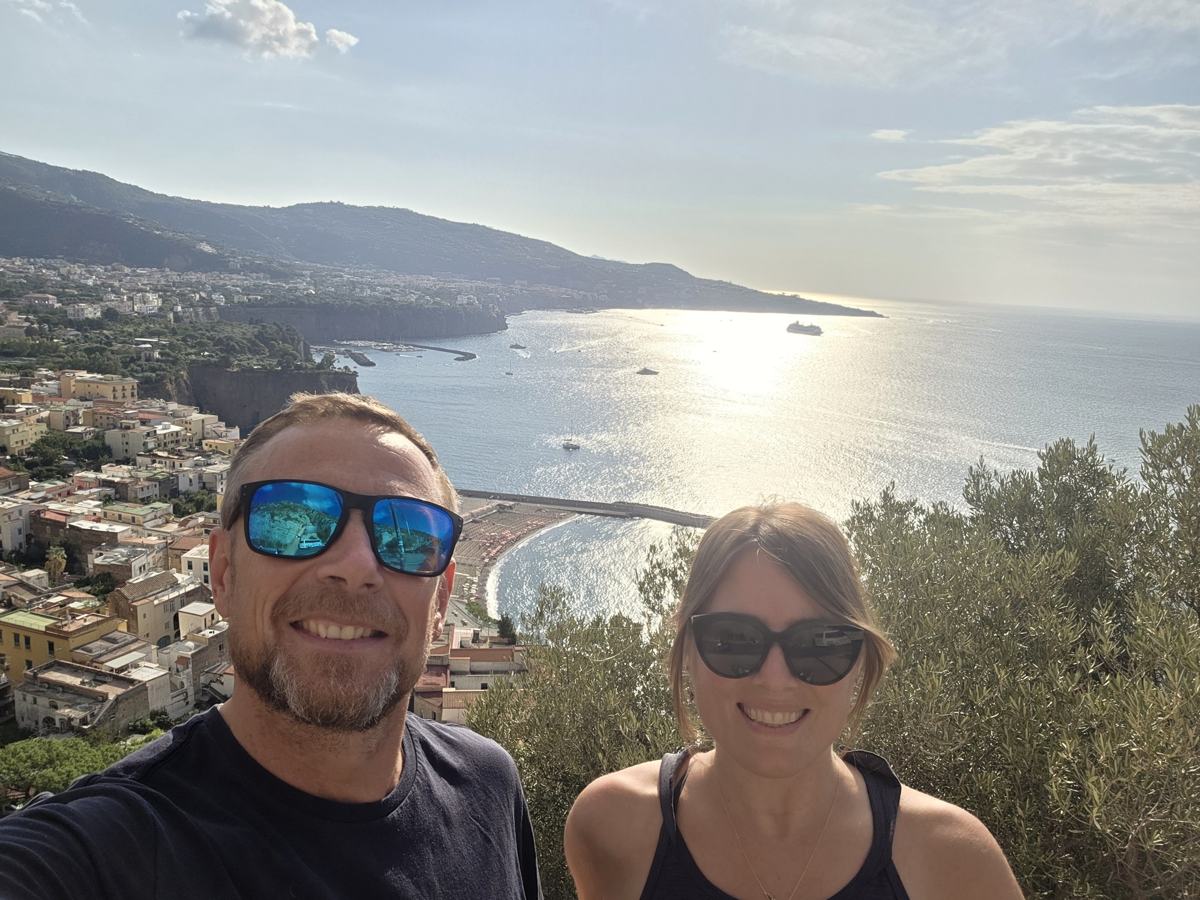
Together above the bay on our Sorrento stop.
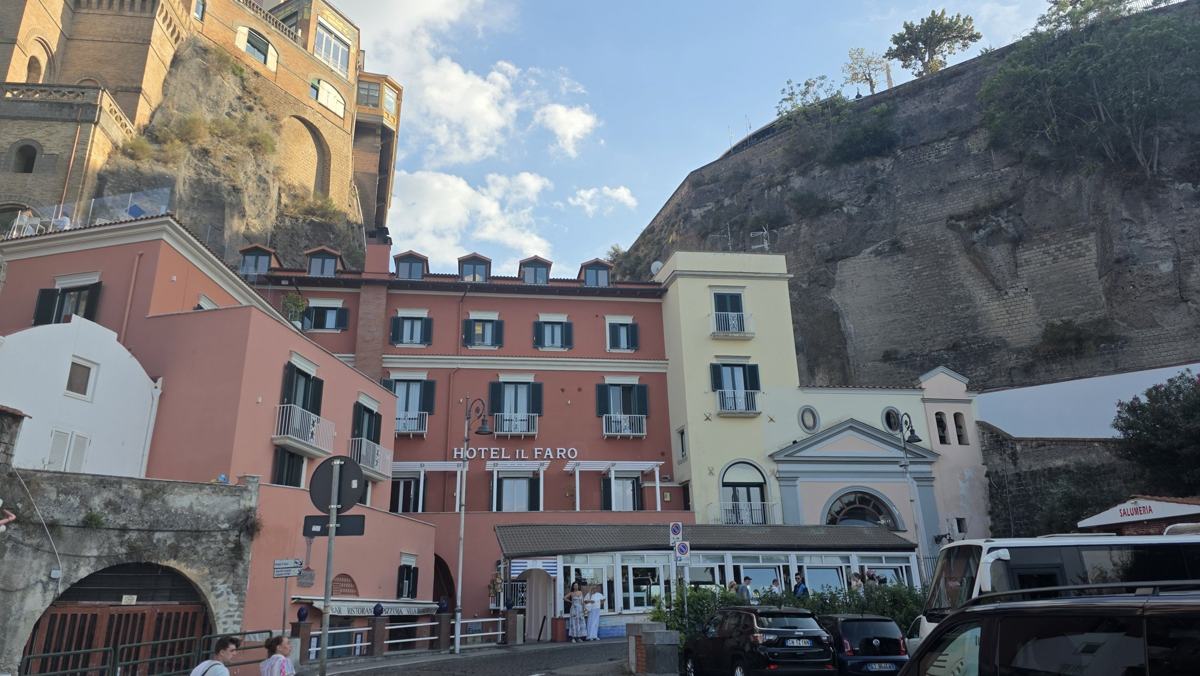
Waterfront buildings tucked beneath the cliffs at Sorrento.
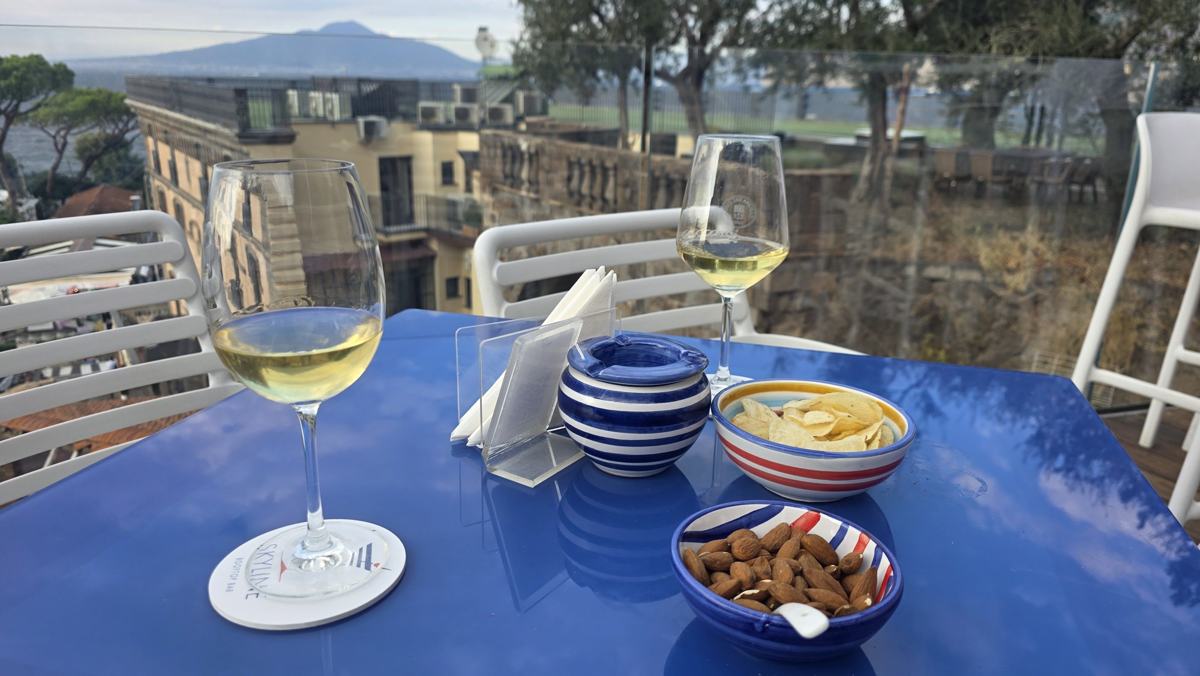
Wine and snacks with a view during our Sorrento stop.
The Amalfi Coast from sea level to Scala
The Amalfi Coast was not one stop. Our experience moved between Amalfi, Positano, Scala, Ravello, Praiano, Maiori and Minori, with the Emerald Grotto adding another coastal perspective.
The central planning lesson is that geography controls the day. Roads bend around the coast. Towns sit at different elevations. Parking can be scarce, and the final walk can be longer than expected. A string of nearby map pins is not automatically a relaxed itinerary.
Amalfi and Positano
Amalfi and Positano are the names many people begin with, and both belong in this story. They are also places where timing has an outsized effect on the visit. Arrival, parking and the flow of people can shape the experience before you have reached the view you came for.
In Amalfi, make room for the town itself rather than treating it as a photograph from the road. In Positano, remember that the famous view includes a town climbing a hillside. Walking downhill to the waterfront commits you to getting back up again.
For a day trip, pick the part of each town that matters most to you. If photography is the priority, choose your vantage point and time of day. If it is a long lunch and the waterfront, leave room for that. Trying to give every stop equal time is an easy way to spend the day watching the clock.
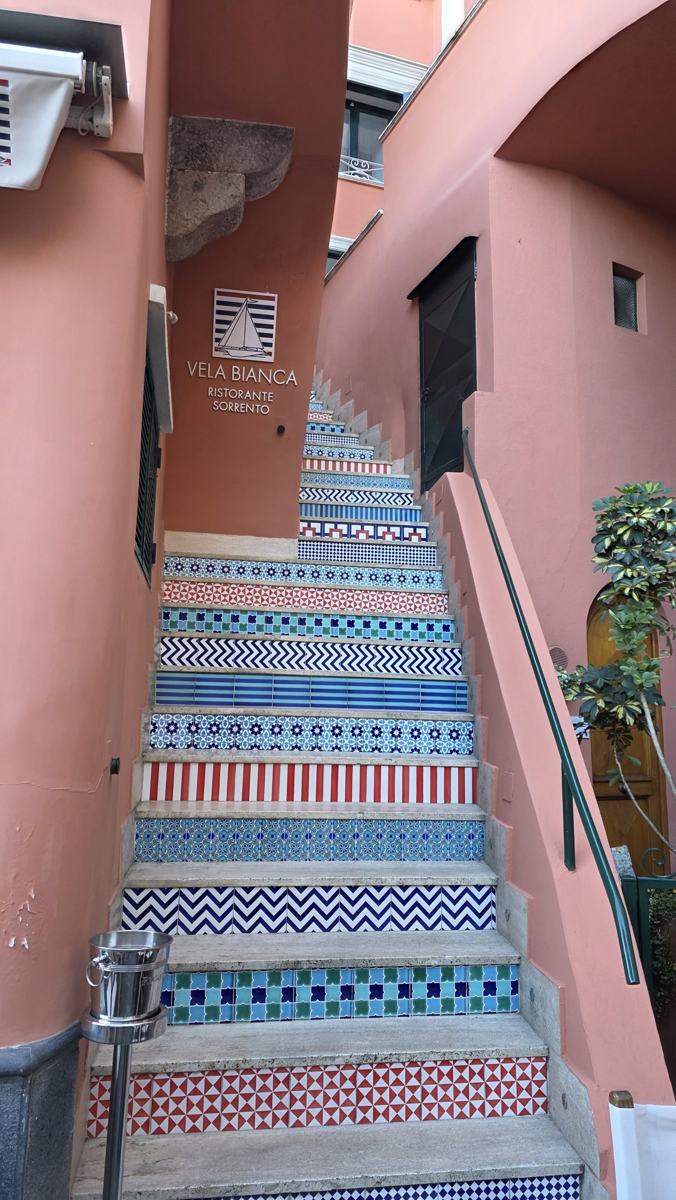
Colourful tiled steps on our Amalfi Coast day.
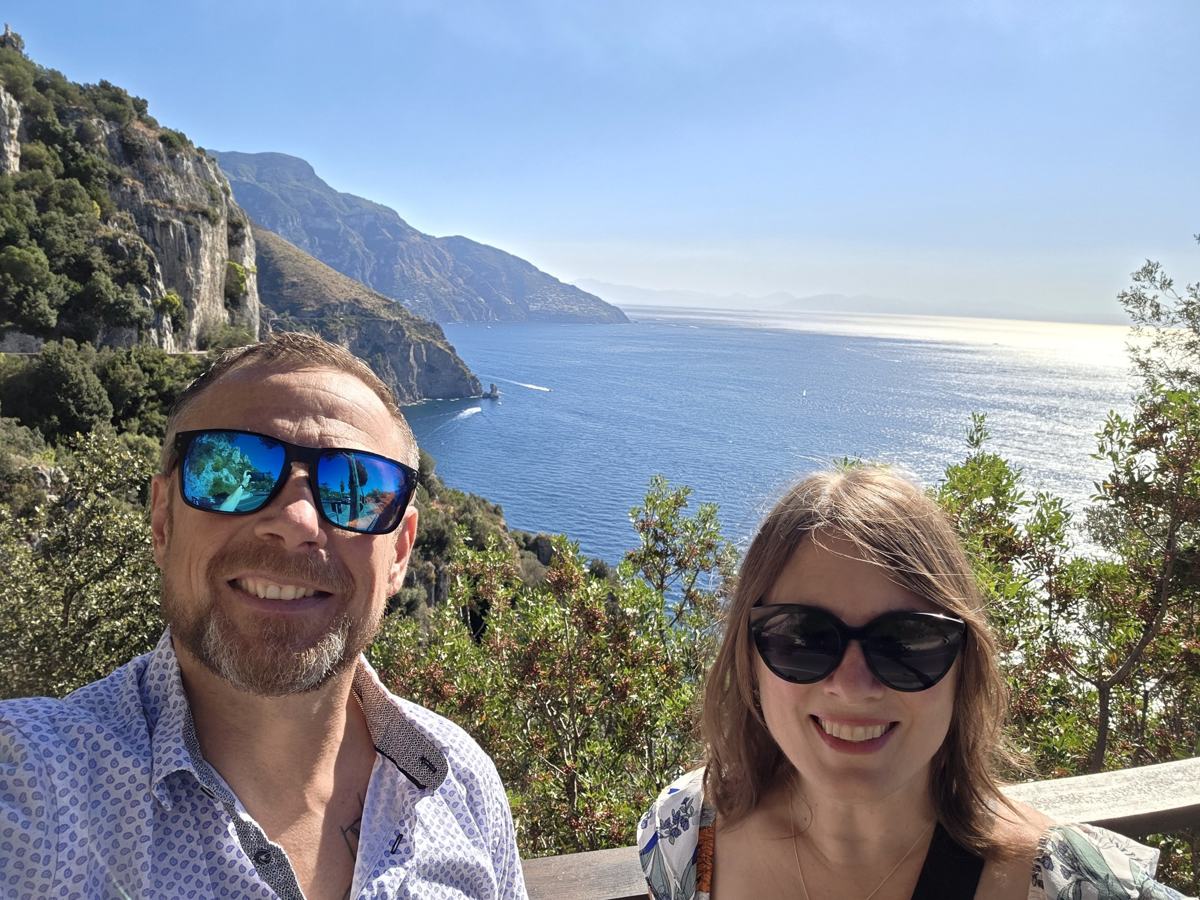
A pause above the sea on our coastal drive.
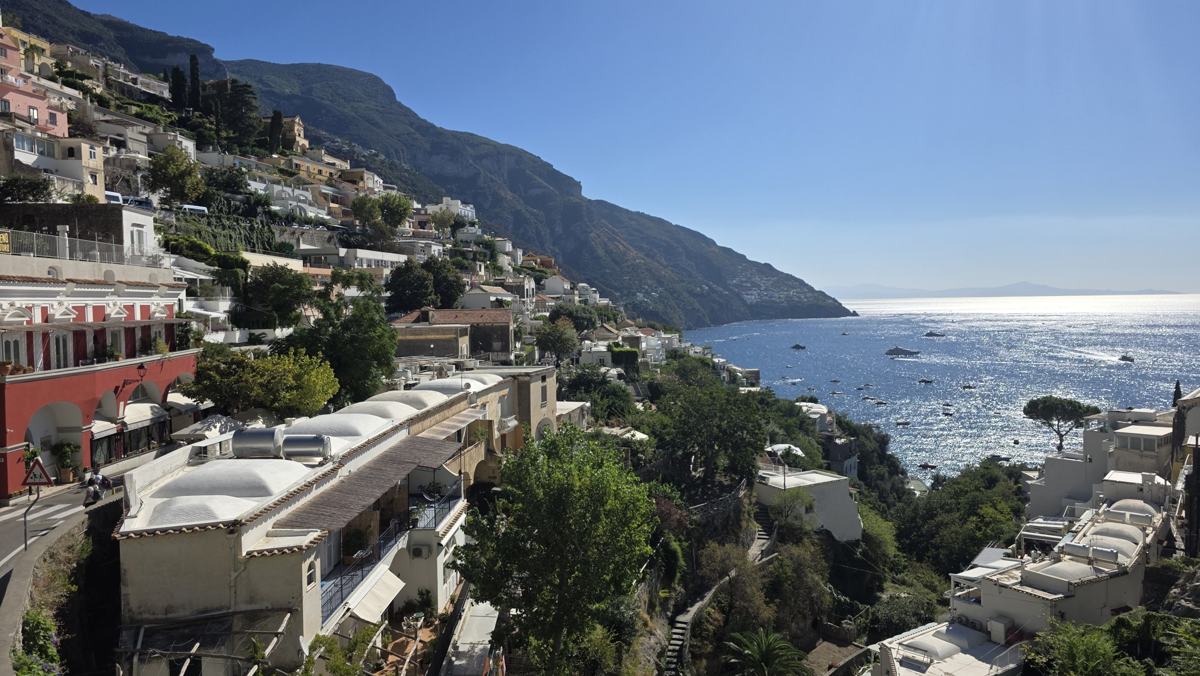
Positano descending toward the water.
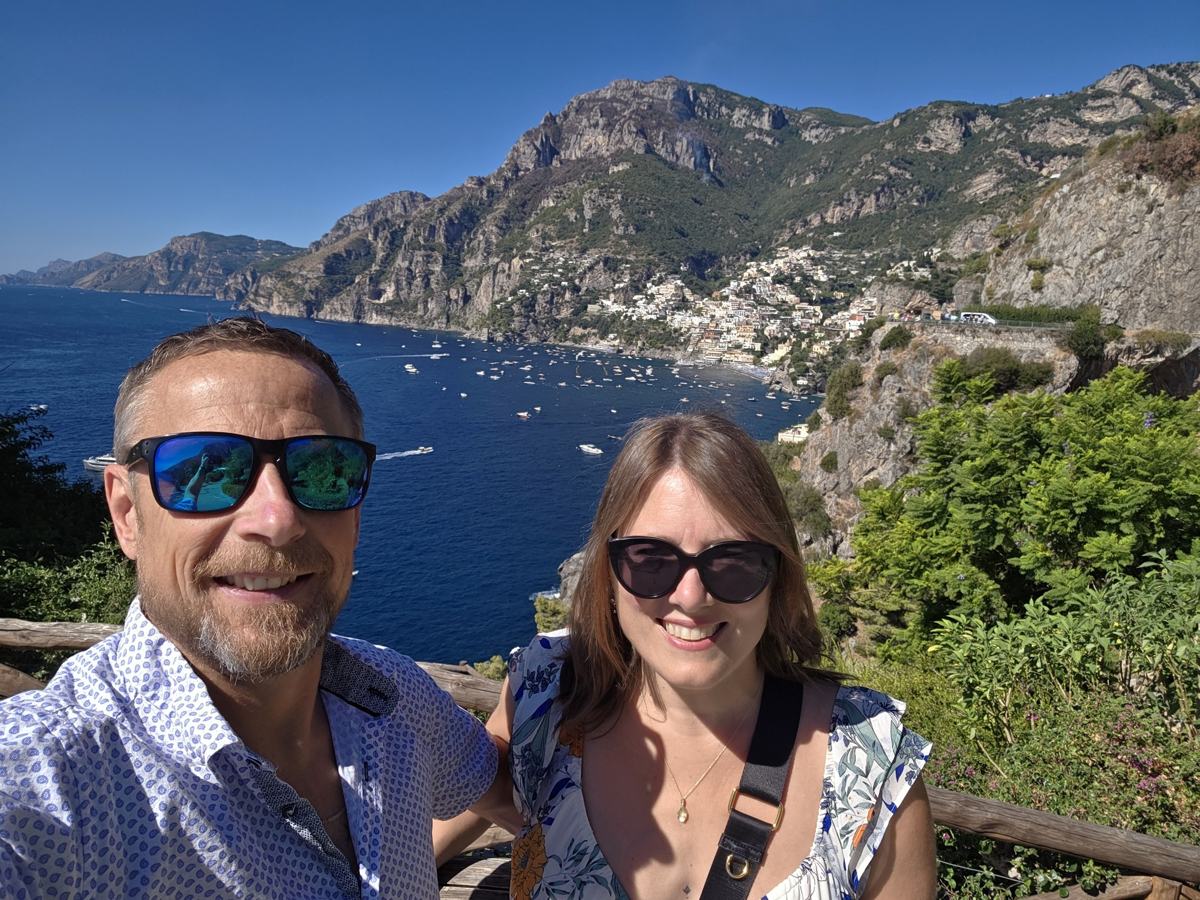
Together with Positano and the cliffs behind us.
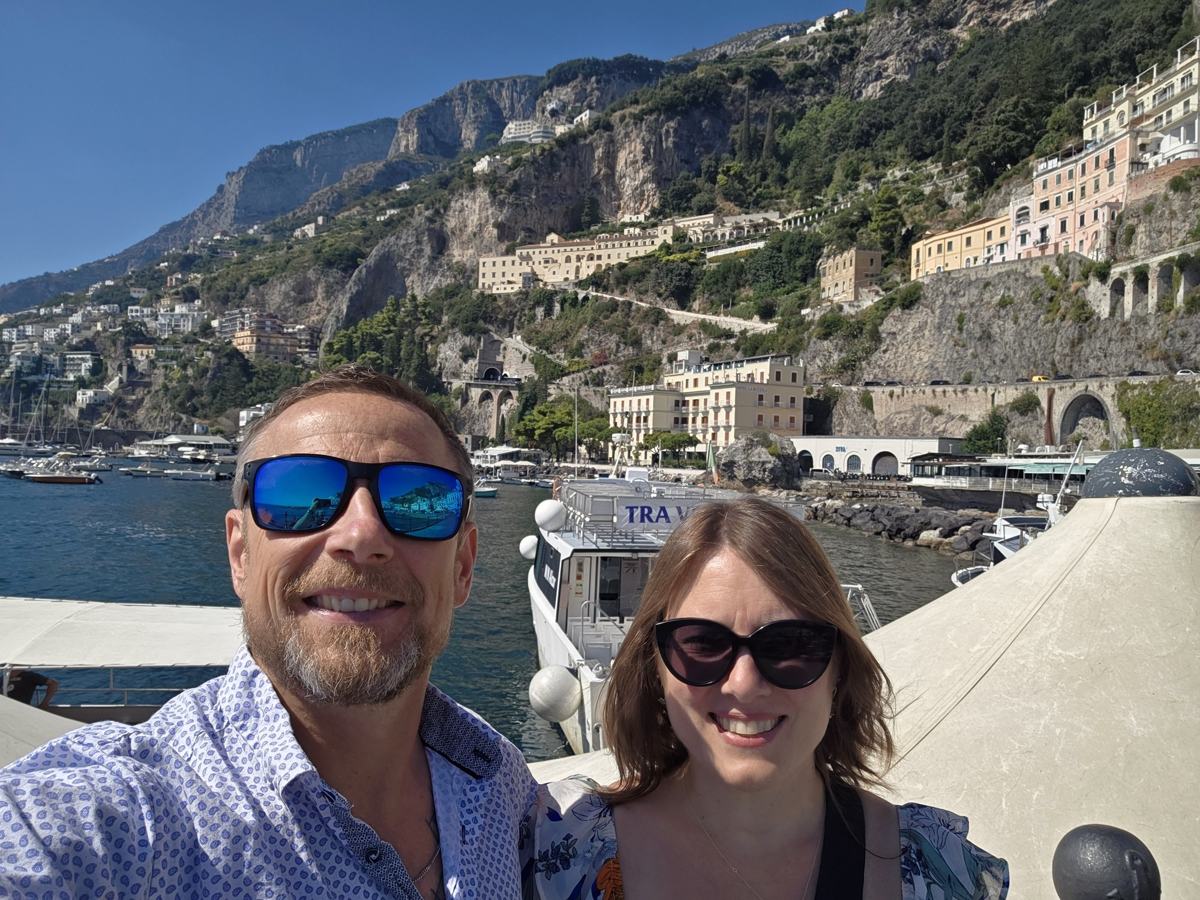
A waterfront pause on the Amalfi Coast.
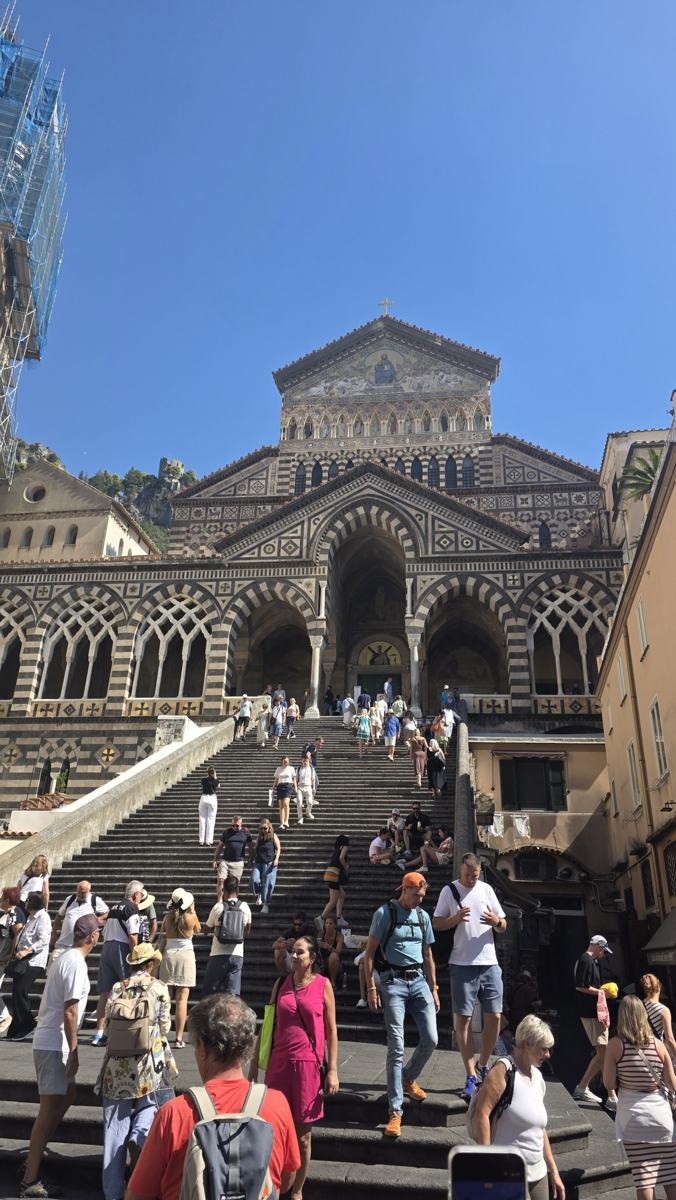
The cathedral steps in Amalfi.
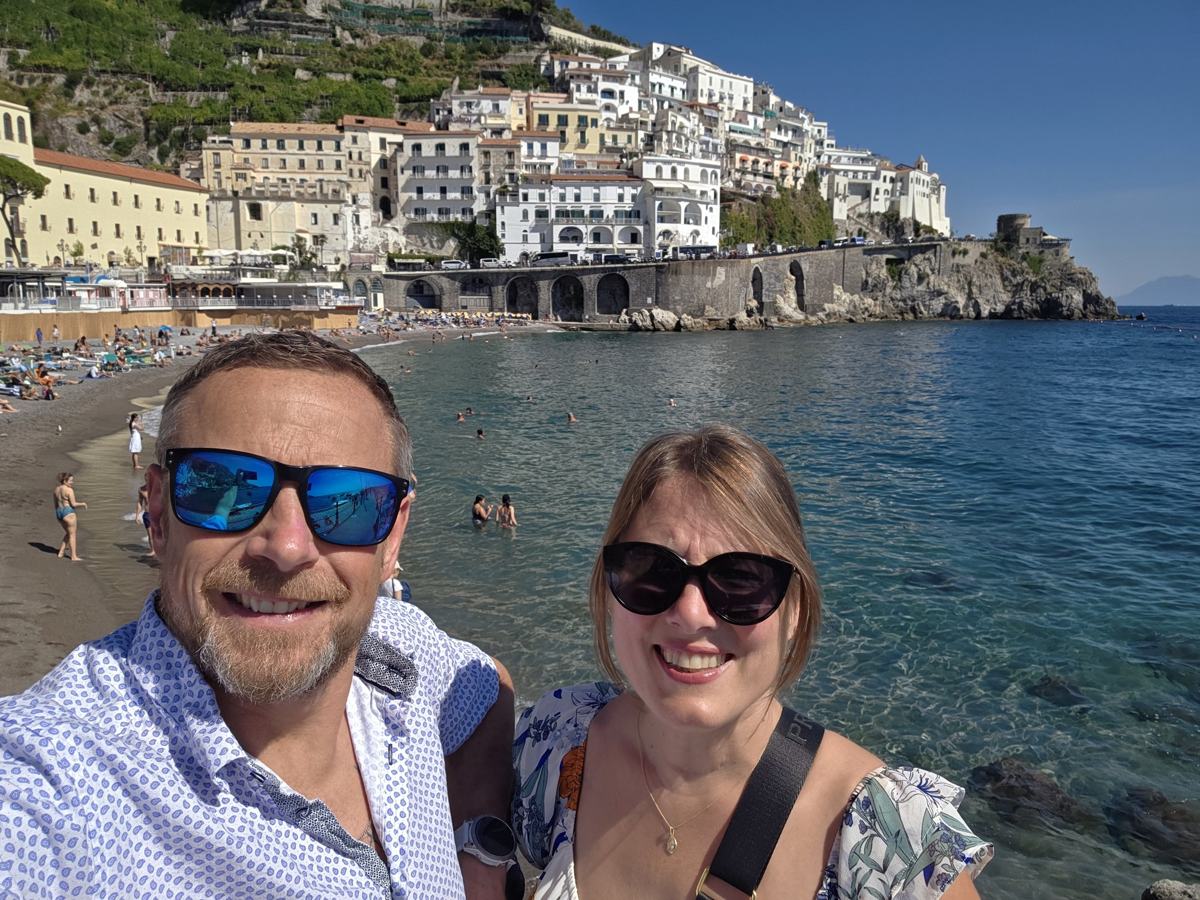
Amalfi from beside the beach.
Where we stayed Palazzo Pascal in Scala
Palazzo Pascal in Scala was one of our standout stays. We thought the accommodation was amazing, and it is a place we would happily return to. Staying above the water gave this part of the trip a different setting from the busy coastal towns. The hotel describes itself as a family-run five-star boutique property in the historic village of Minuta, with views toward Ravello and the coast. [9]
Scala deserves to be described as a place in its own right. A hotel here means village surroundings and elevation, with journeys down to the coast when you want them. It is a deliberate choice of base, not a substitute address for staying directly in Amalfi or Positano.
Wine was part of our Palazzo Pascal story, including the distinctive donkey wine-collection experience. That is exactly the kind of memory a travel journal should make space for: something that tells readers about the trip beyond the standard landmark list.
The property's Gli Ulivi restaurant and wine cellar also make food and wine part of the setting. Reserve directly and ask about the current menu or tasting arrangements. We are not attaching a Michelin-star claim to the stay; restaurant selections, awards and stars are different distinctions. [10]
Before choosing a hillside hotel, confirm parking, luggage access and how you will get to and from dinner or coastal excursions. The view is one part of the stay. The daily logistics are another.
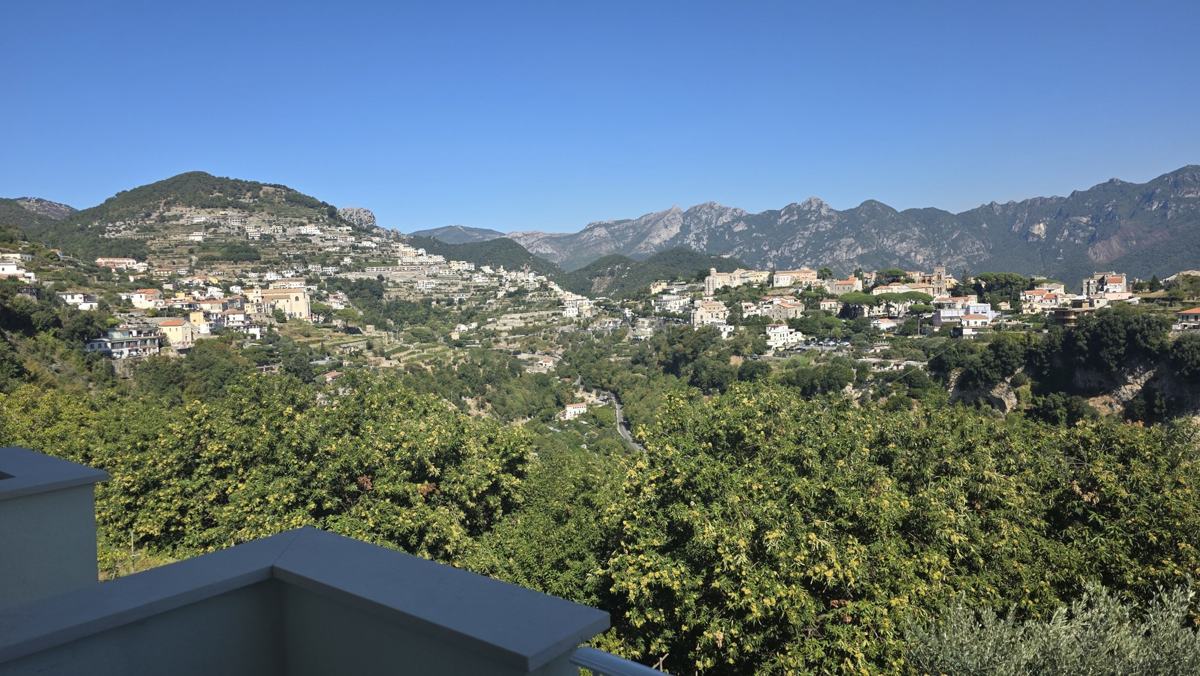
The hillside panorama during our Scala stay.
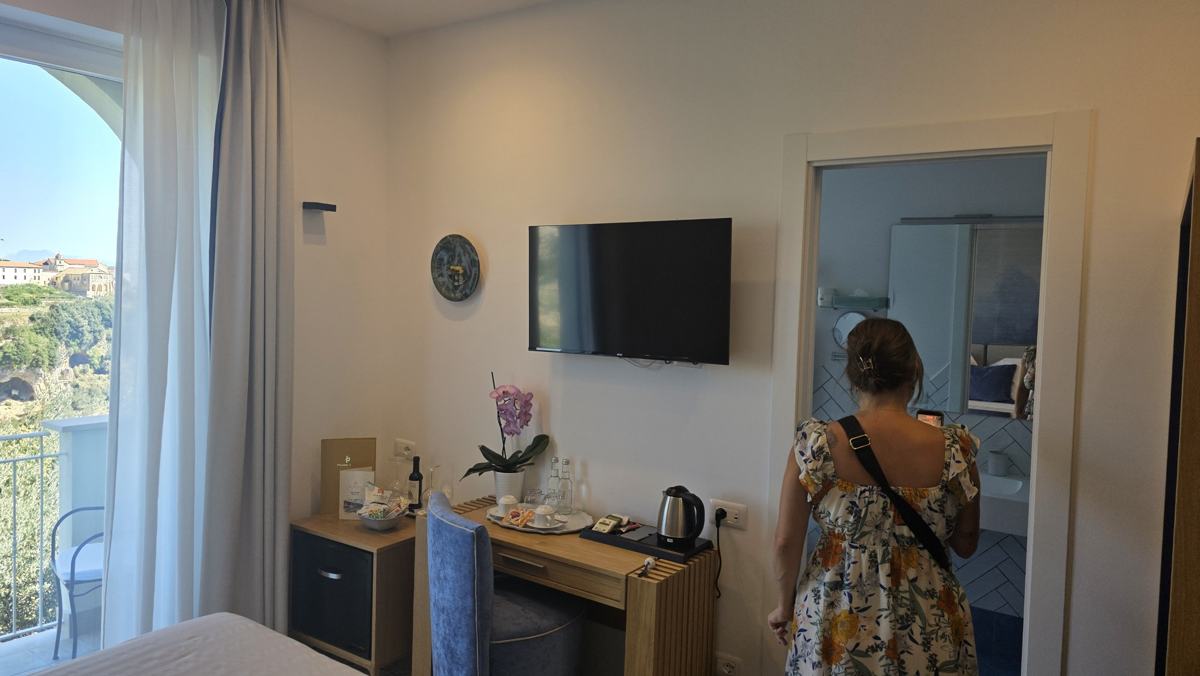
Settling into our room in Scala.
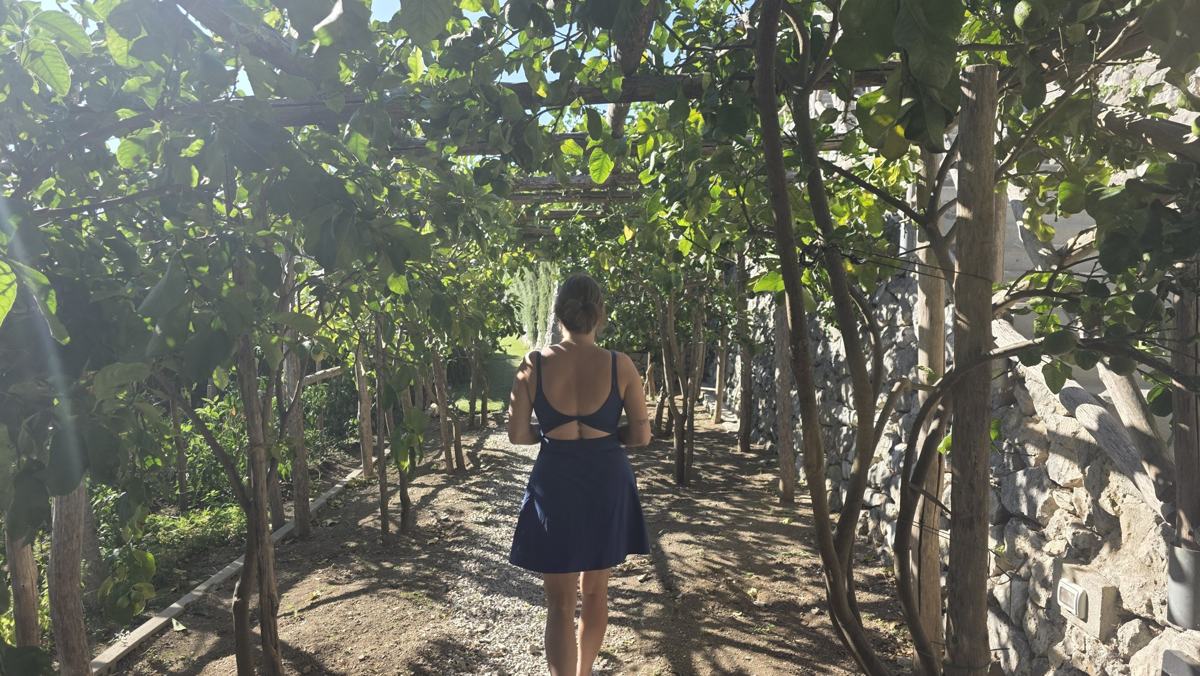
A shaded walkway during our morning above the coast.
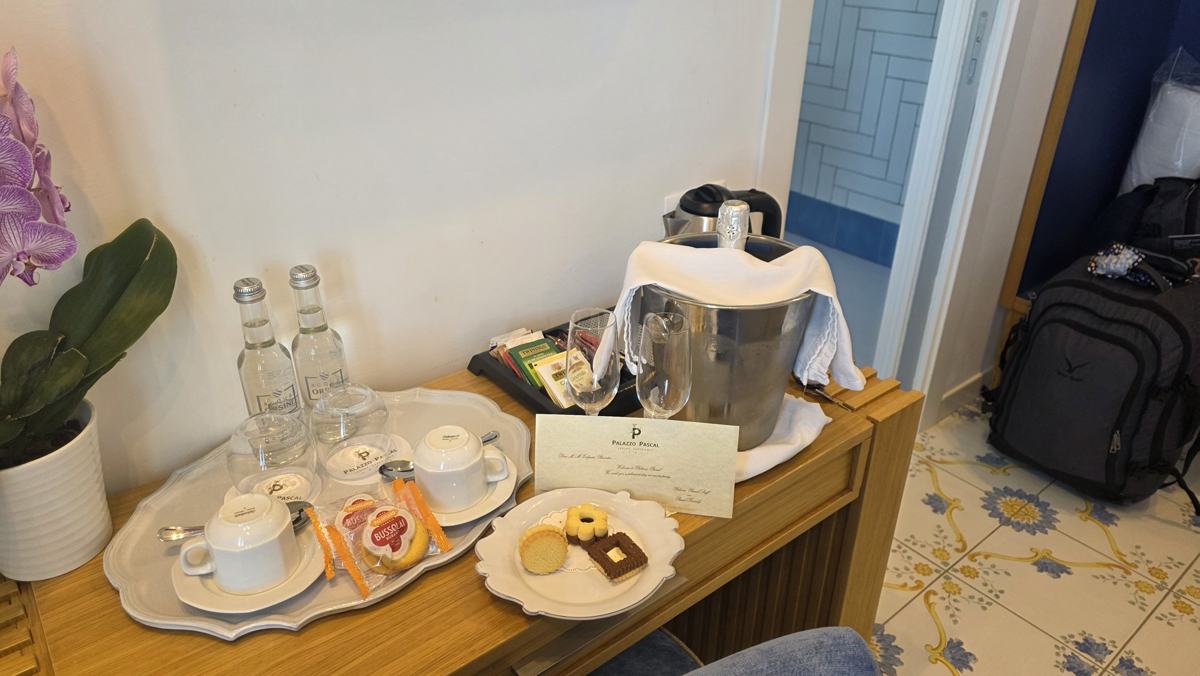
Welcome treats in our room at Palazzo Pascal.
Ravello and Praiano
Ravello belongs to the higher part of the coast, with a different perspective from the waterfront towns. Give it time for the walk and the views. If you want to add a villa garden, check the specific attraction's entry and hours rather than assuming it is part of a general town visit.
Praiano brought the route back along the coastal road. Here, as elsewhere, the beach you can see is not necessarily the beach you can reach easily. Check the access path, stairs and parking before deciding to spend a few hours by the water.
For photography, a safely reached viewpoint is worth more than a hurried roadside stop. Let the passenger notice possible stops, then pull into a legal space before getting out. Never make a traffic lane the platform for a photograph.
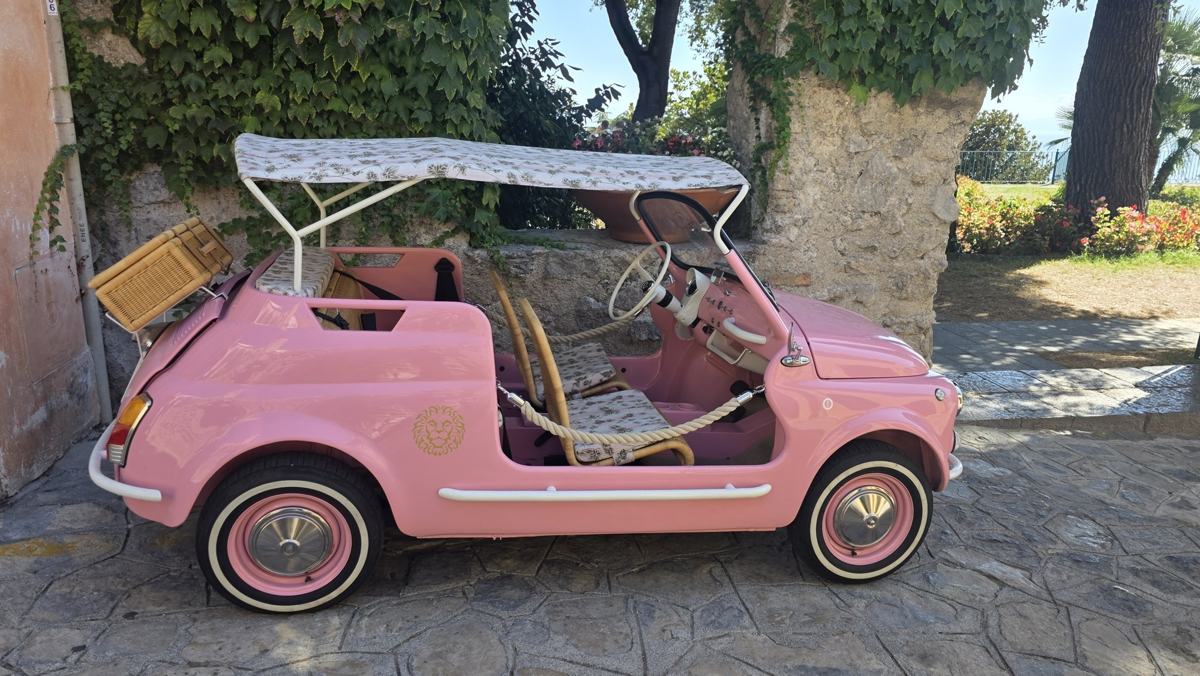
A pink open-top car spotted while exploring.
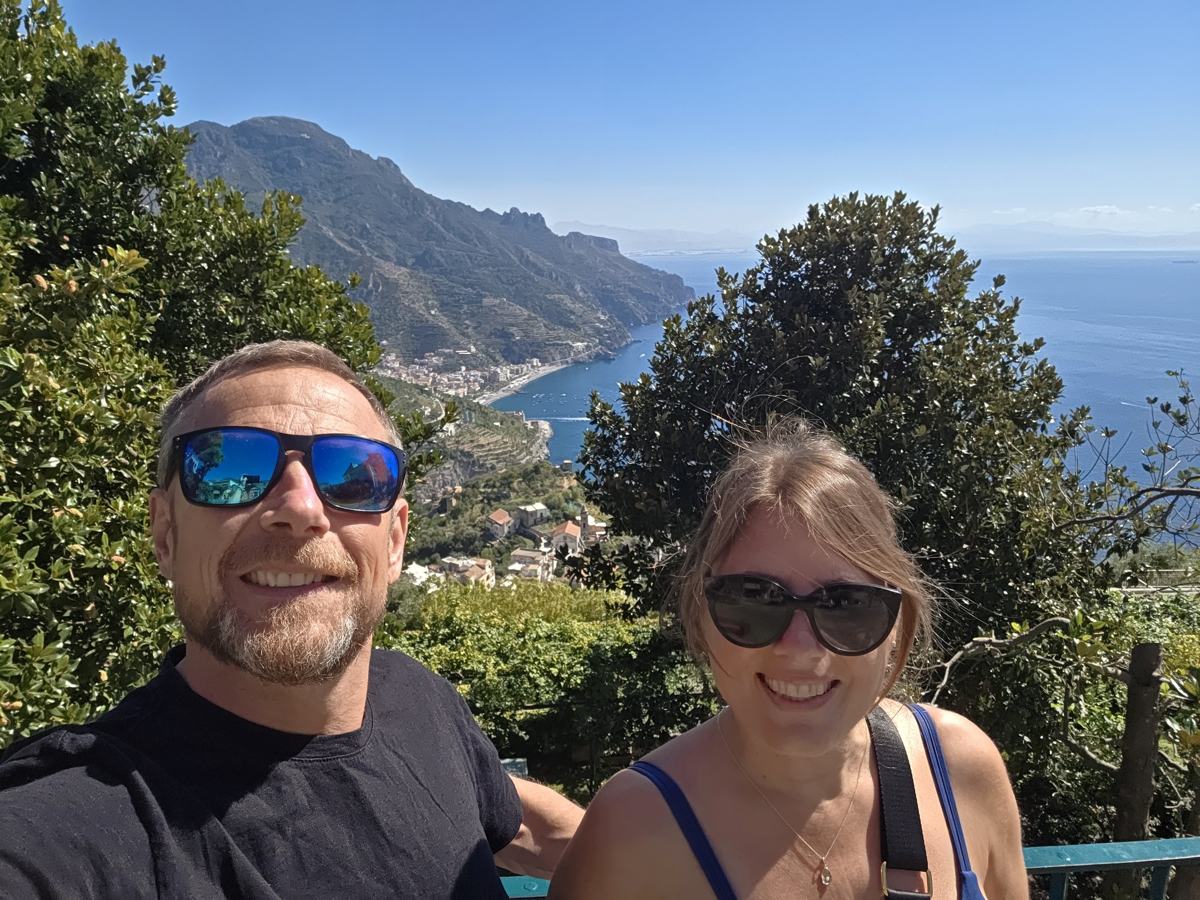
A view from the hills above the coast.
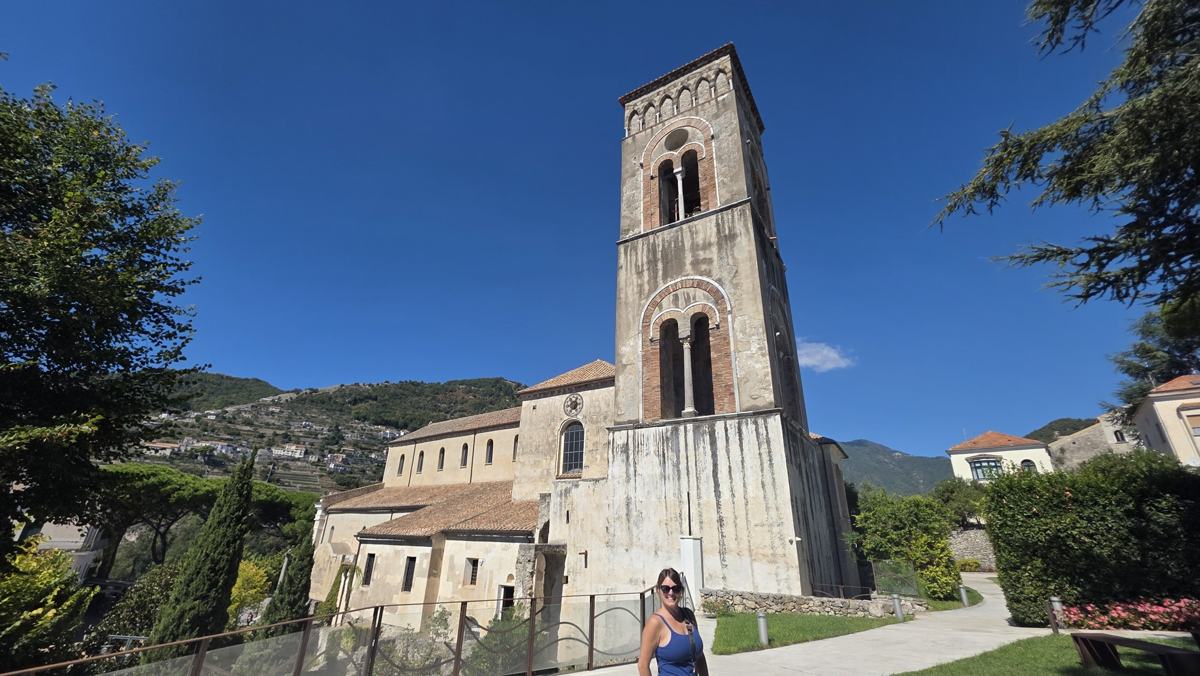
Church architecture on our walk through the hill towns.
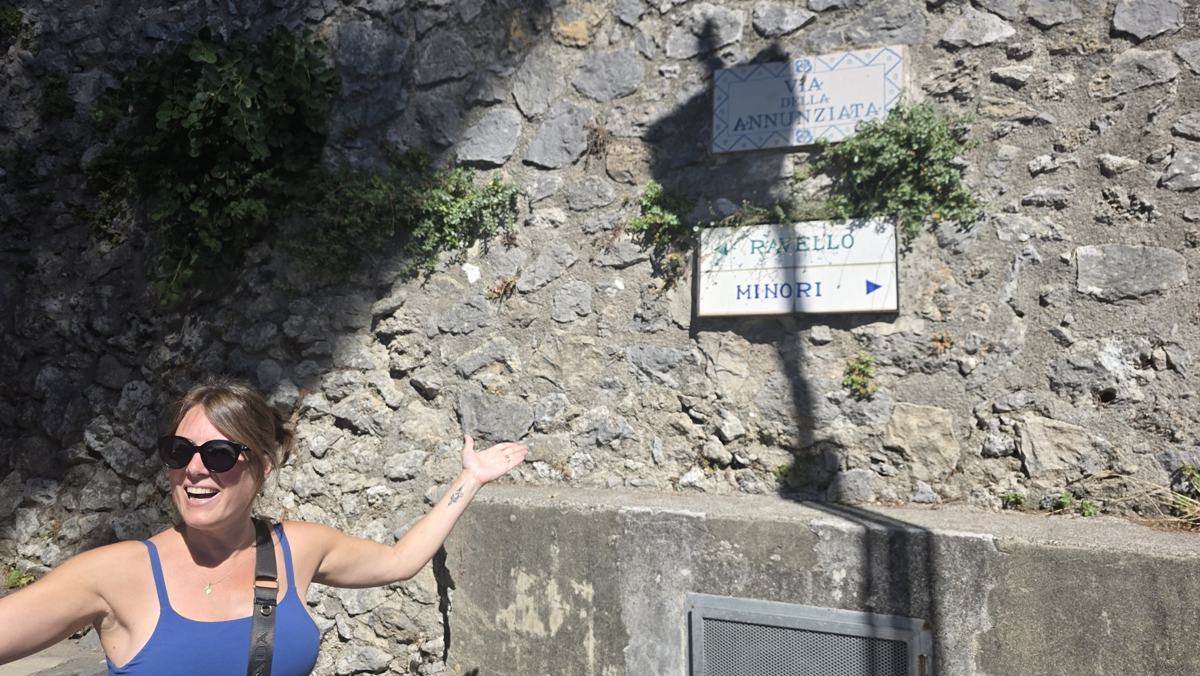
Jenn beside a sign pointing toward Minori.
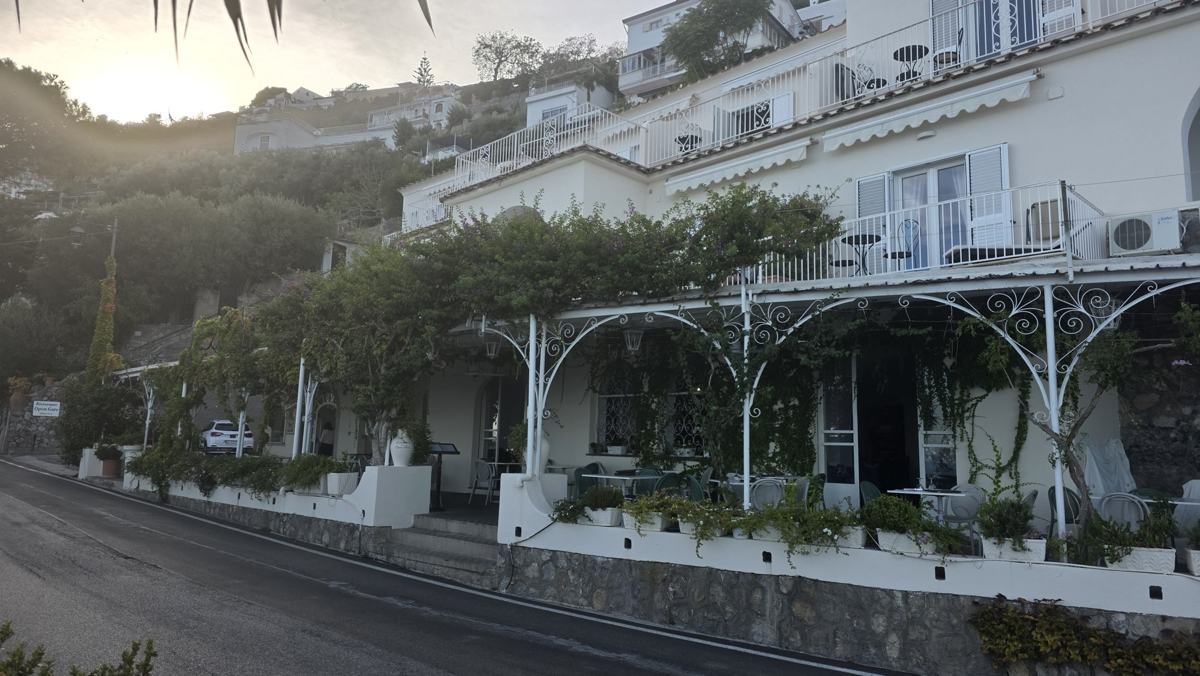
White terraces beside the coastal road in Praiano.
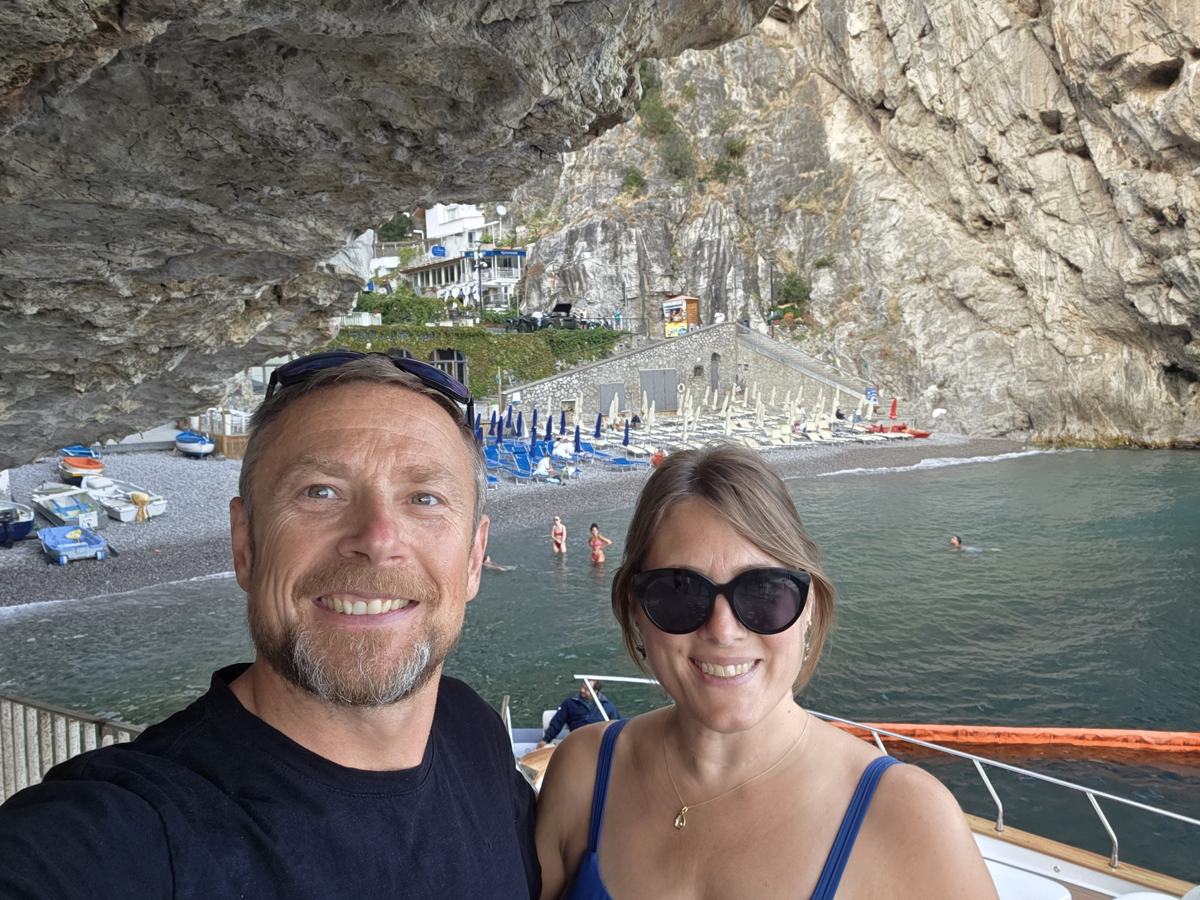
A sheltered cove beneath the cliffs in Praiano.
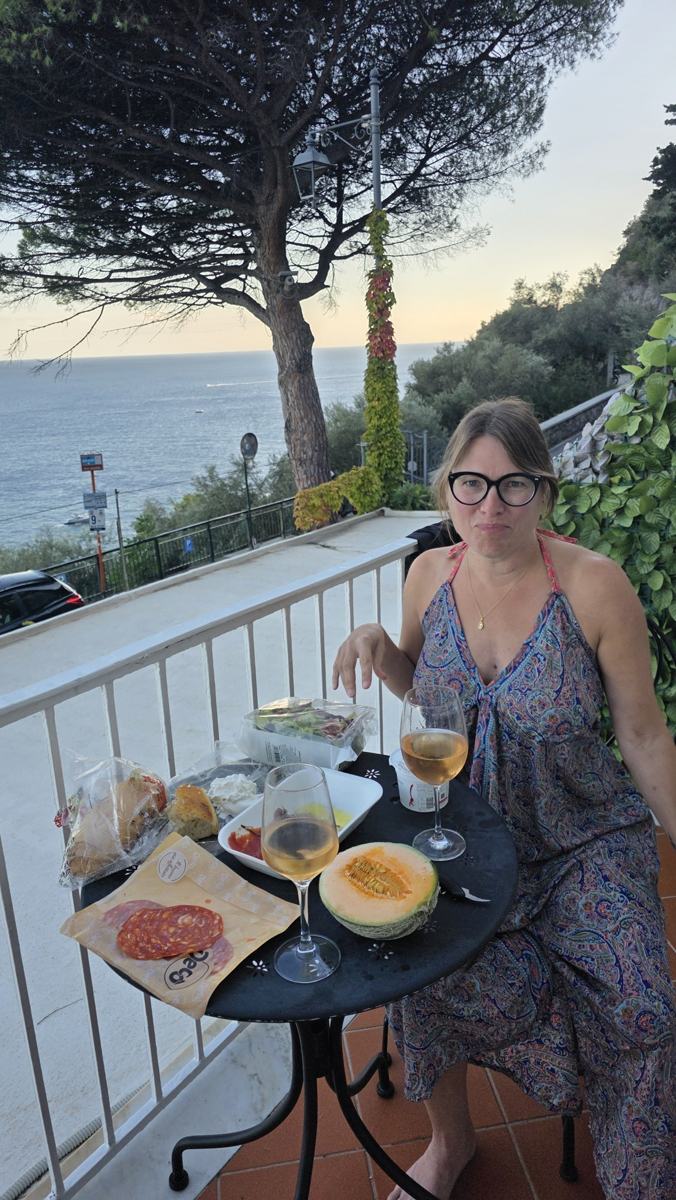
A simple balcony meal: cheese, cured meat, melon and wine with a sea view.
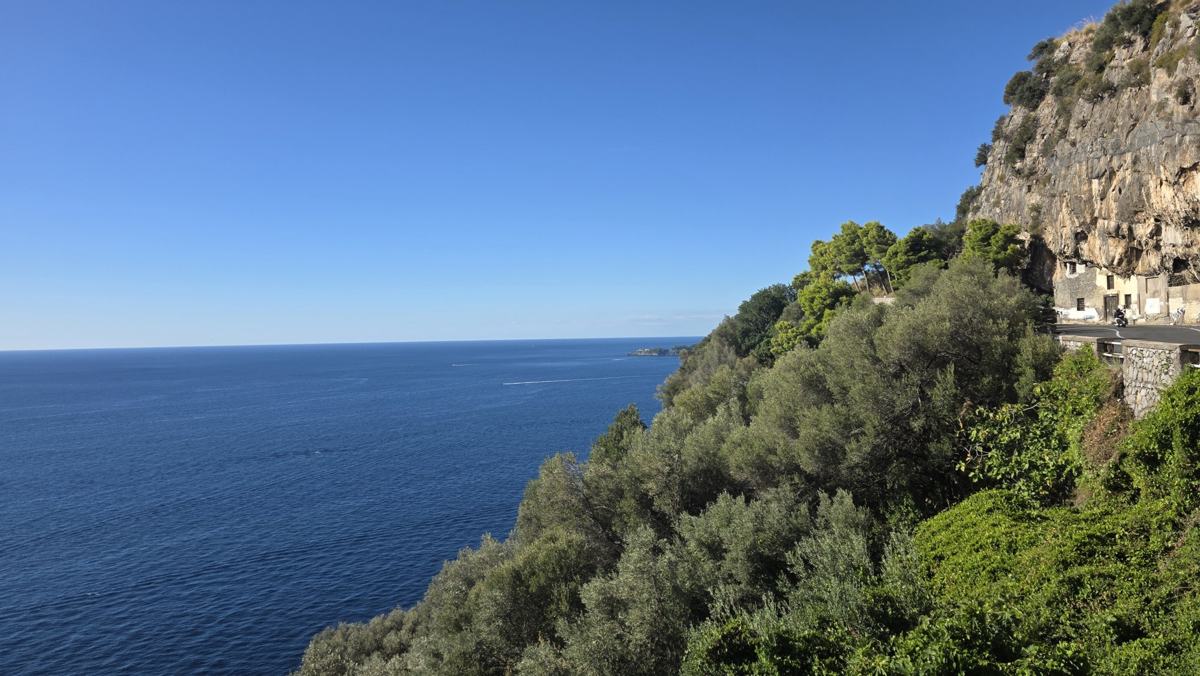
The coastal road winding above the water.
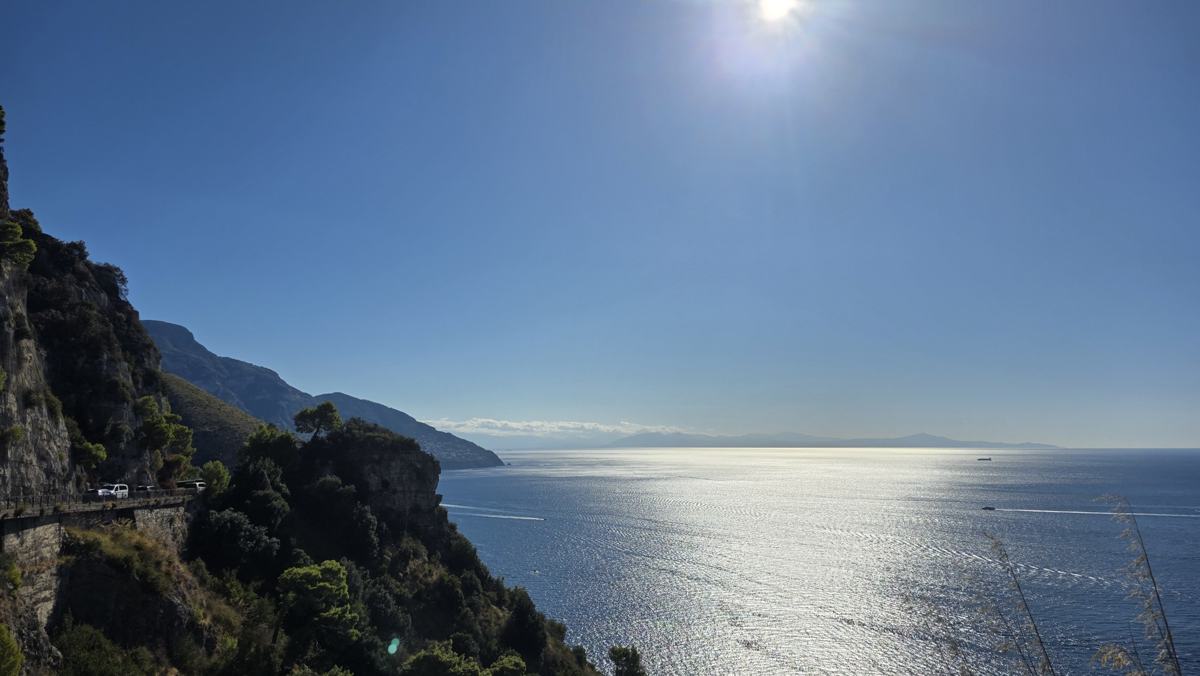
Morning light across the sea before leaving the coast.
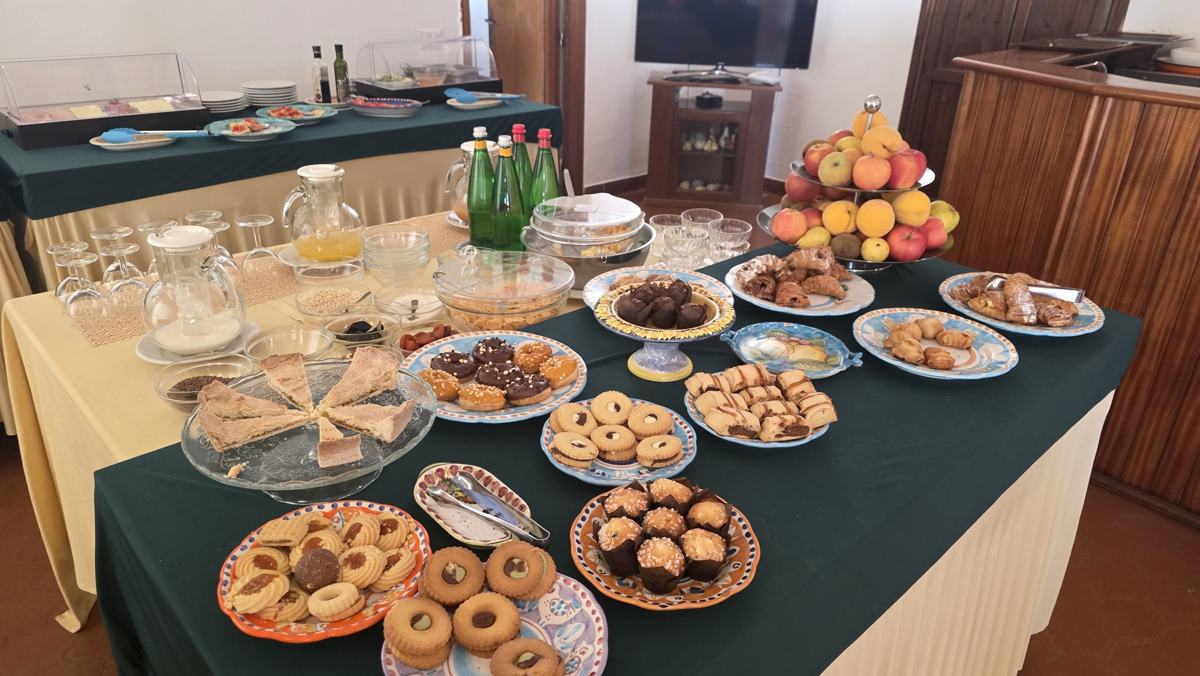
Breakfast before leaving the Amalfi Coast.
Maiori Minori and the Emerald Grotto
Maiori and Minori added another pair of towns to our coast chapter. They are useful reminders that the Amalfi Coast has more to offer than its two most photographed names. A waterfront walk, a food stop and time observing everyday town life can be enough reason to visit.
For readers who want a beach break with fewer changes of elevation, investigate the waterfront arrangements in Maiori and Minori. Check the difference between public beach space and a managed lido before settling in, and ask what is included in any lounger or umbrella charge.
The Emerald Grotto, or Grotta dello Smeraldo, added the coast's cave-and-water scenery to our route. Treat it as a weather-dependent extra and check current access locally. If it is unavailable, there is no reason to let that unsettle the rest of the day.
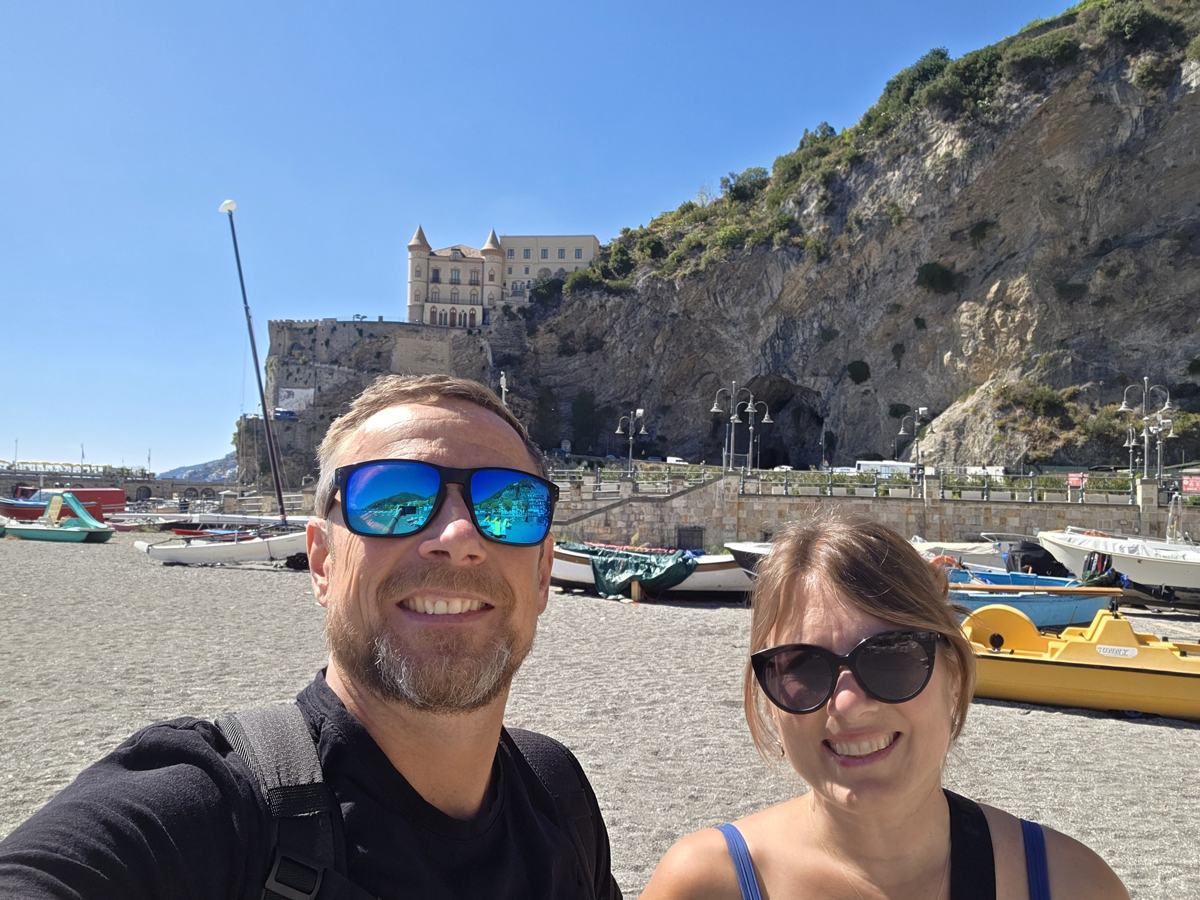
Together on the beach during our Maiori and Minori chapter.
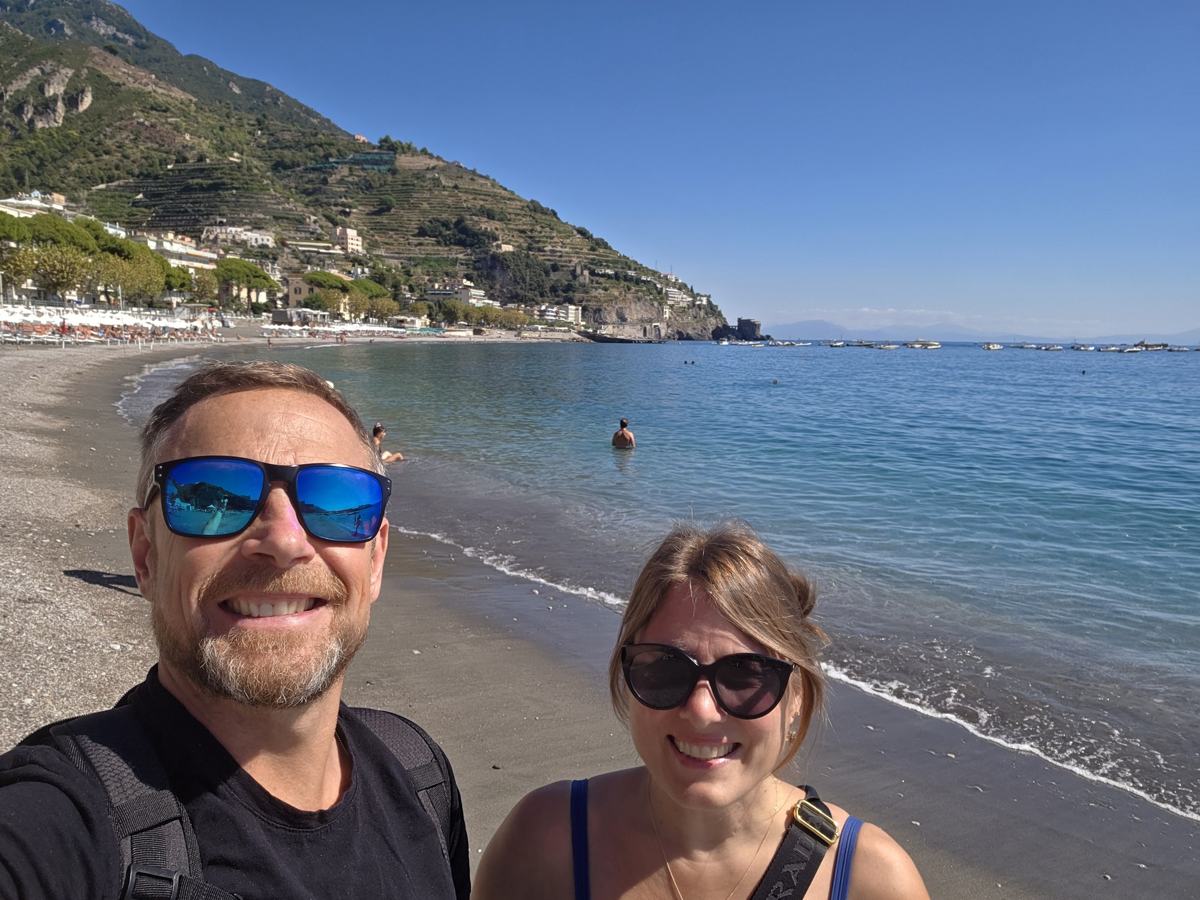
A waterfront pause with the hillside beyond.
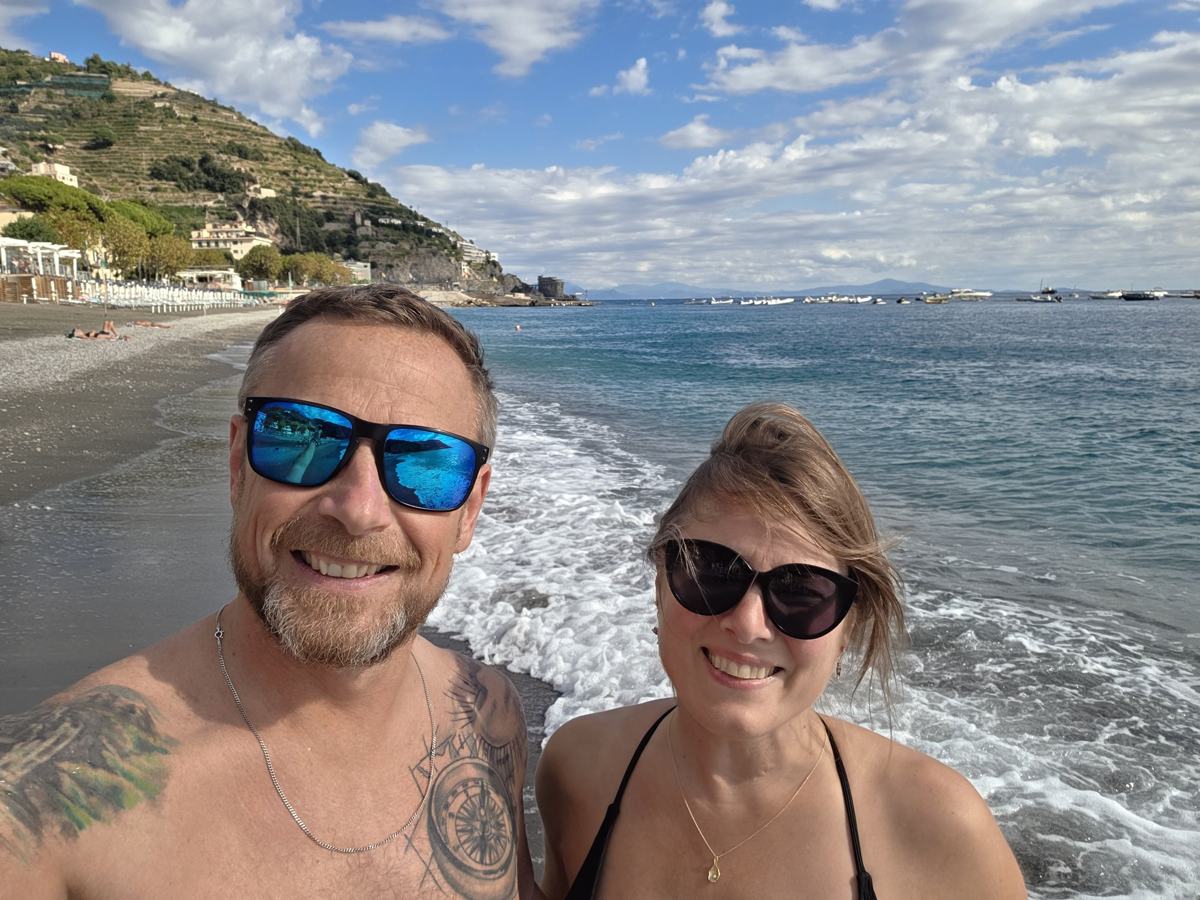
Making time for a swim on the coast.
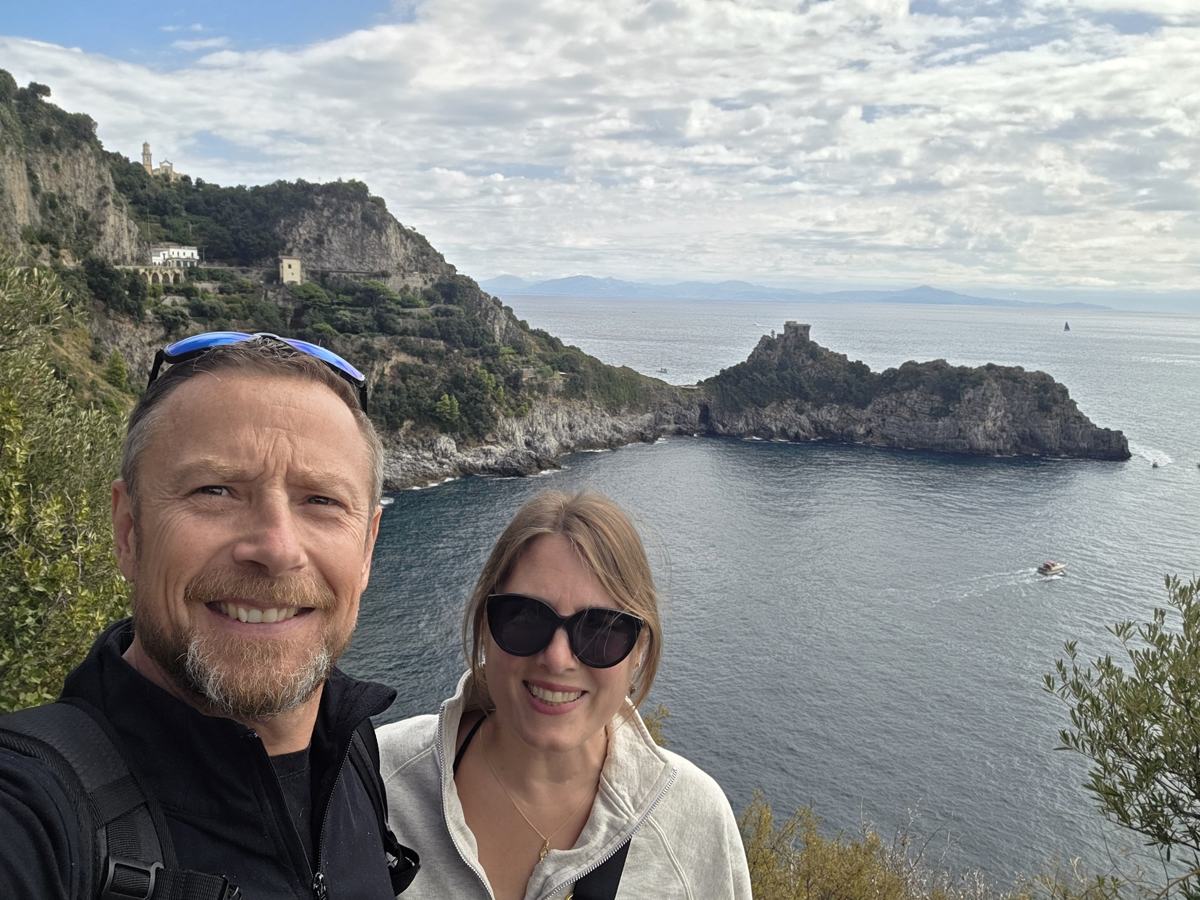
The coastline near our Emerald Grotto stop.
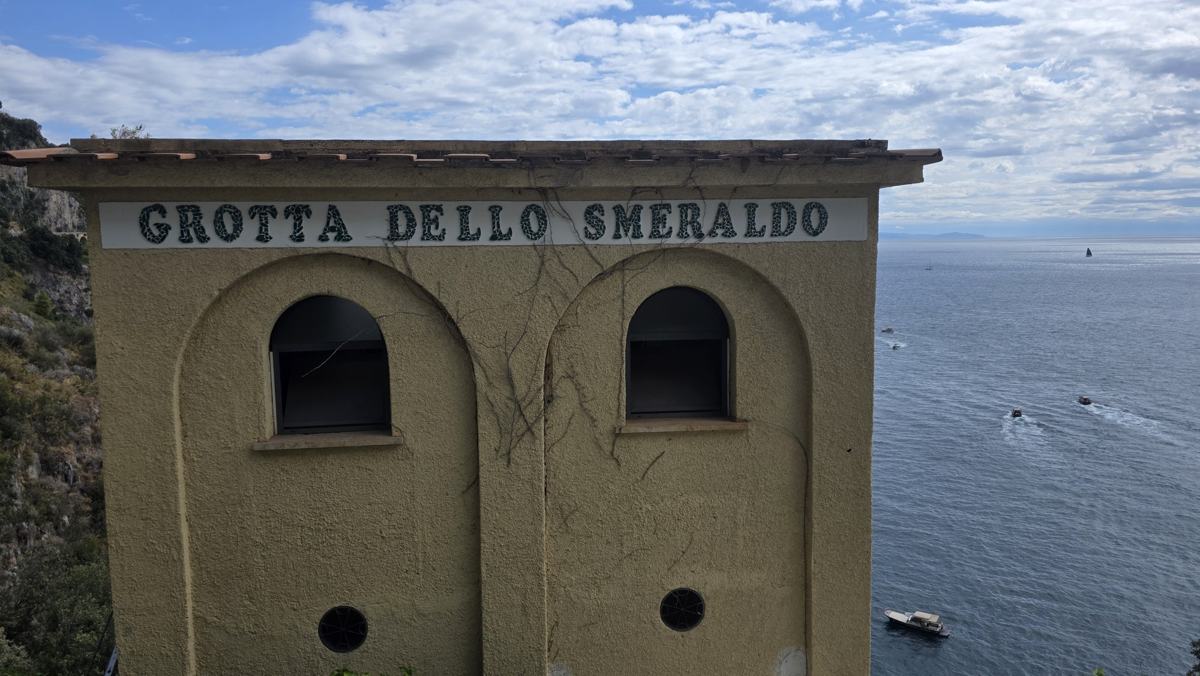
Arriving at the Grotta dello Smeraldo.
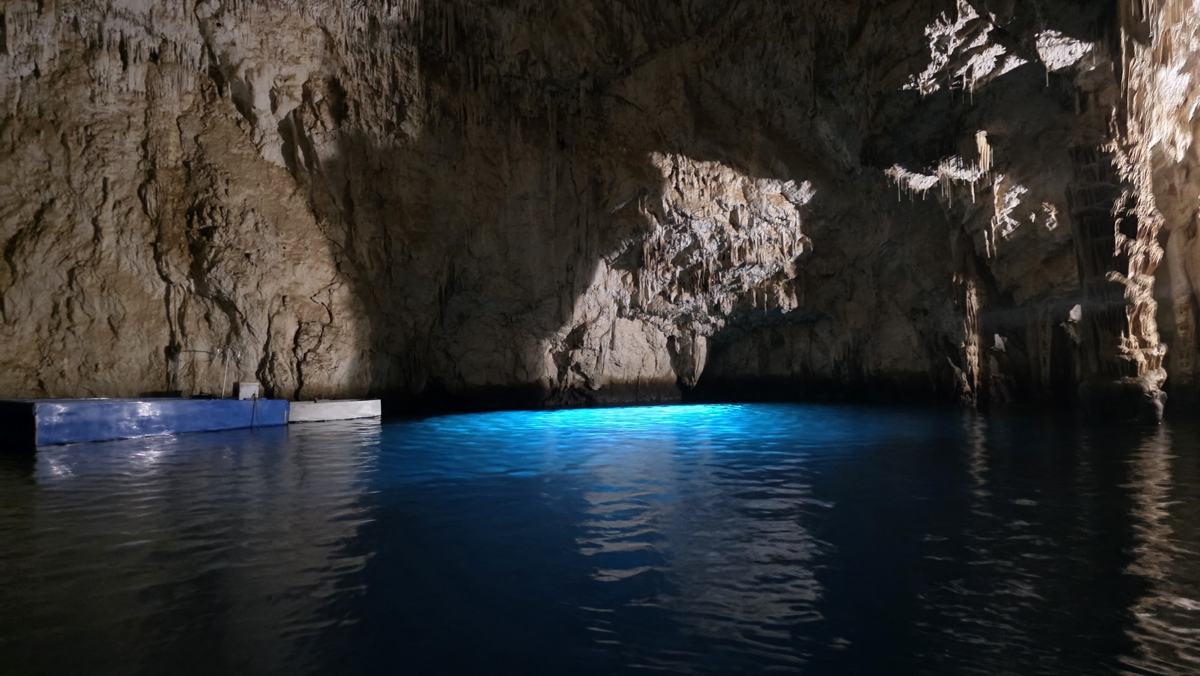
Blue-green light inside the Emerald Grotto.
Driving the coast and choosing when to leave the car
A car gave our trip flexibility, but it also made parking part of each decision. Choose a compact vehicle, inspect the rental carefully and ask your accommodation for arrival instructions. An apparently convenient navigation route can take you toward a restricted street or somewhere unsuitable for unloading.
Check any seasonal vehicle restrictions before driving the coastal road. Do not build your route around an old blog's description of access rules. Ask the rental company and your hotel, then verify with the responsible local authority for your dates.
For visitors, ferries can replace some coastal drives when operating, and buses can work if their route and crowding suit your plans. Neither should be treated as a guaranteed shortcut. Confirm the day's service, last return and connection to your hillside base before deciding.
The best coastal day usually begins with fewer stops than you think you can fit. Leave time for a meal, a swim or simply the view. That is why you came.
Seiano and Herculaneum before Sicily
Seiano was part of our final mainland chapter before Naples airport. A seaside stop can make a departure day feel like part of the holiday, but only if it leaves the onward journey comfortable.
Herculaneum gave us one more archaeology visit on the route north toward the airport. Its relationship with Pompeii is interesting: the sites share the story of the Vesuvius eruption, yet offer different experiences of the surviving ancient towns. Seeing both adds depth, but visitors with limited time may want to choose one and see it properly.
On a flight day, set the airport arrival and rental return first, then work backward. Refuelling, the rental depot and any shuttle to the terminal are separate steps. Set a firm time to leave the attraction and drop an optional stop if traffic or the visit uses the margin.
We used Carwiz for the mainland rental. Readers should follow the pickup and return instructions on their own booking; a company's name does not tell you whether its depot is in the terminal, outside the airport or reached by shuttle.
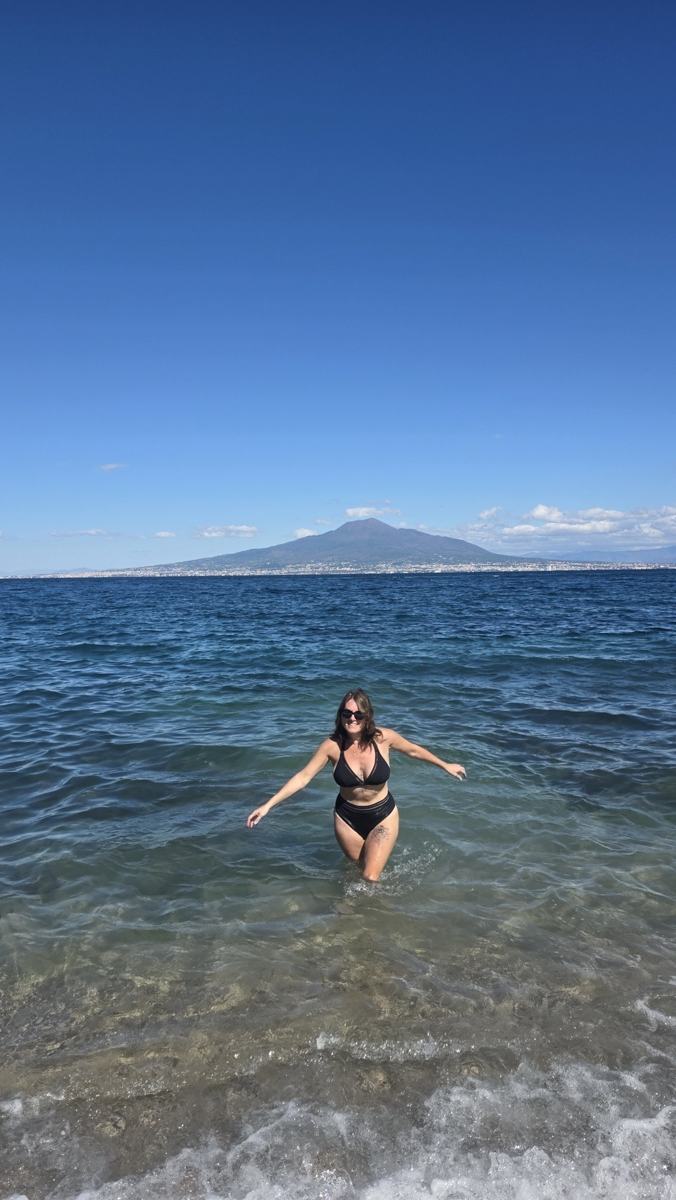
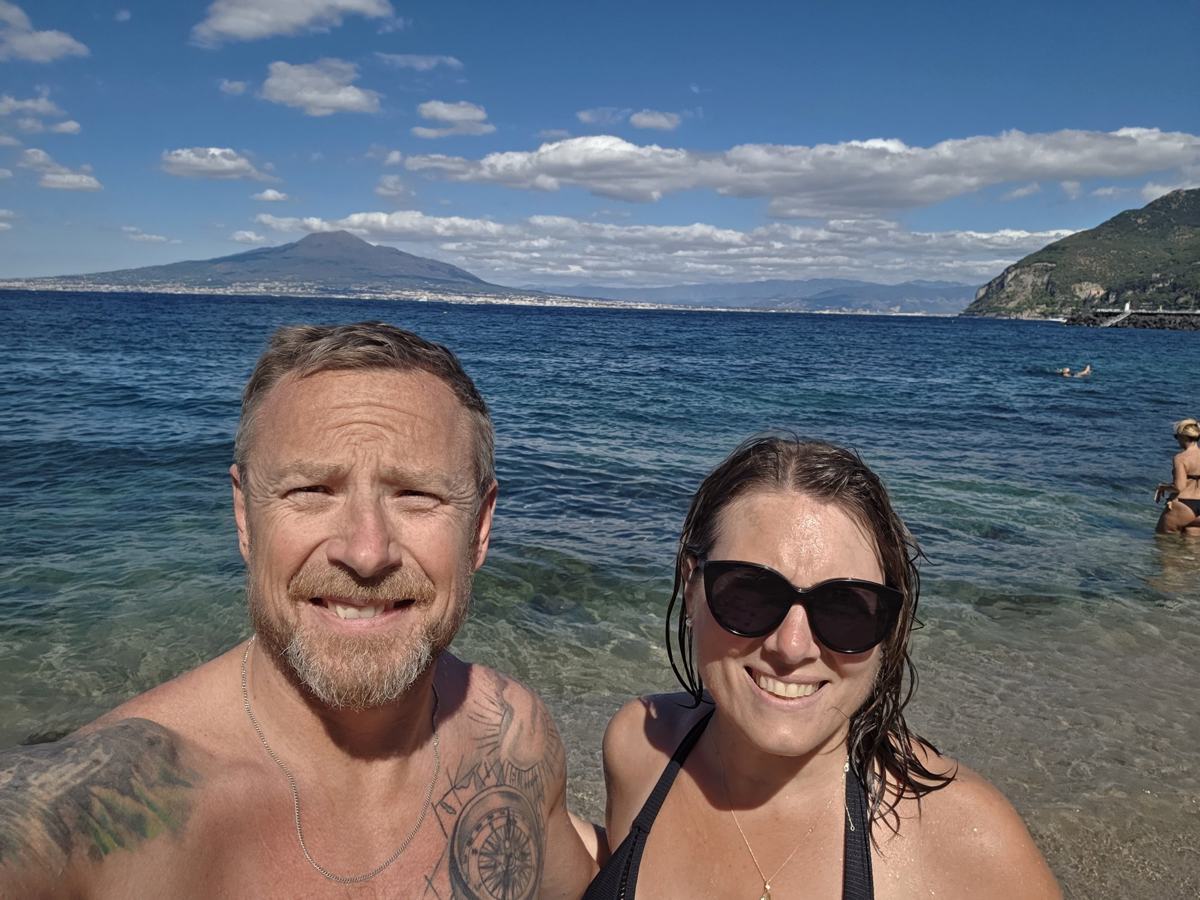
Jenn in the water during our Seiano beach stop, with Vesuvius across the bay.
One more beach moment before continuing toward Naples.
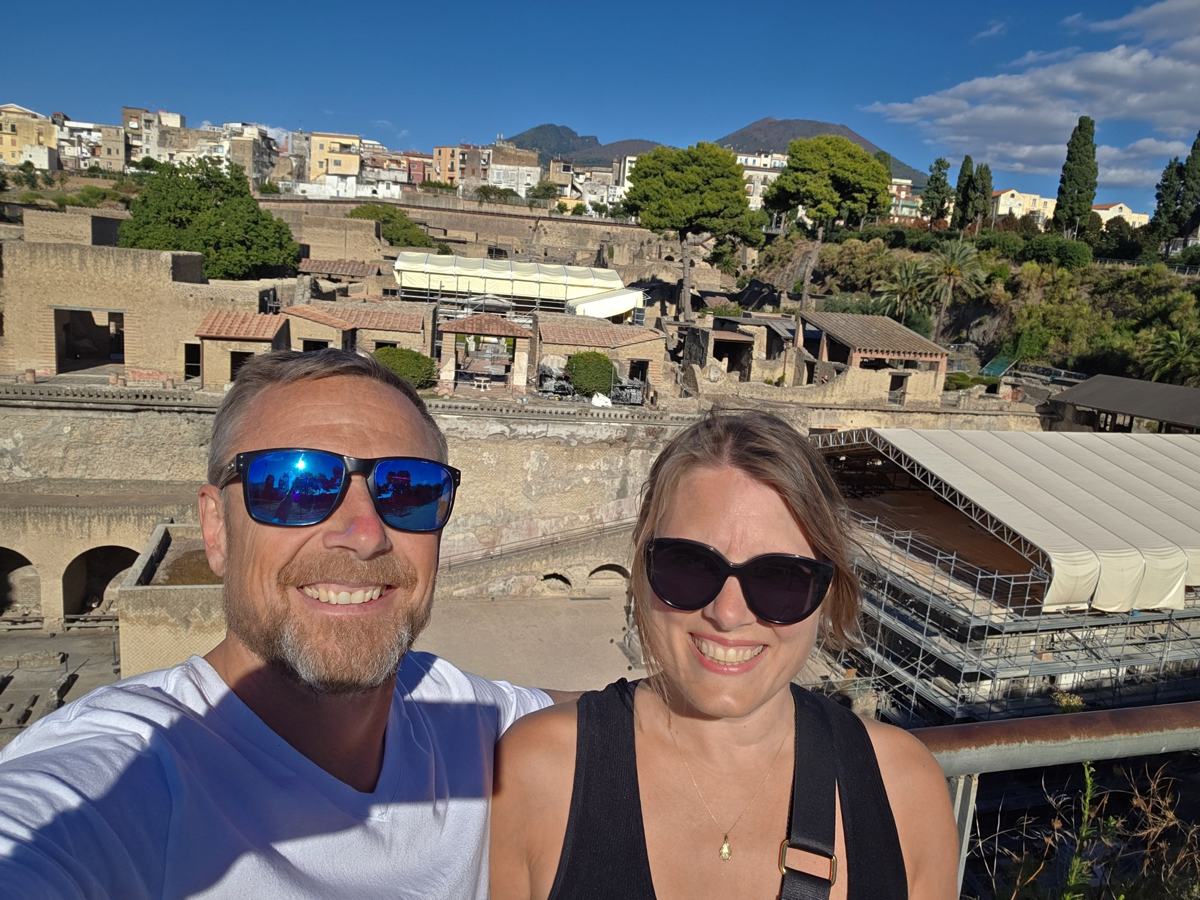
Together above the excavations at Herculaneum.
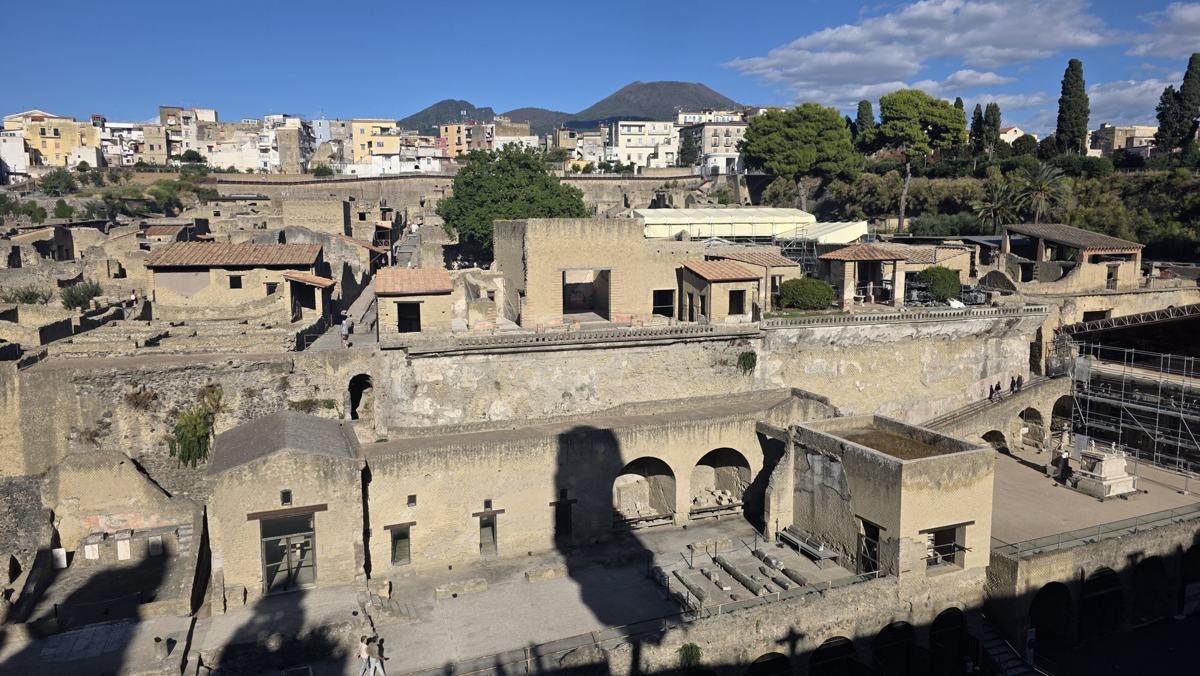
Ancient Herculaneum below the modern town.
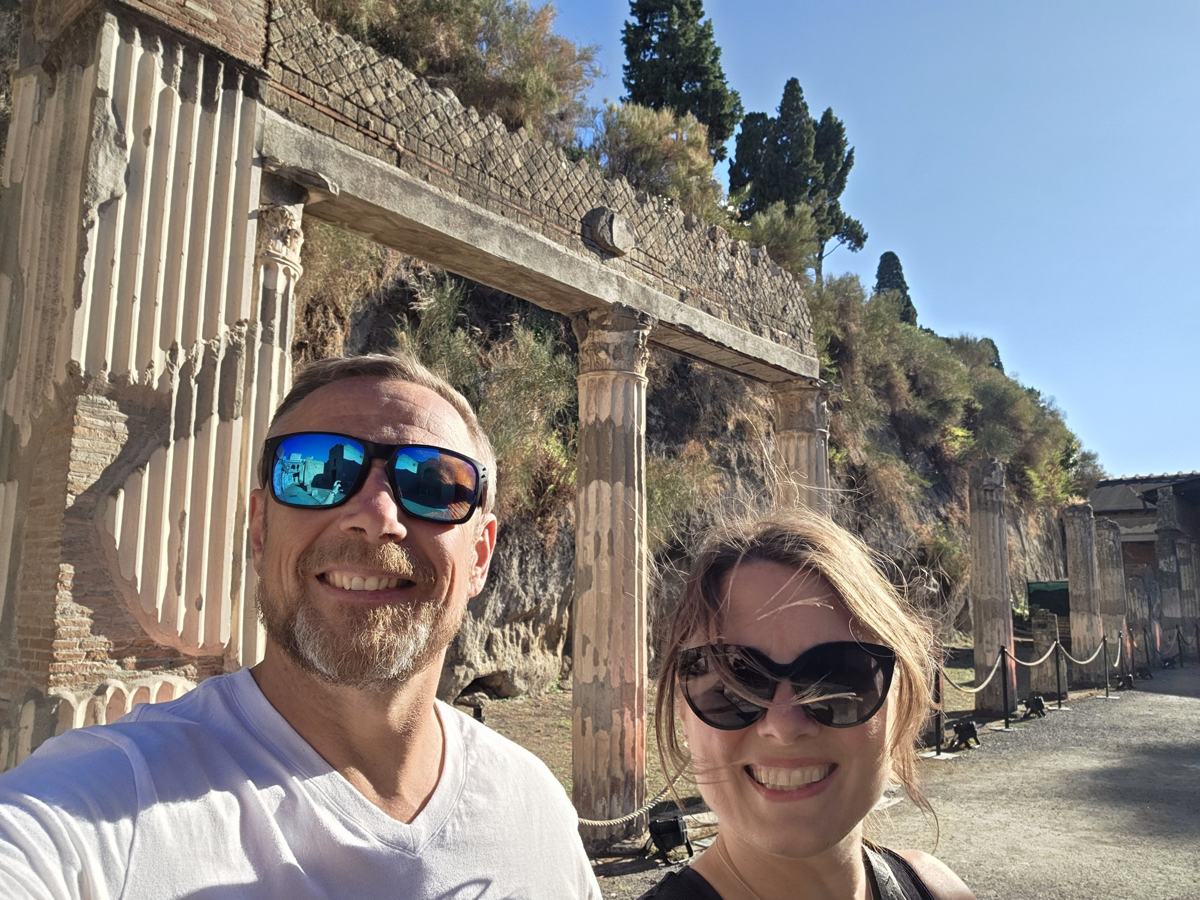
Exploring the preserved streets and columns at Herculaneum.
Sicily began in the wrong airport
Our flight from Naples was meant to take us to Catania. Because of the Mount Etna eruption, it diverted to Trapani. Then came the four-hour bus journey across Sicily to Catania.
It was not the arrival we planned. It also explains why the following morning started later, after some much-needed rest. The sensible response to a disrupted travel day is not always to recover the original schedule. Sometimes it is to sleep and begin again with fewer expectations.
This is the practical lesson we would pass on to anyone flying into Catania: leave the arrival day flexible. Give the accommodation a reliable way to contact you, and keep a change of clothes, charging equipment and essential medication in your cabin bag. If your flight is disrupted, speak to the airline about the actual onward arrangements before making a separate transfer purchase.
Do not book a time-critical tour immediately after arrival. The volcano is a major reason to visit eastern Sicily, and its activity can also affect transport. Those two facts belong together in the planning.
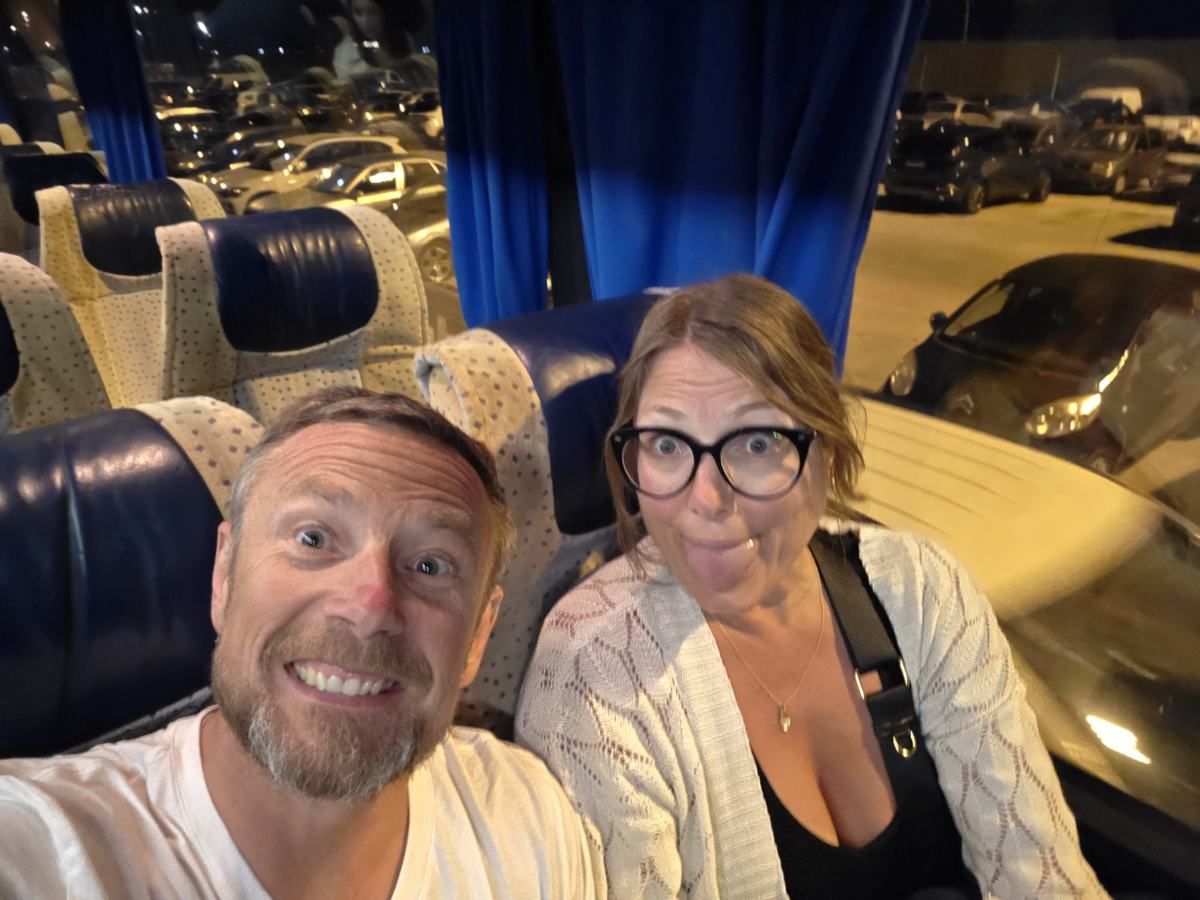
On the bus after our flight diversion to Trapani.
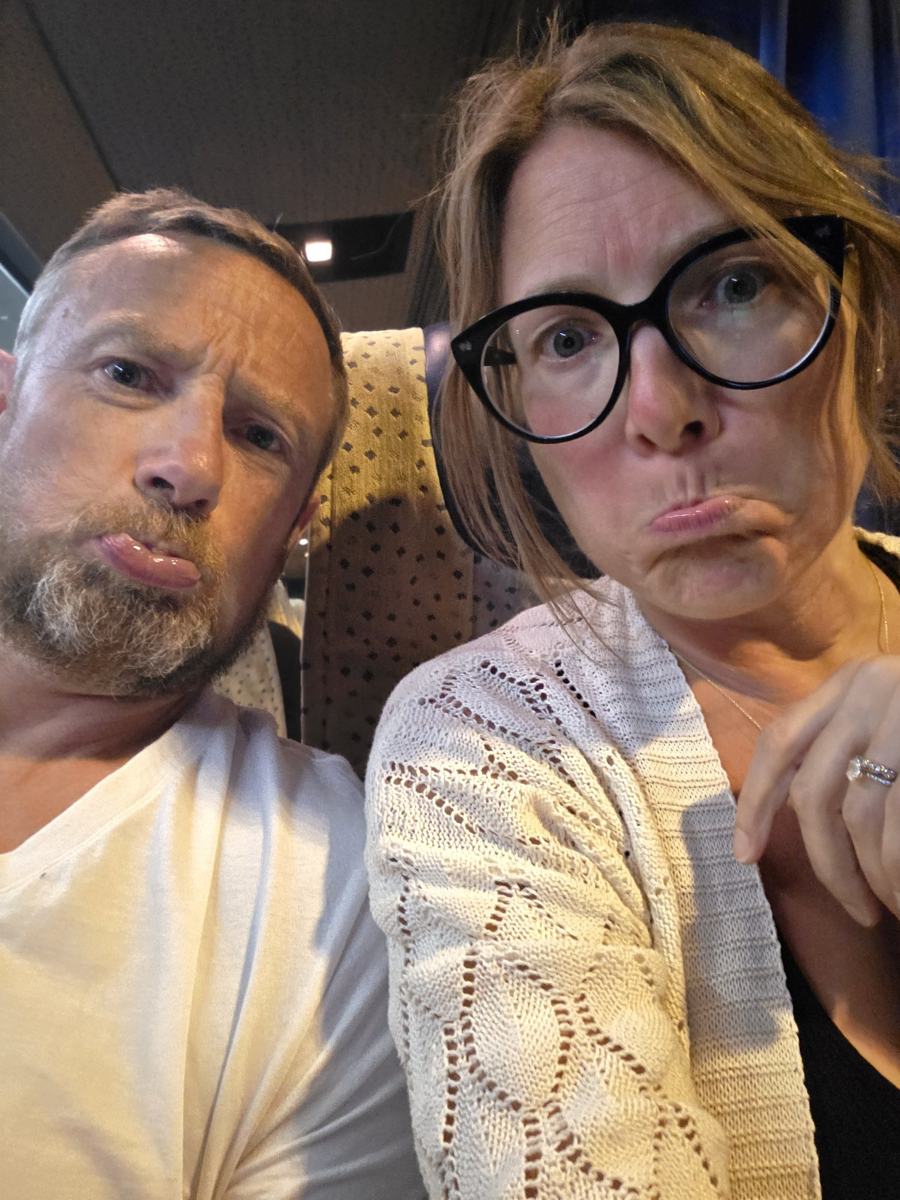
Our expressions say plenty about the unexpected transfer.
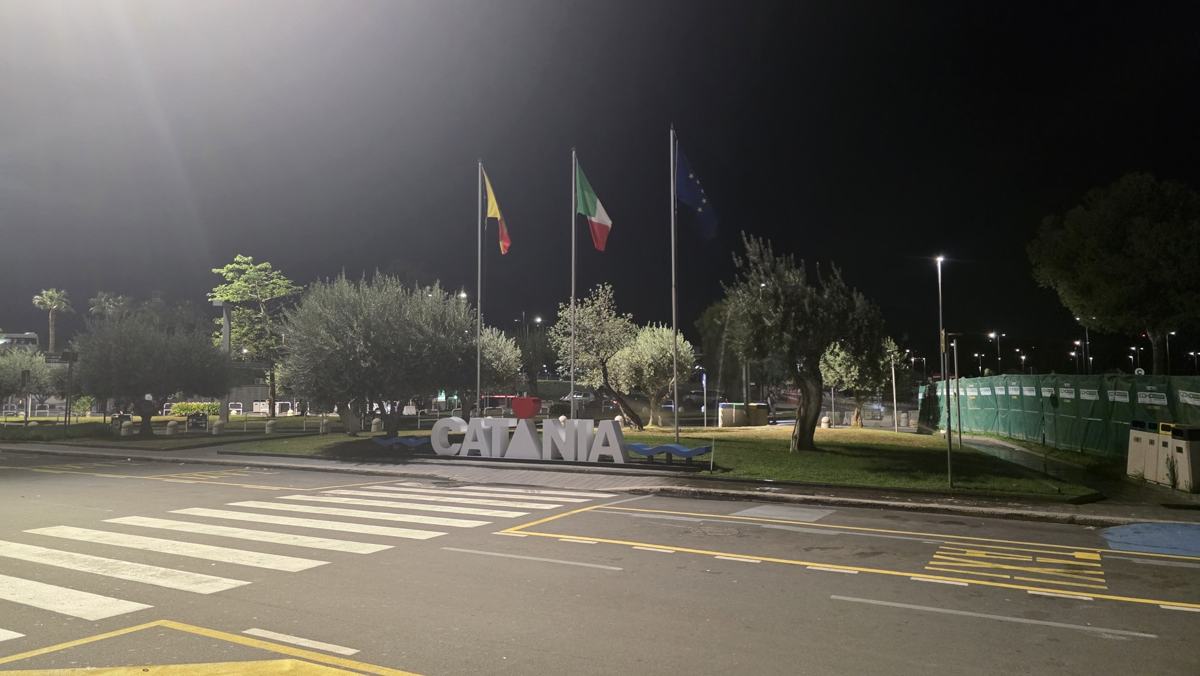
Finally in Catania, well into the night.
Catania after a late start
Catania brought the trip back to city streets: Teatro Massimo Bellini, the ancient theatre, Castello Ursino, the cathedral, umbrella-covered streets, cafés, shops, architecture and the buskers festival we encountered during our visit.
After the unexpected journey across the island, this was a good chapter to approach on foot. The city gave us details to notice without needing a long drive to every experience. Its street life belongs beside the monuments in the photo selection.
Teatro Massimo Bellini deserves its own space in the story, but distinguish seeing the building from attending a performance or taking an interior tour. Check the official programme if either is part of your plan. The same principle applies to the festival: it was part of our experience on those dates, not an event readers should assume they will find every day.
Our photographs also capture the ancient theatre, with its stone seating tucked into the modern city. This was a separate stop from Teatro Massimo Bellini: two very different theatre settings within the same Catania chapter.
For food, Catania is a place to explore Sicilian flavours. Put pasta alla Norma, arancini, granita with brioche and seasonal seafood on your list of things to look for. We would build a day around the city and a few food stops, rather than trying to add an Etna excursion to the same already-busy schedule.
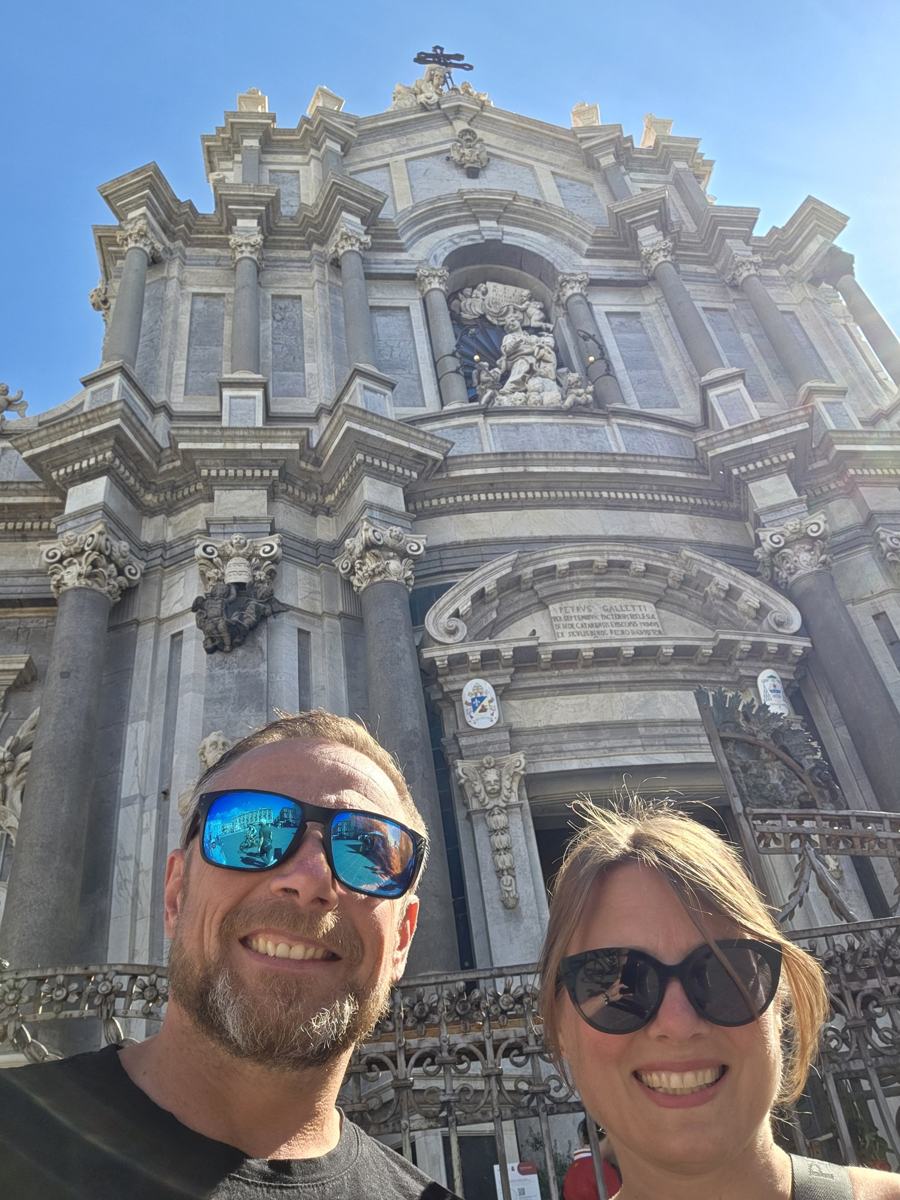
Together outside Catania Cathedral.
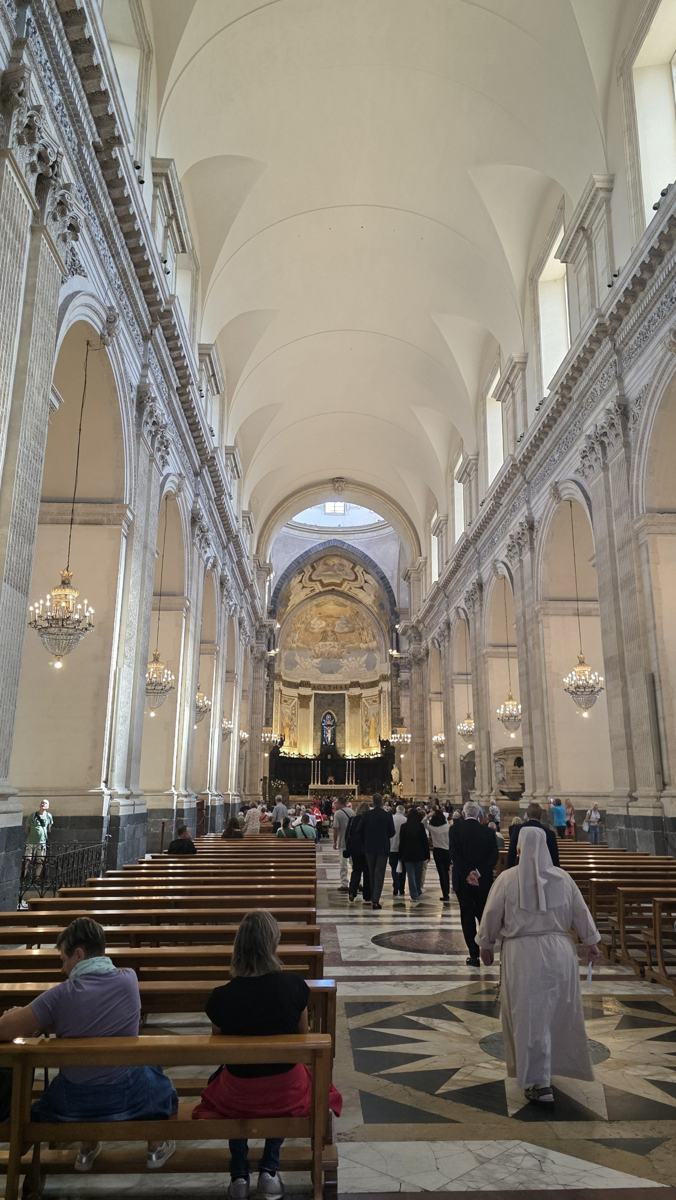
Inside the cathedral.
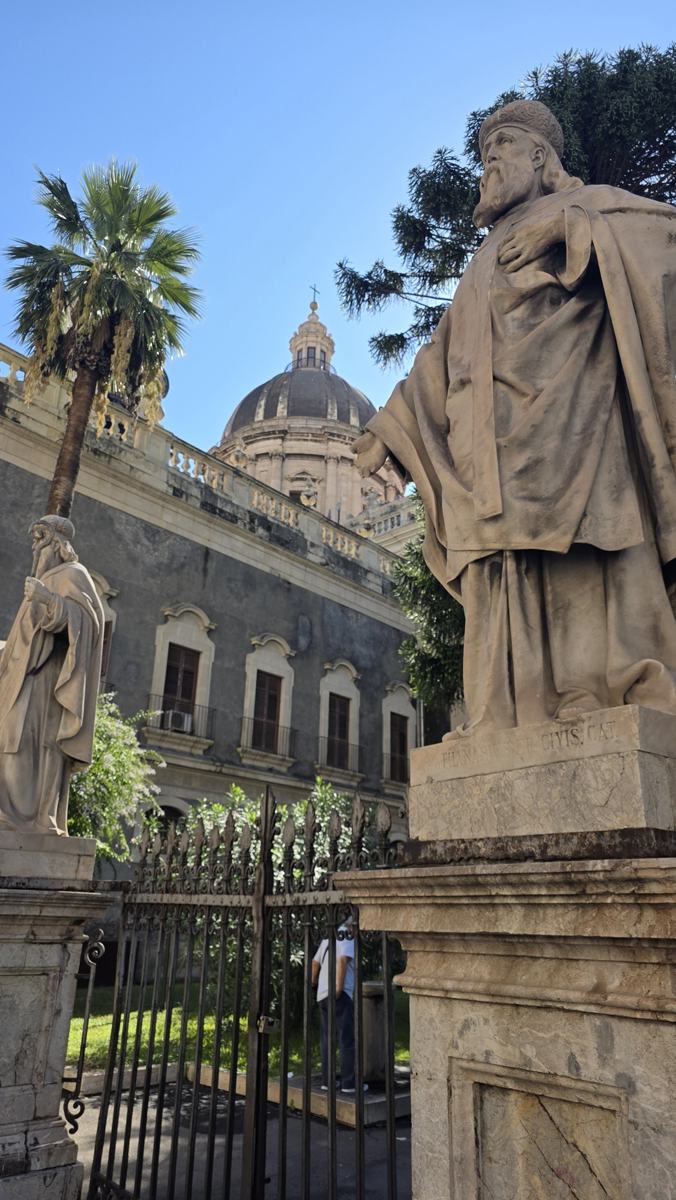
Sculpture and architecture beside the cathedral.
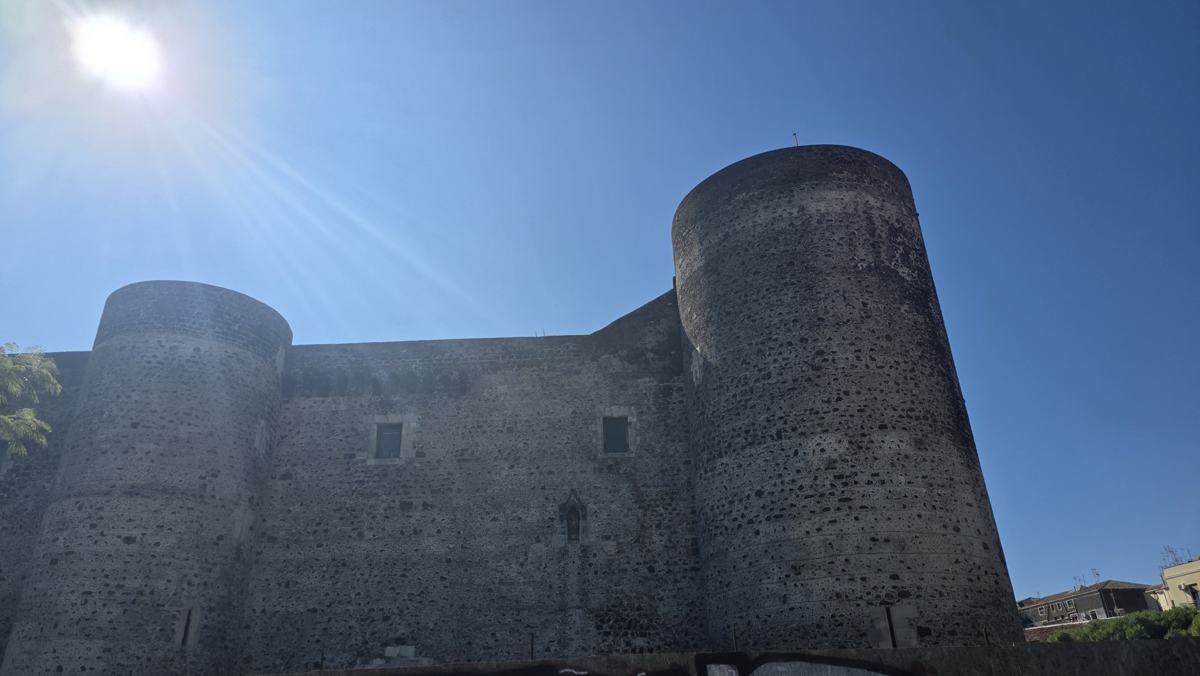
Castello Ursino in the morning sun.
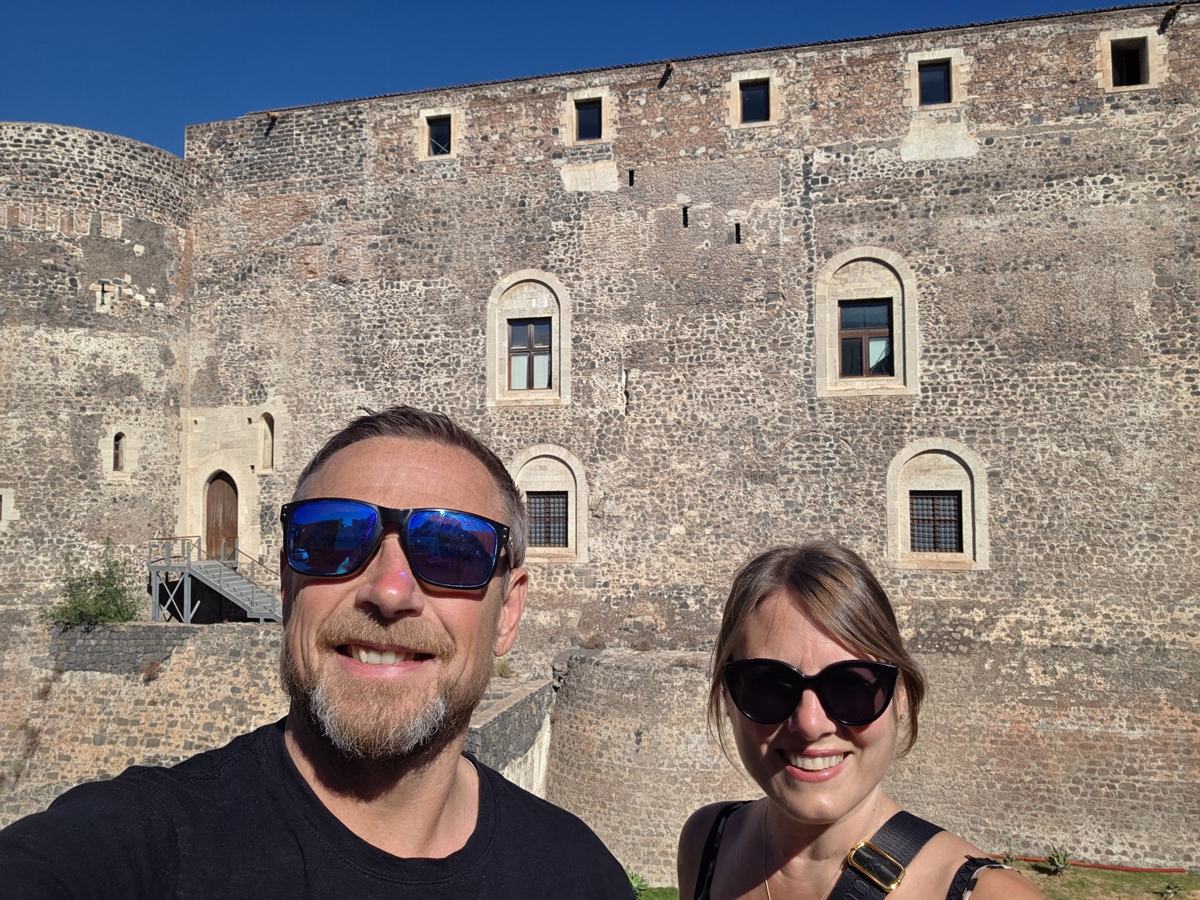
Together outside Castello Ursino.
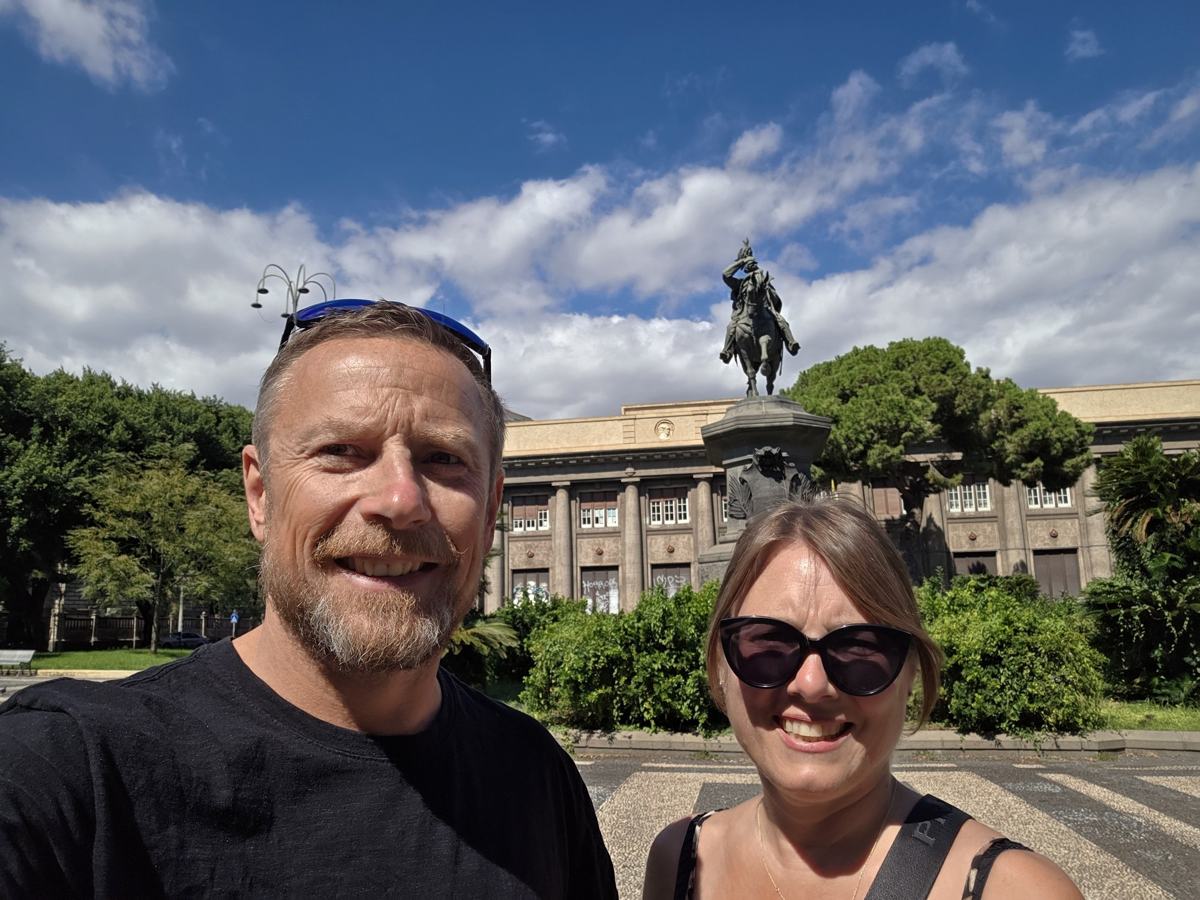
A pause beside a monument while exploring Catania.
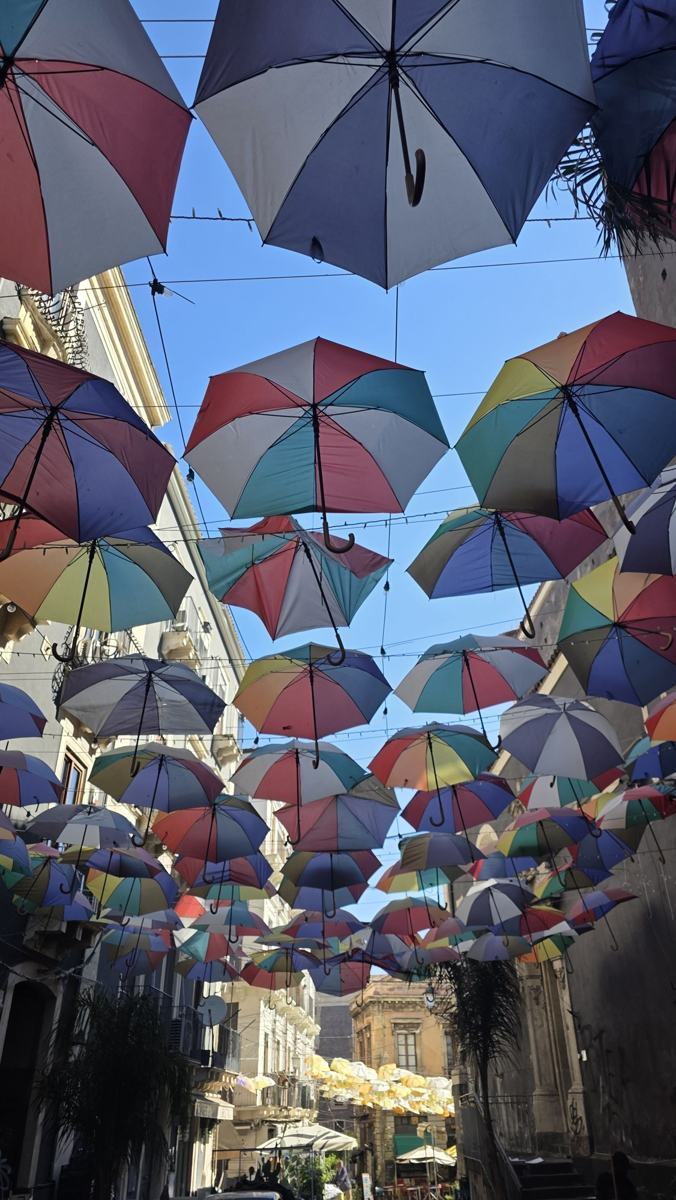
Colourful umbrellas above a Catania street.
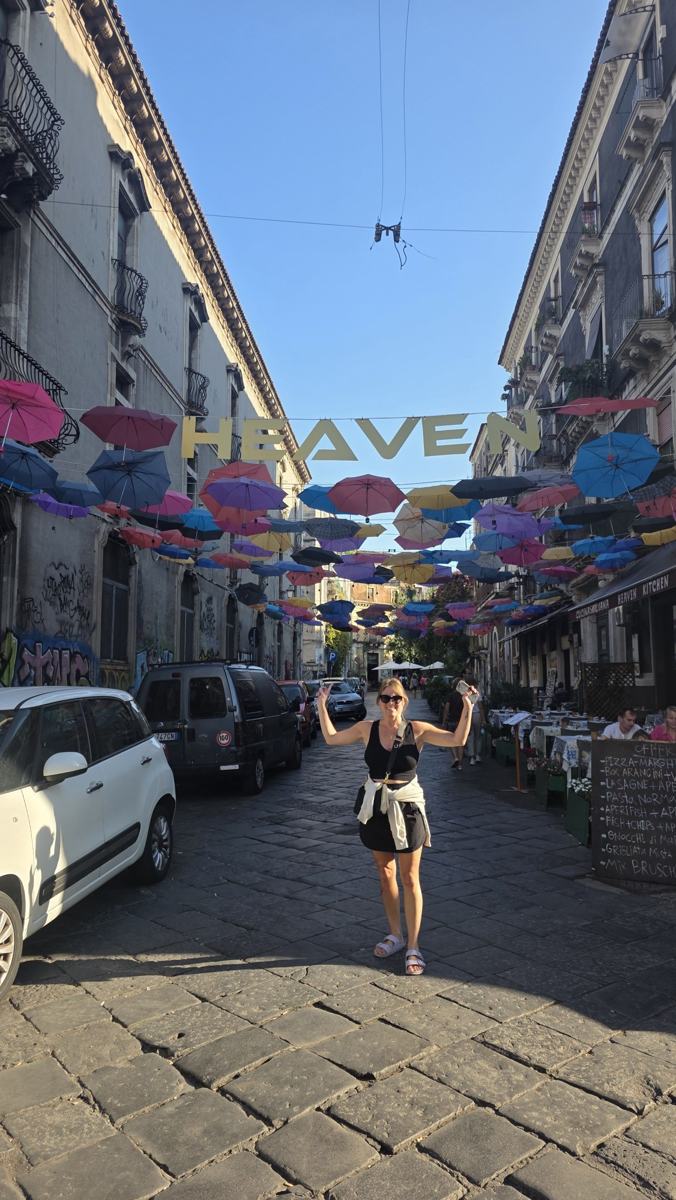
Jenn beneath the umbrellas.
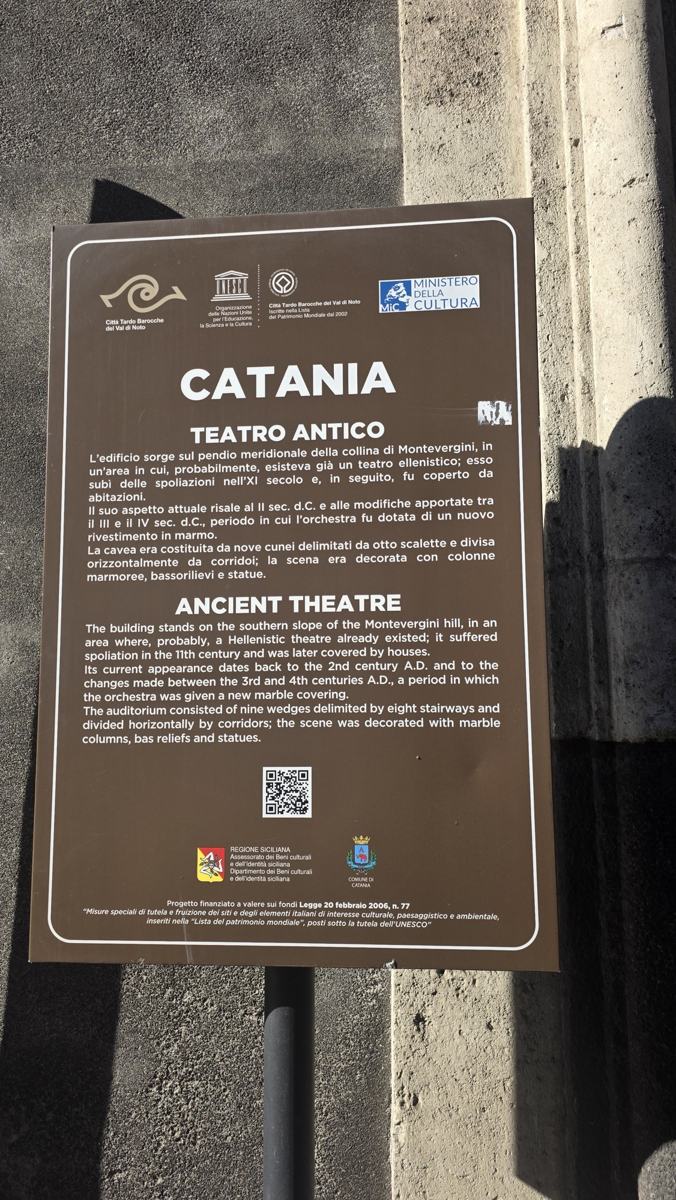
The entrance sign identifies Catania’s ancient theatre.
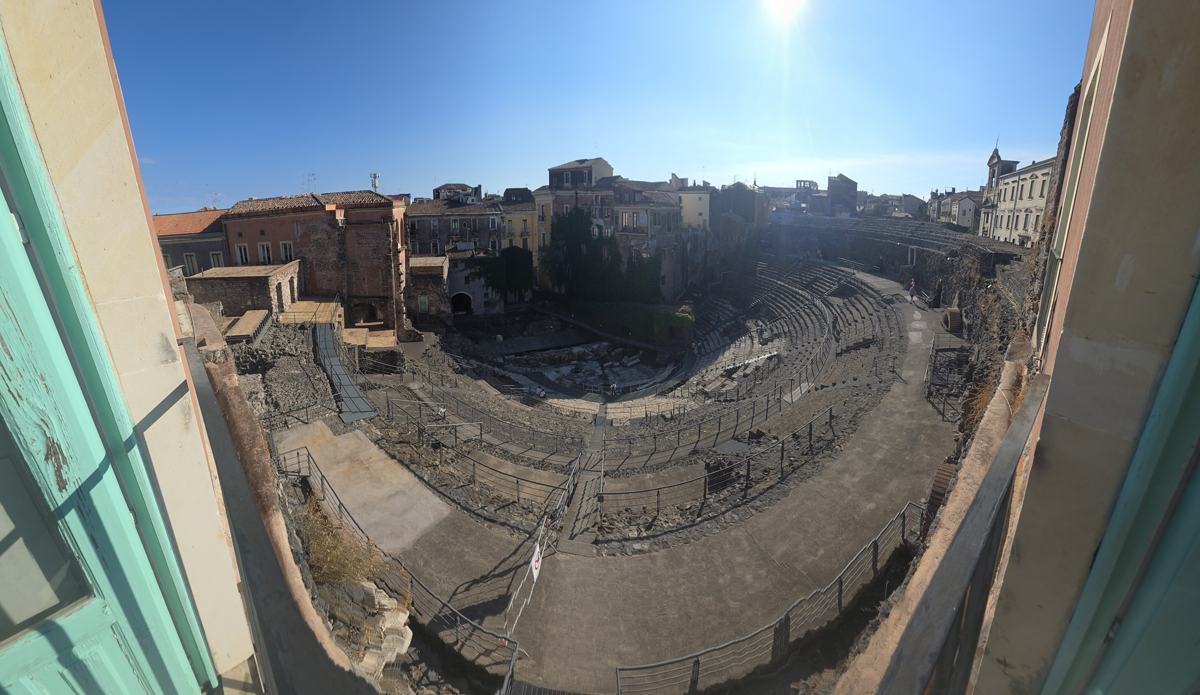
The ancient theatre framed by the surrounding city.
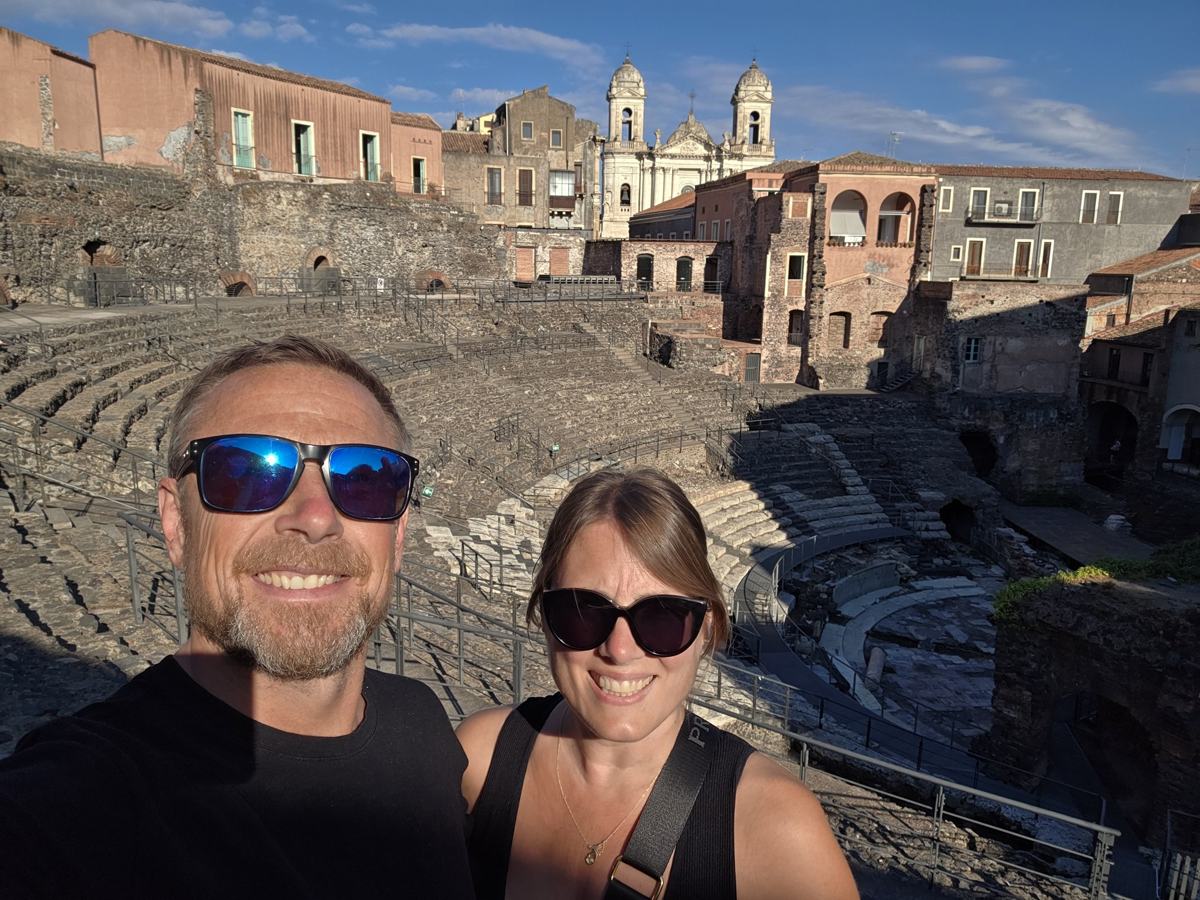
Together at the ancient theatre in Catania.
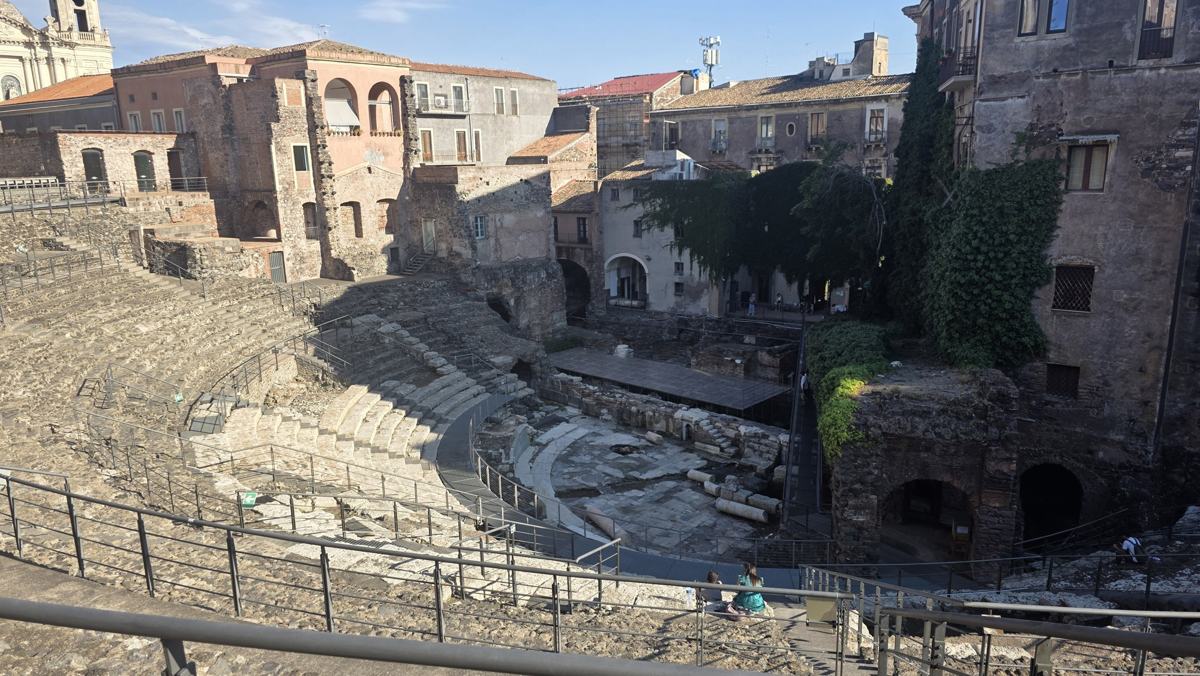
Stone seating and the stage area of the ancient theatre.
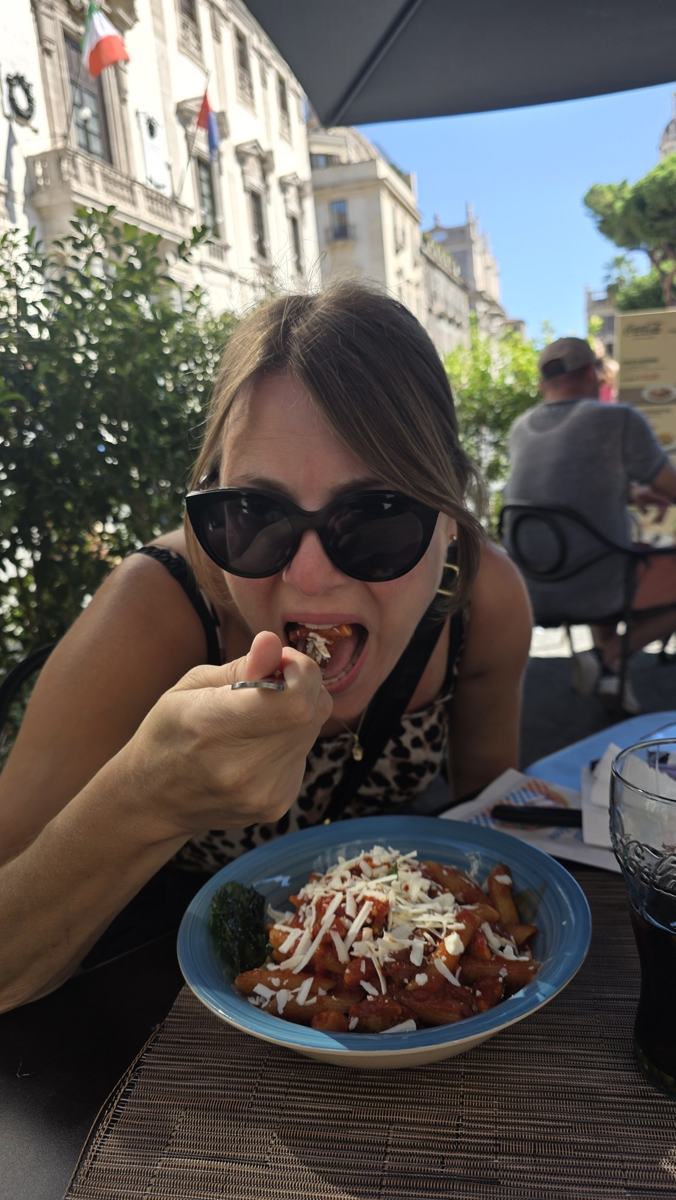
Jenn enjoying a pasta stop in Catania.
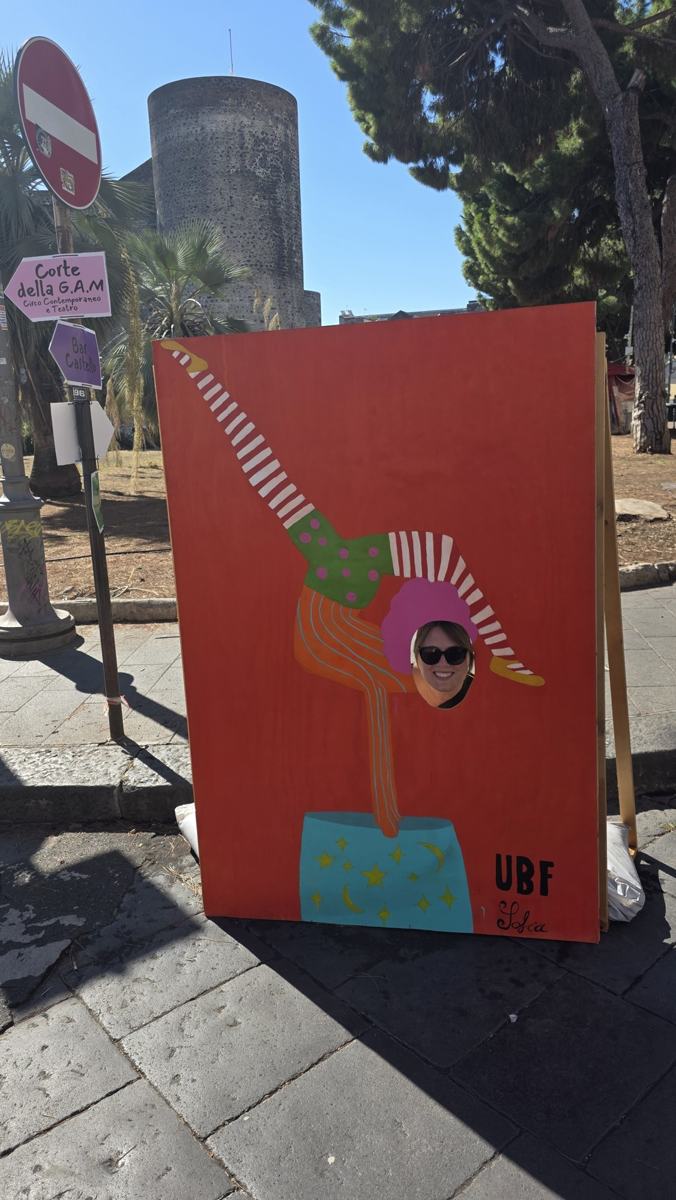
A playful festival photo stop beside Castello Ursino.
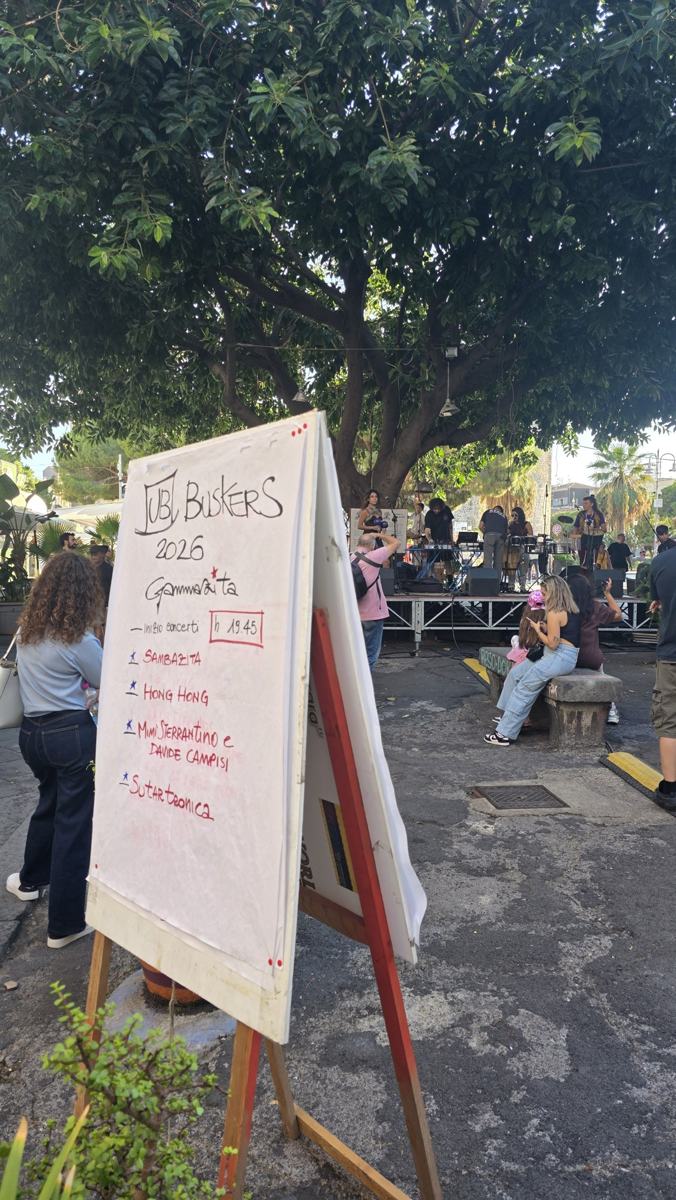
The buskers festival programme during our visit.
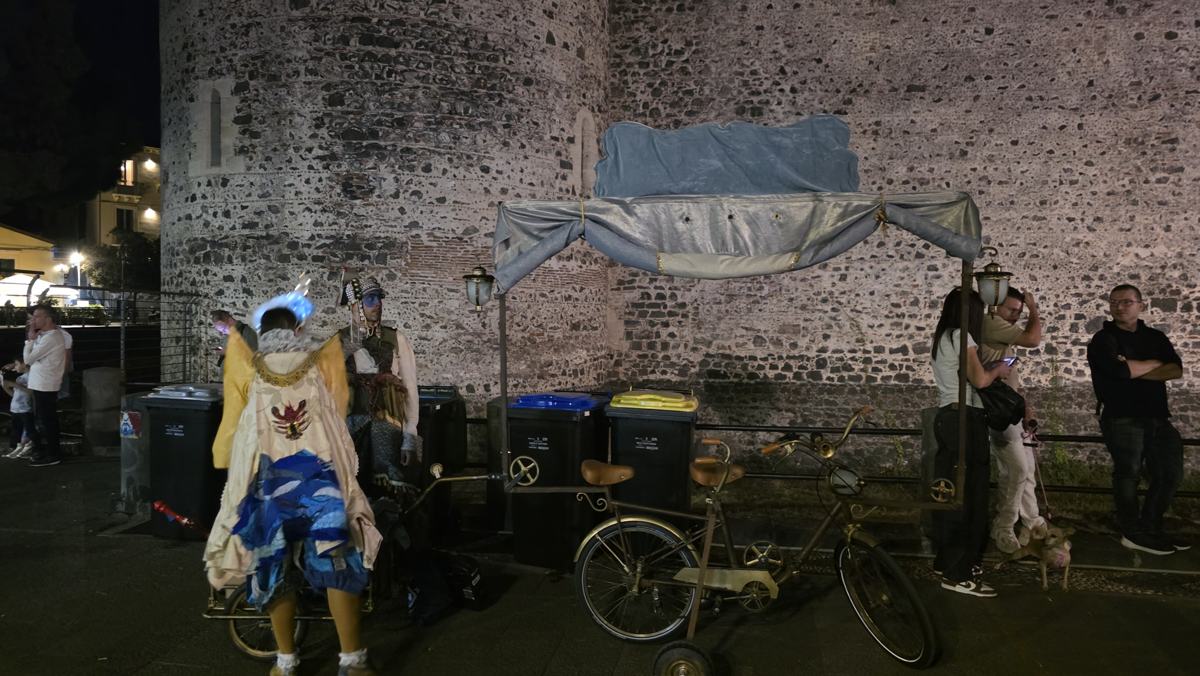
A performer beside the castle after dark.
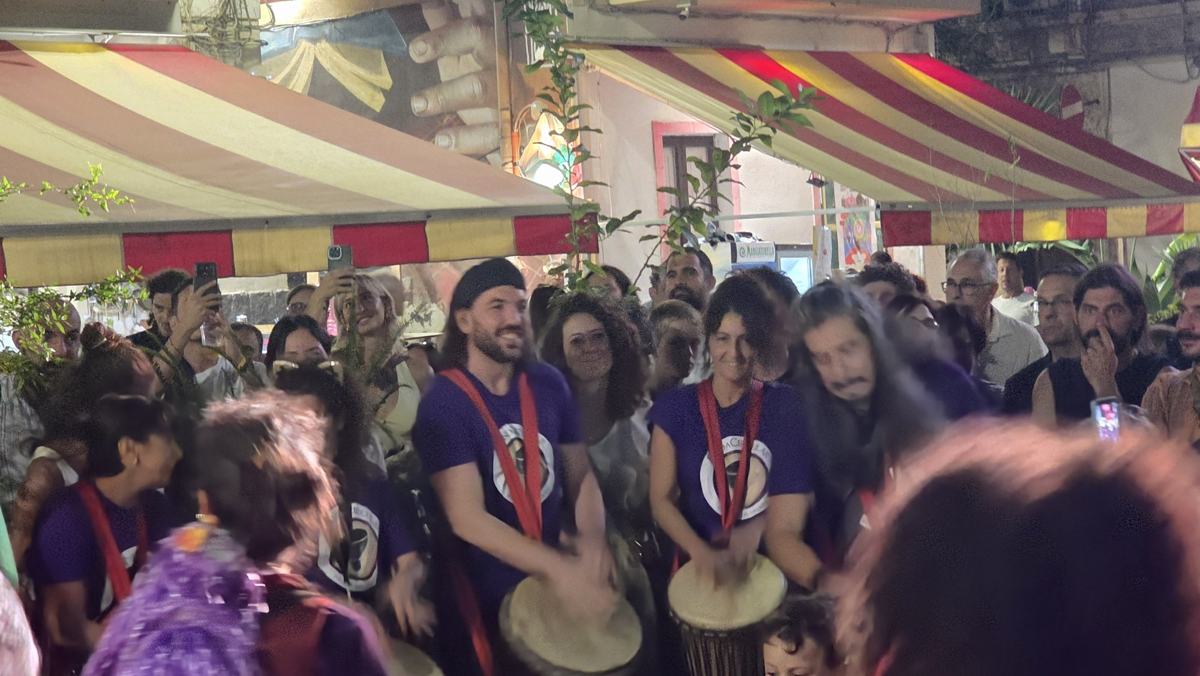
Drummers bringing the street to life.
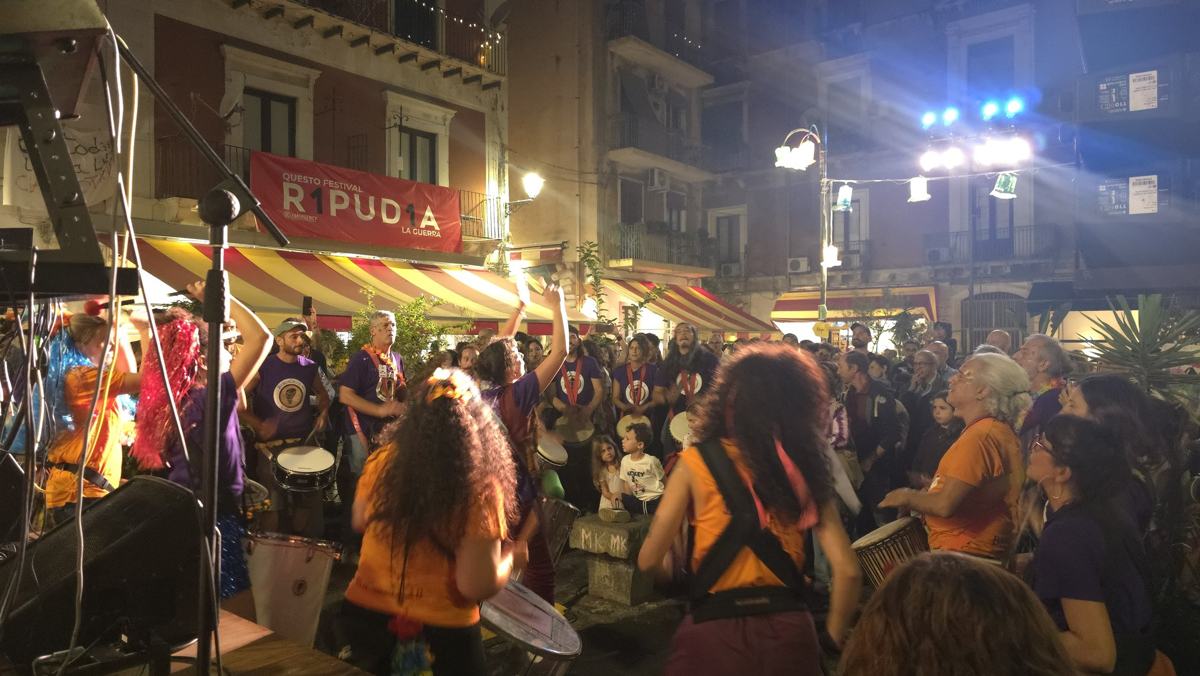
The evening crowd gathering around the music.
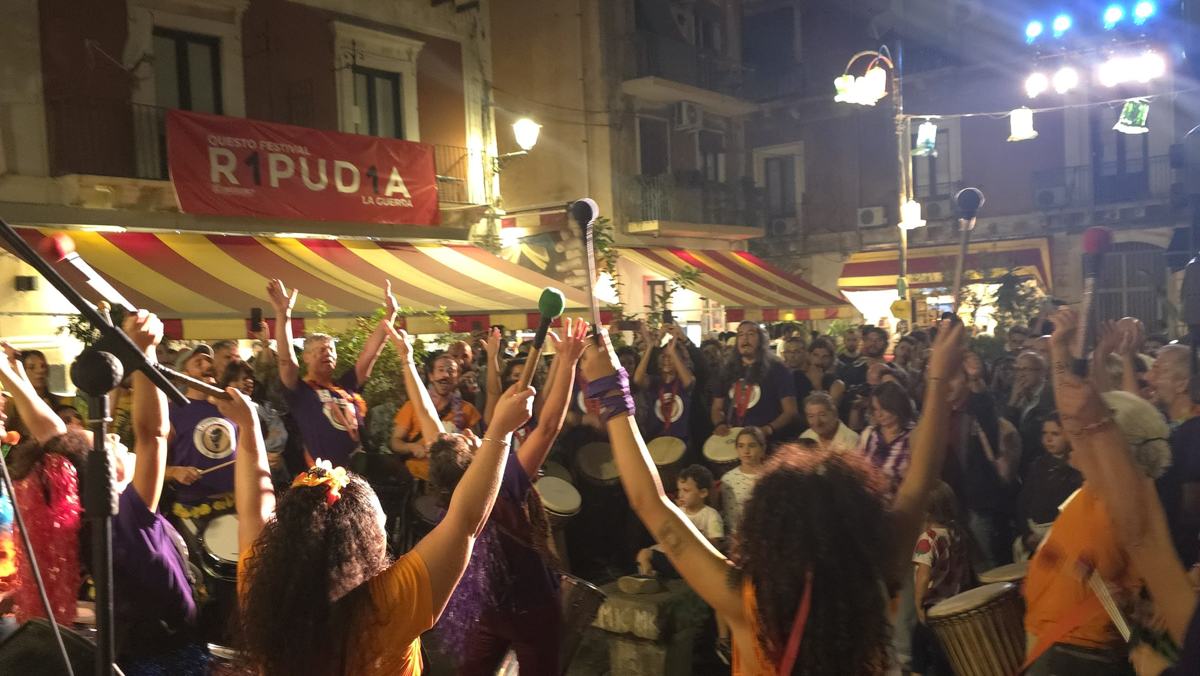
Music and a lively crowd at the festival.
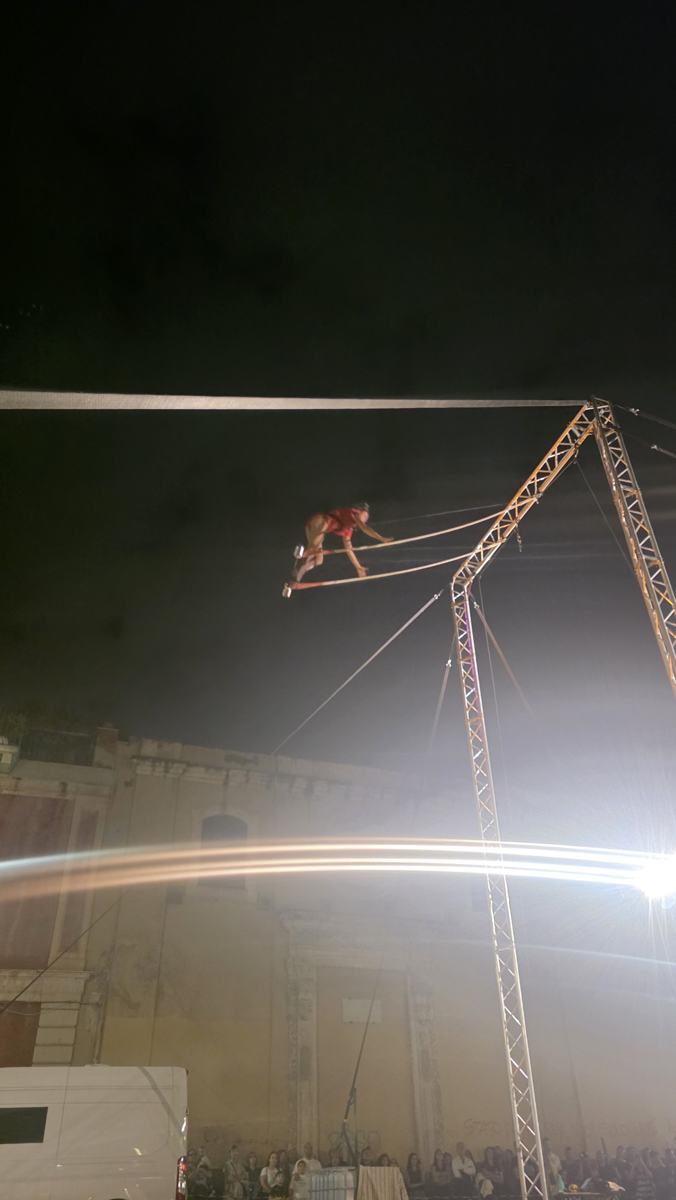
An aerial performance against the night sky.
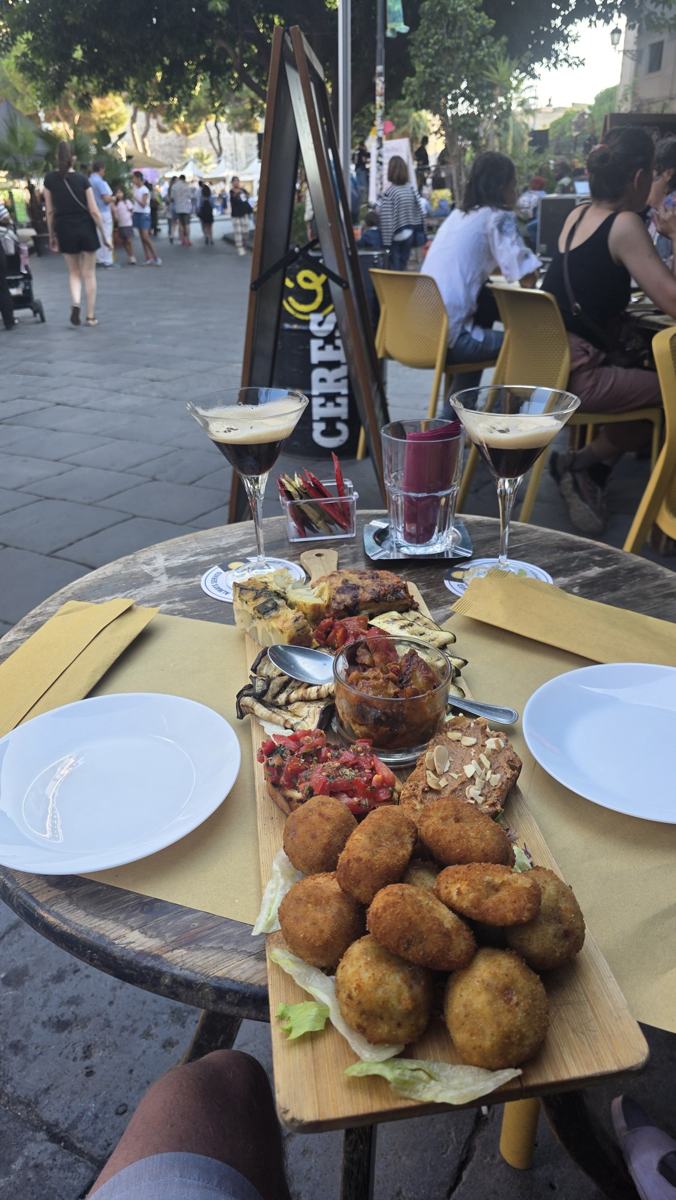
A sharing board and drinks during our Catania afternoon.
Mount Etna and the wine country around it
The volcano changes the scale of the trip
Our Mount Etna excursion gave this journey a landscape completely different from Rome, Ischia or the Amalfi Coast. The volcanic terrain is a reason to pause the city-and-beach itinerary and make room for a mountain day.
Choose the excursion by its actual route and demands, not simply a headline promising an Etna visit. Ask about starting point, walking, transport, clothing and the highest area included. A lower-crater visit and a strenuous high-altitude itinerary are different experiences.
Etna access changes with conditions and official restrictions. Confirm the plan with a qualified local operator shortly before departure and follow current instructions. Do not assume that yesterday's route is open today, or that seeing a dramatic eruption online means visitors can approach it. [11]
Pack closed shoes with grip, a warm layer and a windproof outer layer even if Catania feels like beach weather. Sunglasses and sun protection still matter. Check what your tour supplies before carrying duplicate equipment.
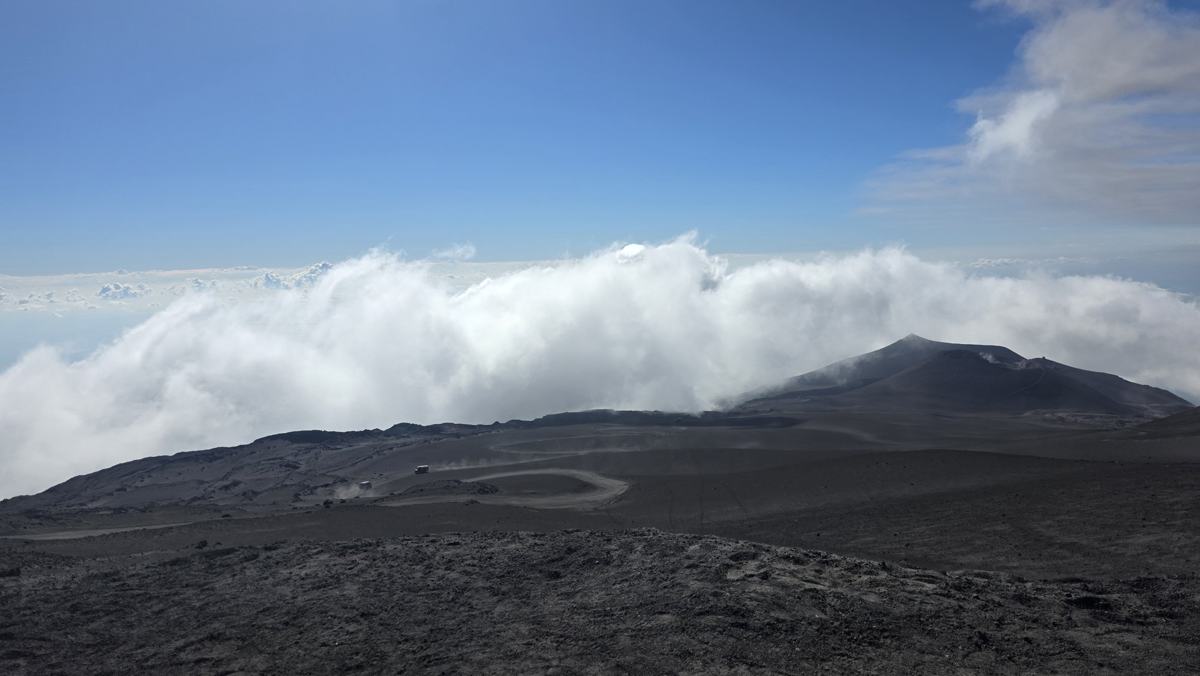
Etna’s volcanic landscape above the clouds.
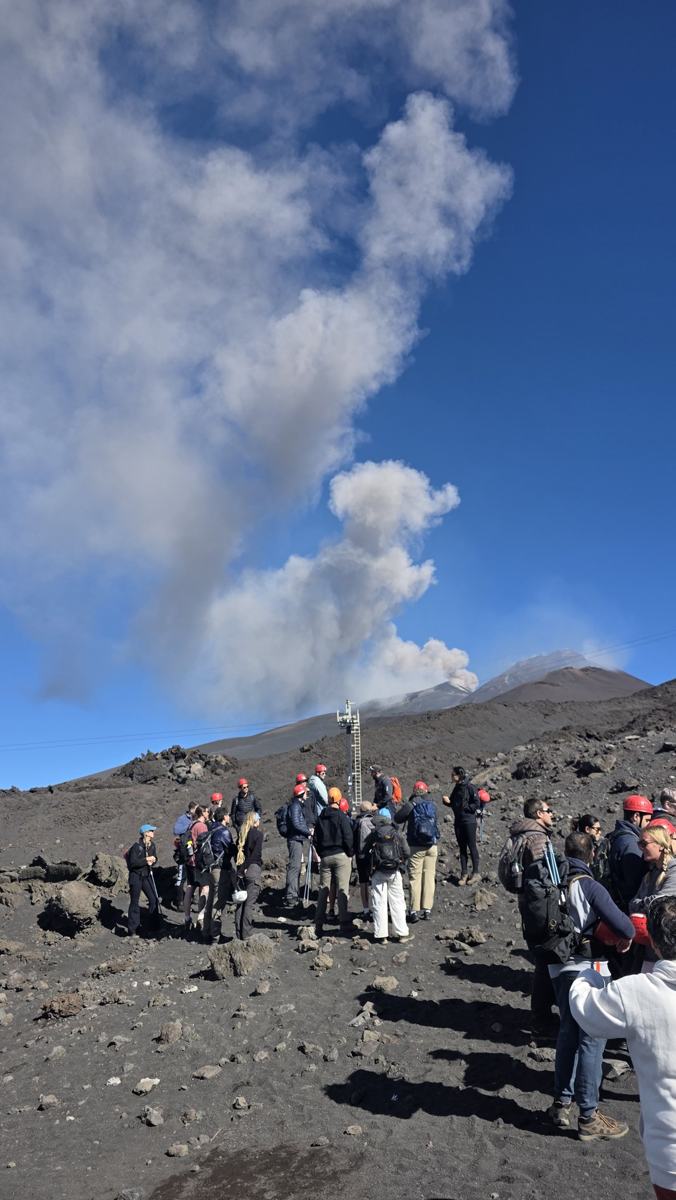
Visitors give a sense of scale to the volcanic landscape.
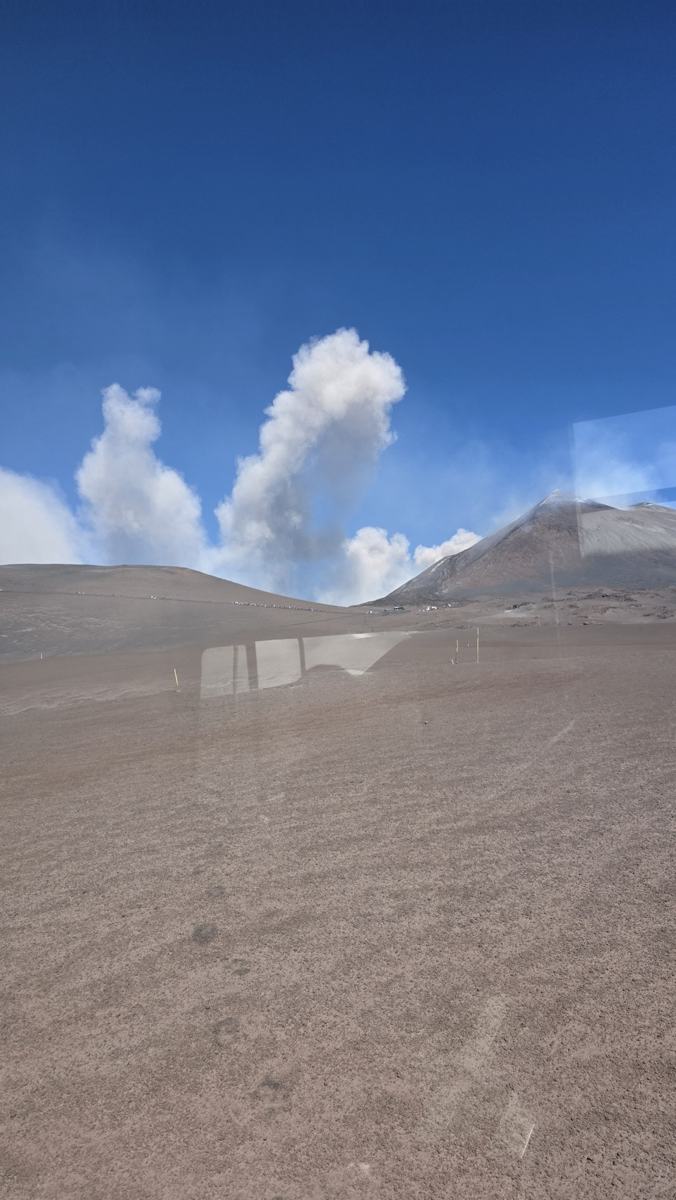
A plume above the slopes, photographed during our excursion.
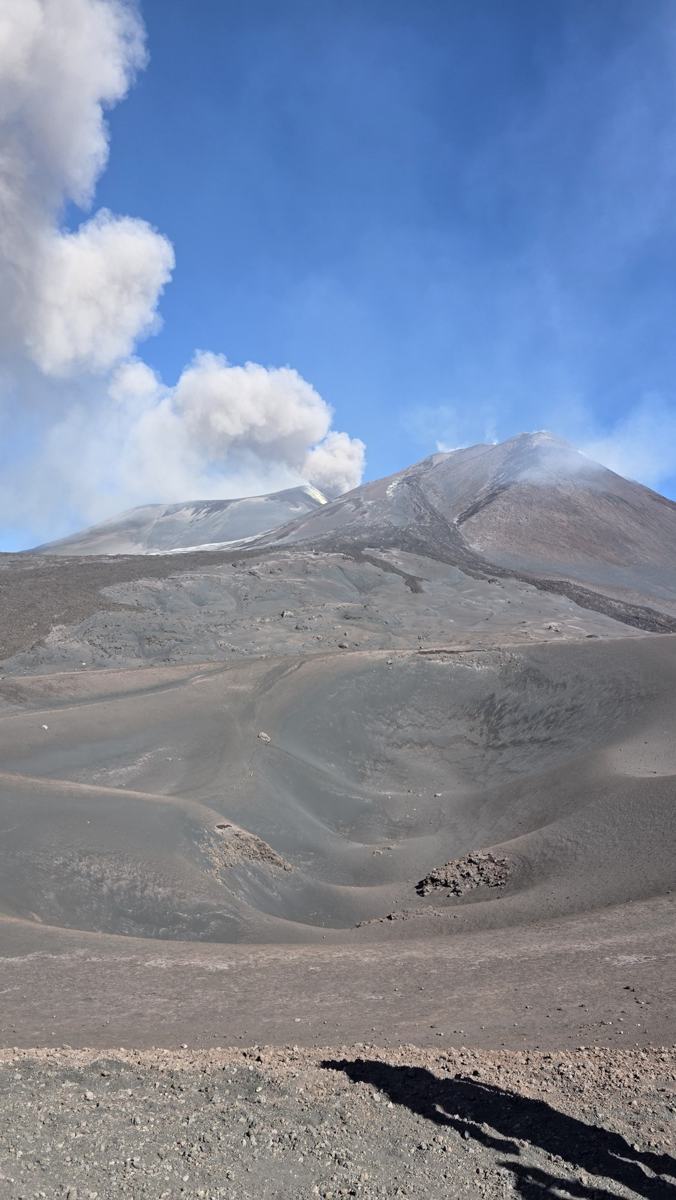
Dark volcanic ground beneath a blue sky.
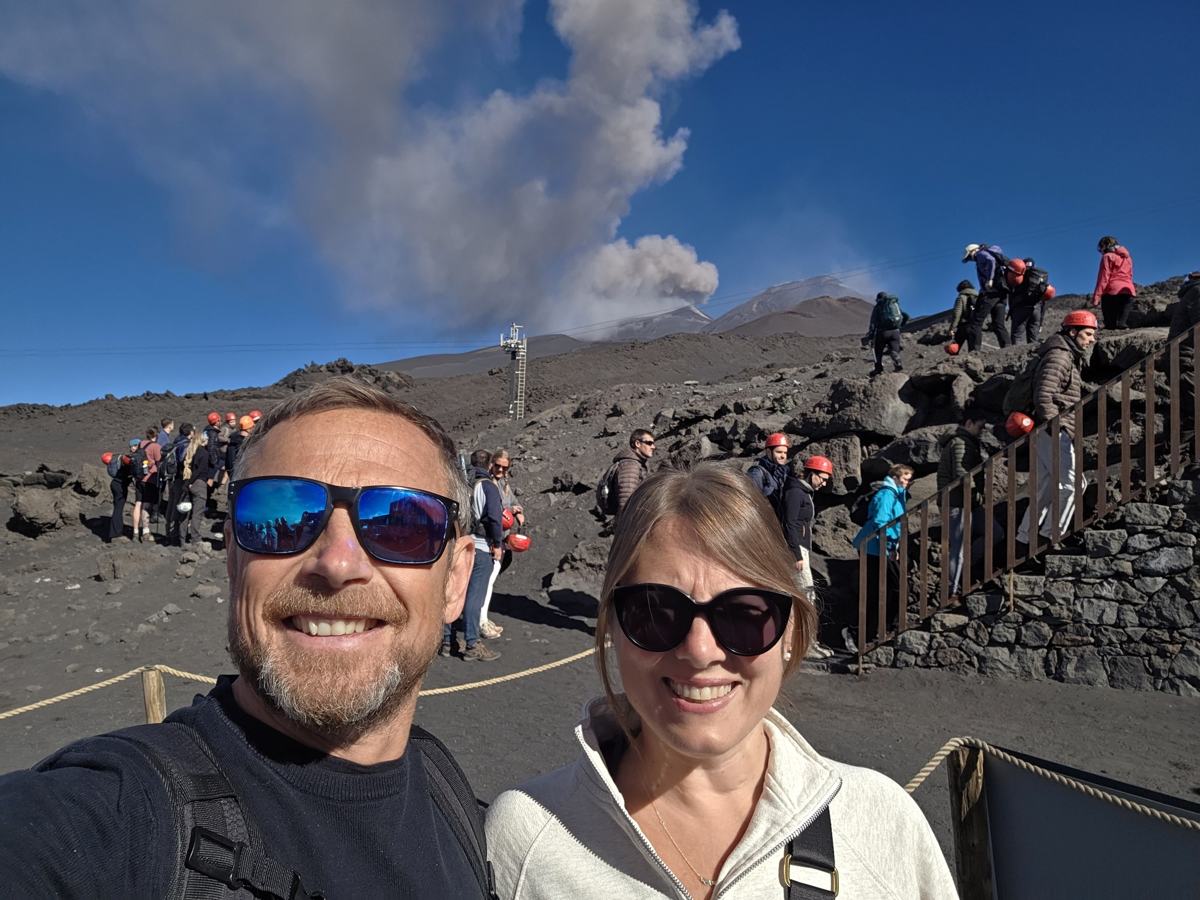
Together on our Etna excursion.
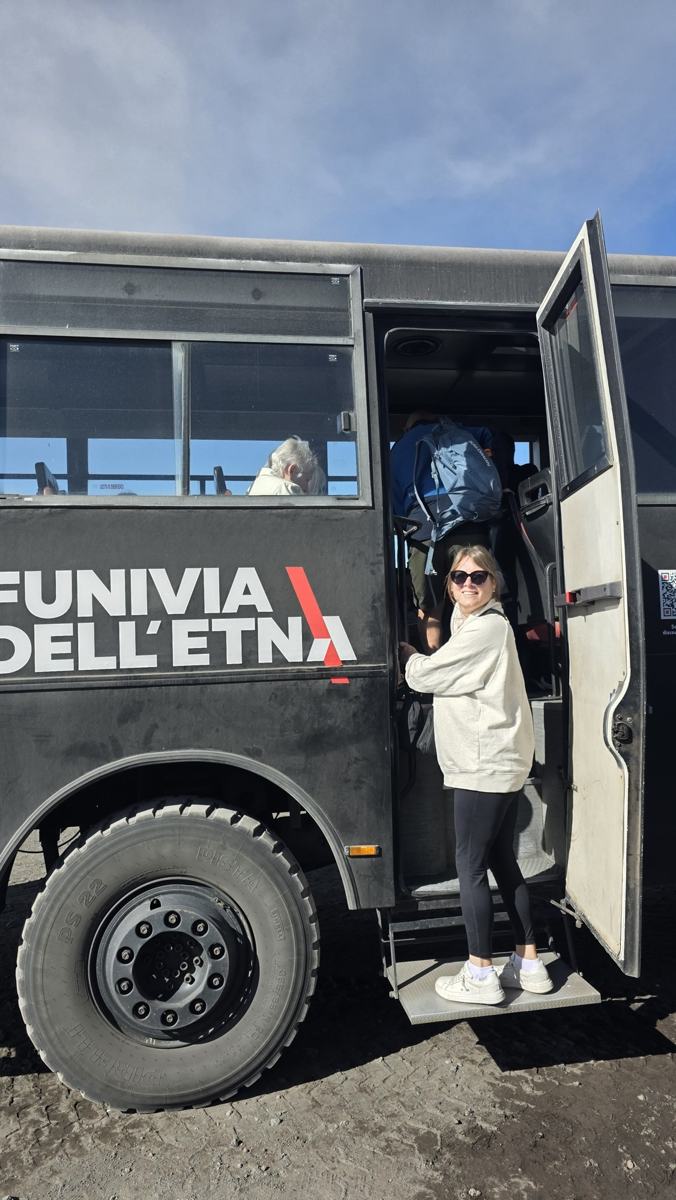
Jenn boarding the excursion vehicle.
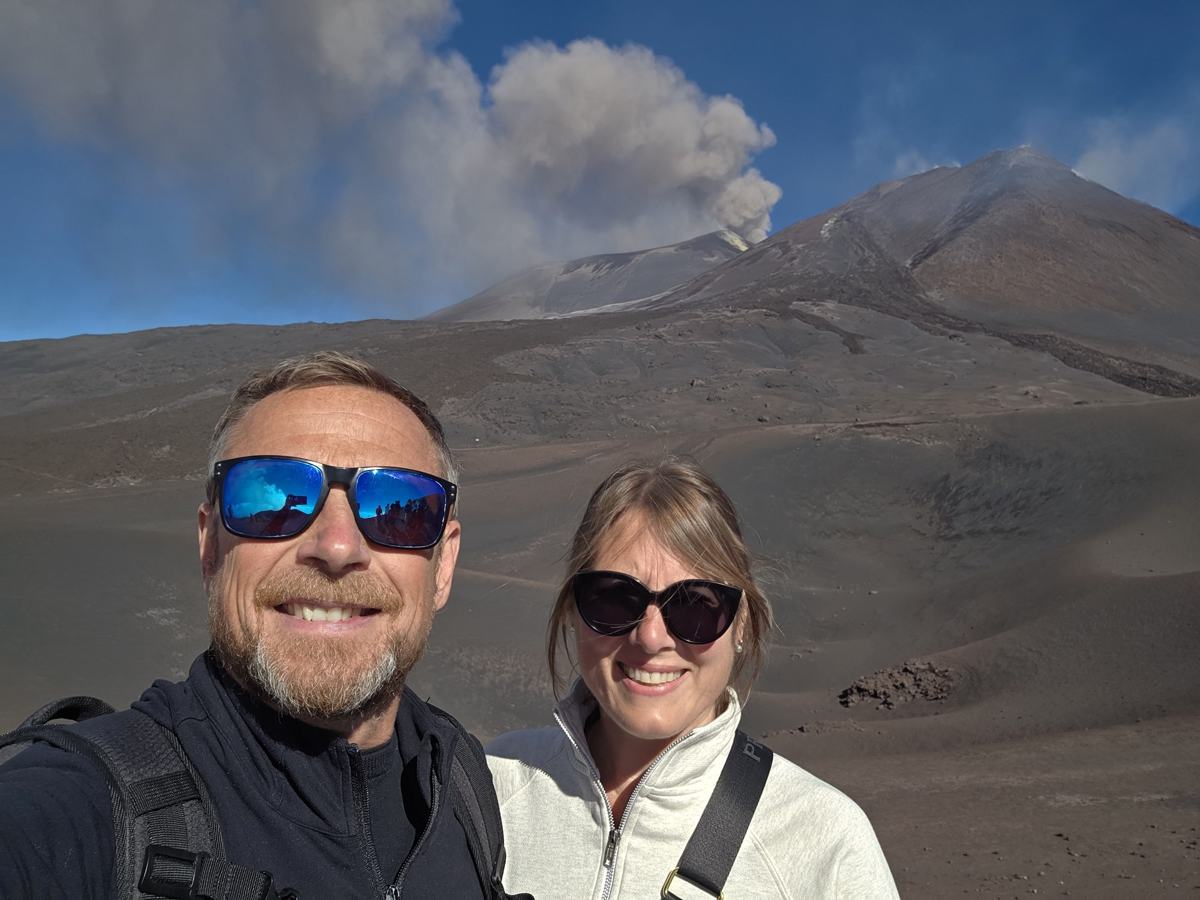
A mountain-day portrait with Etna behind us.
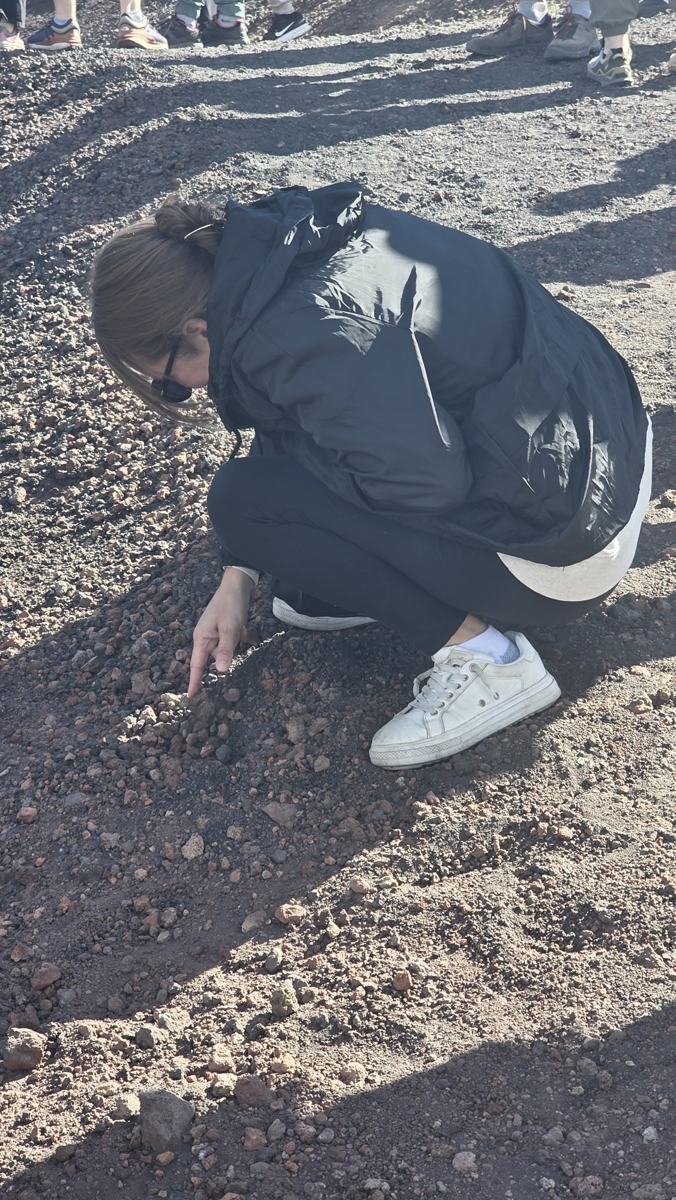
Jenn looking closely at the volcanic ground.
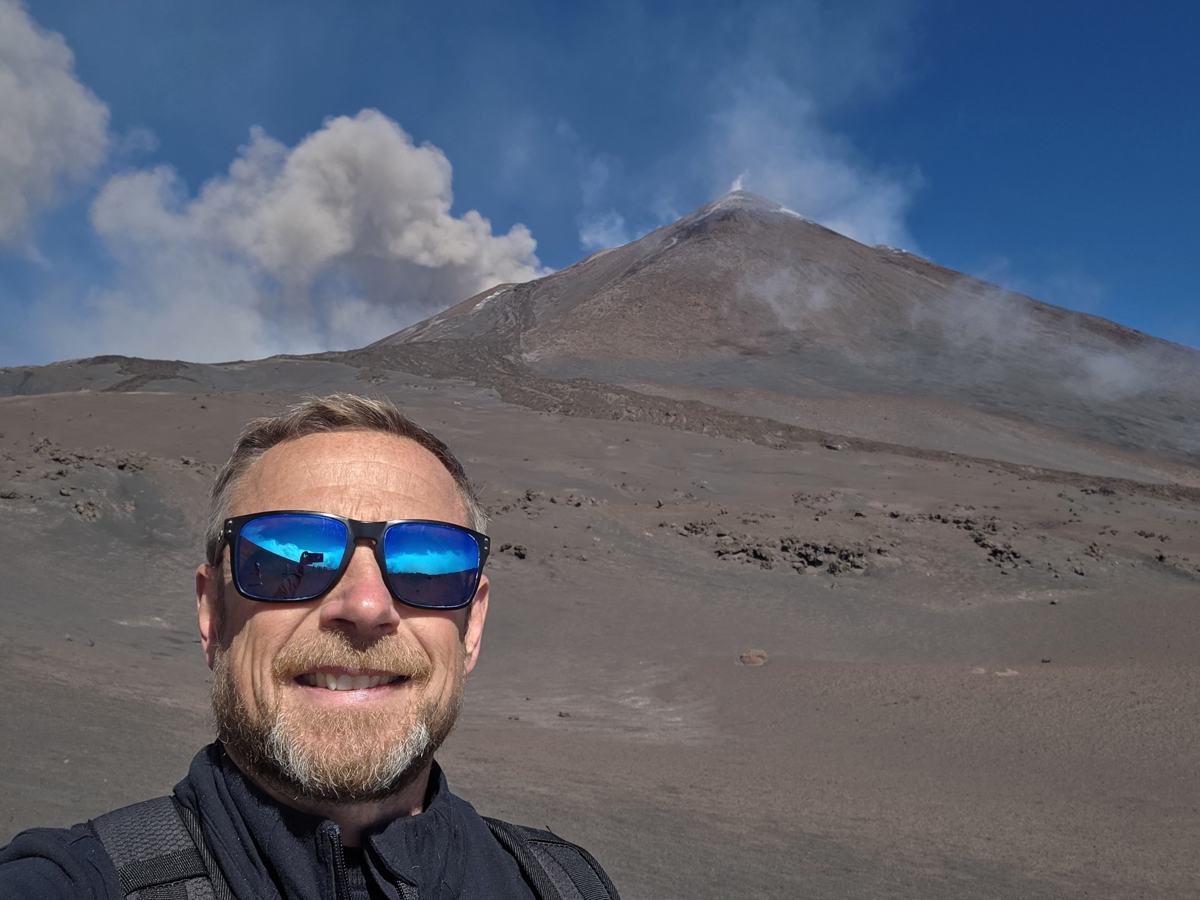
One more portrait before leaving the volcanic landscape.
Where we stayed Feudo Vagliasindi
Feudo Vagliasindi was our wine-country stay, and we also took part in a wine experience there. We enjoyed the food and wine here; Casa D'Ambra remained our favourite tasting of the trip. This chapter brought the focus back from volcanic terrain to cultivated land and a place to spend time rather than pass through.
The estate's own information connects the property with wine and olive production. Staying in this setting gave the route a dedicated wine chapter, rather than requiring another return drive after a tasting. [12]
For anyone choosing an Etna-area stay, do not assume every winery is close to every excursion meeting point. Confirm the exact start of the tour and calculate the drive from your property. Book the tasting in advance, ask about food, and arrange the day so that drinking does not depend on driving afterward.
For photographs, pair the broad vineyard setting with something specific: a bottle label, the tasting table, the property exterior or the view from your stay. Those details give readers a stronger sense of the place than a generic photograph of two wine glasses.
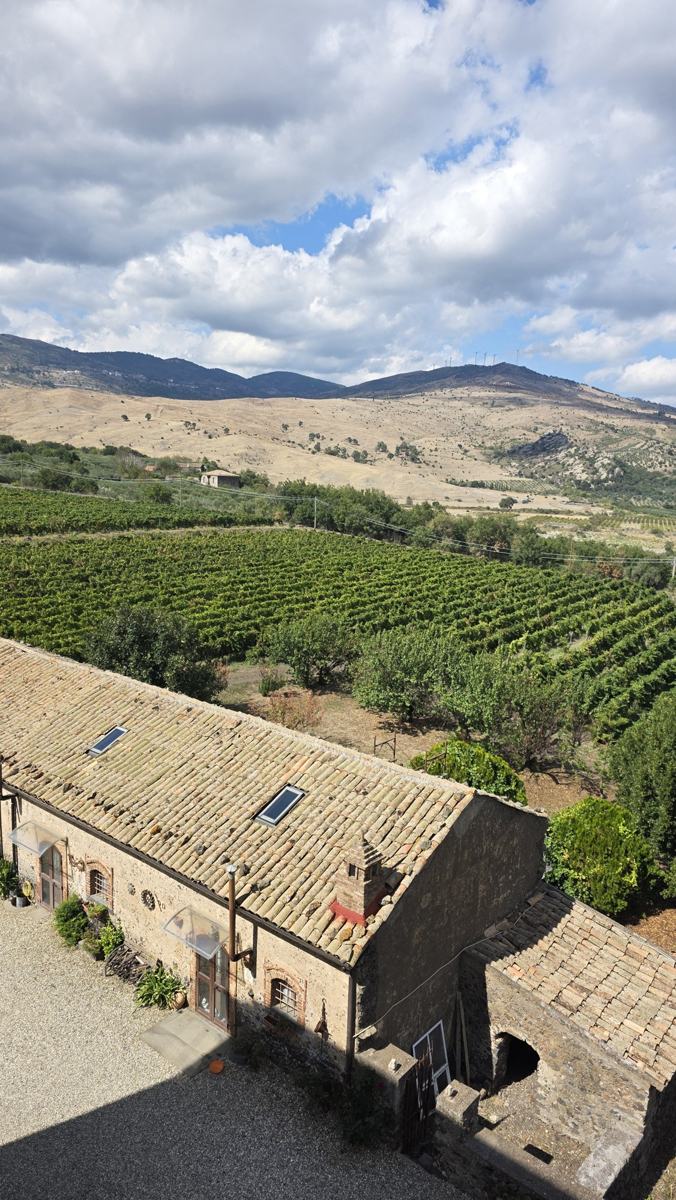
Buildings and vineyard rows at Feudo Vagliasindi.
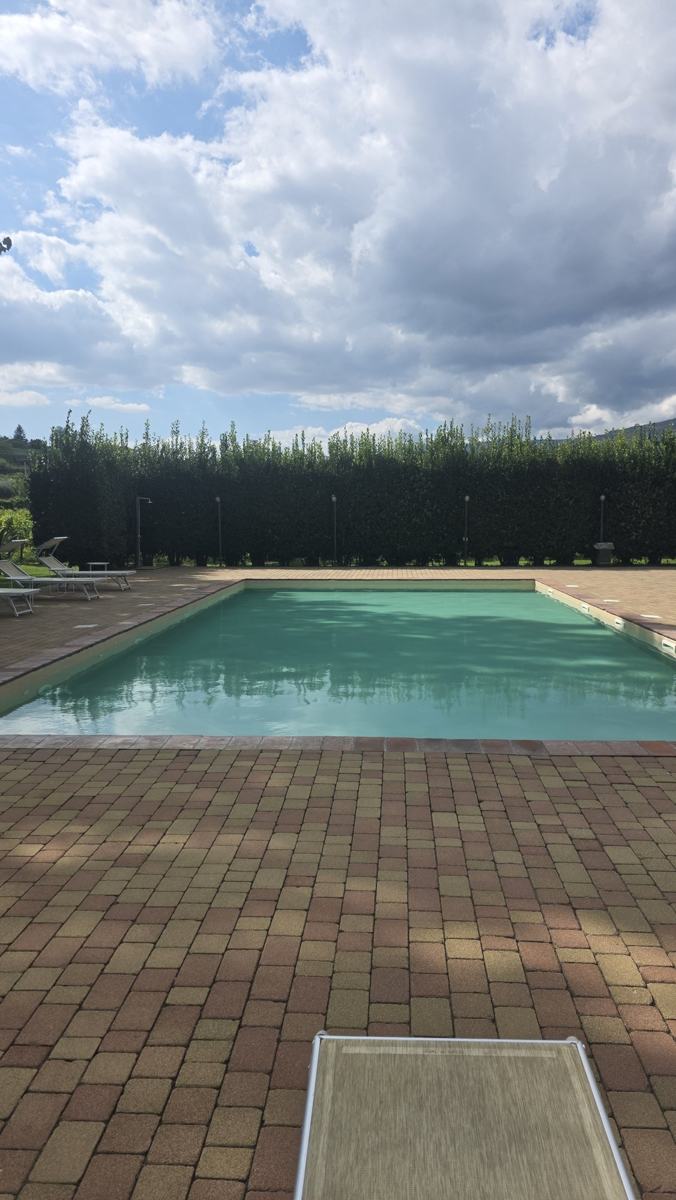
The pool during our wine-country stay.
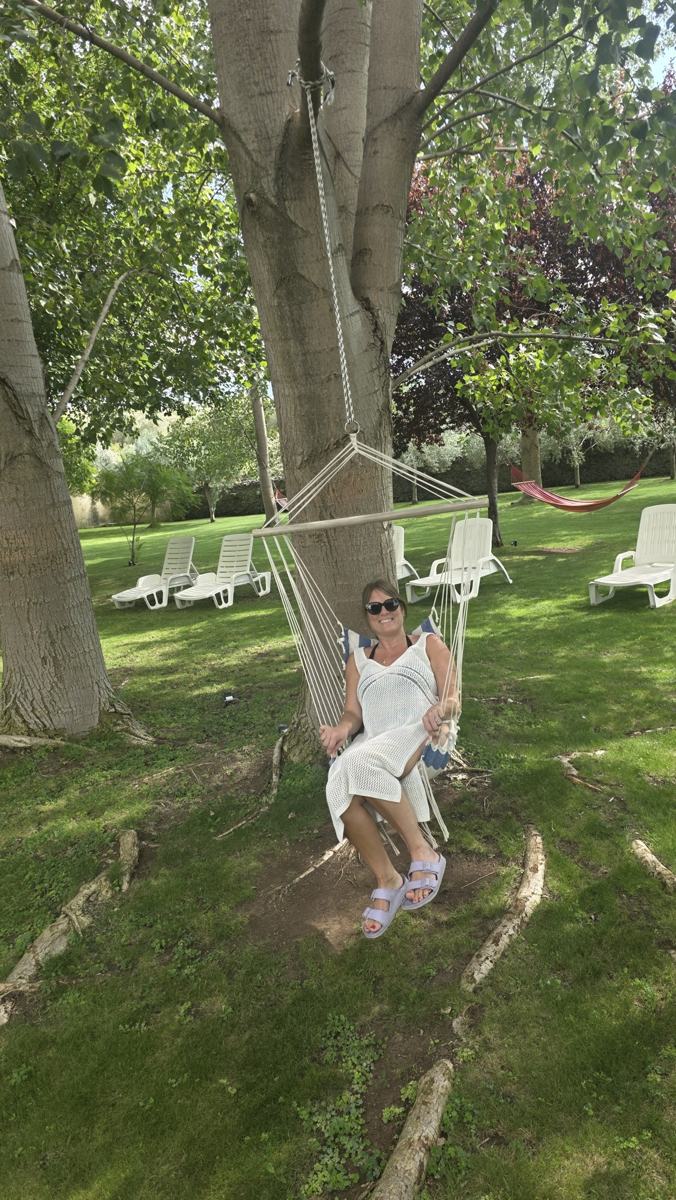
A quiet garden moment for Jenn.
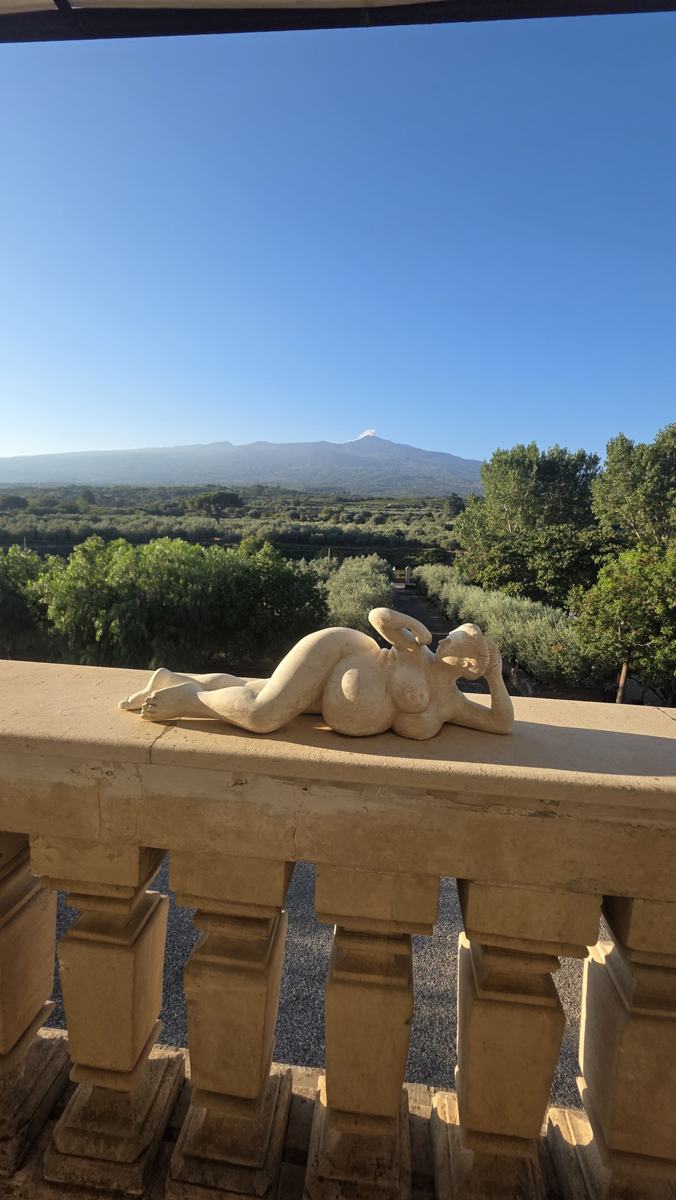
The next morning’s view from the property.
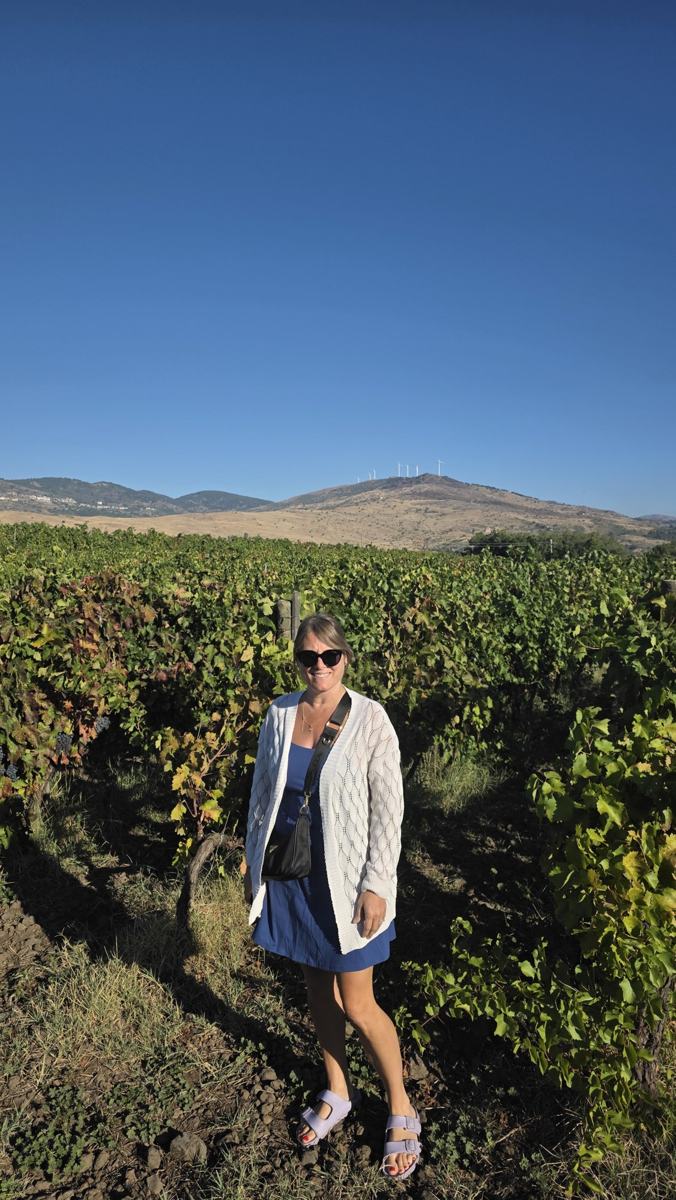
Jenn among the vines.
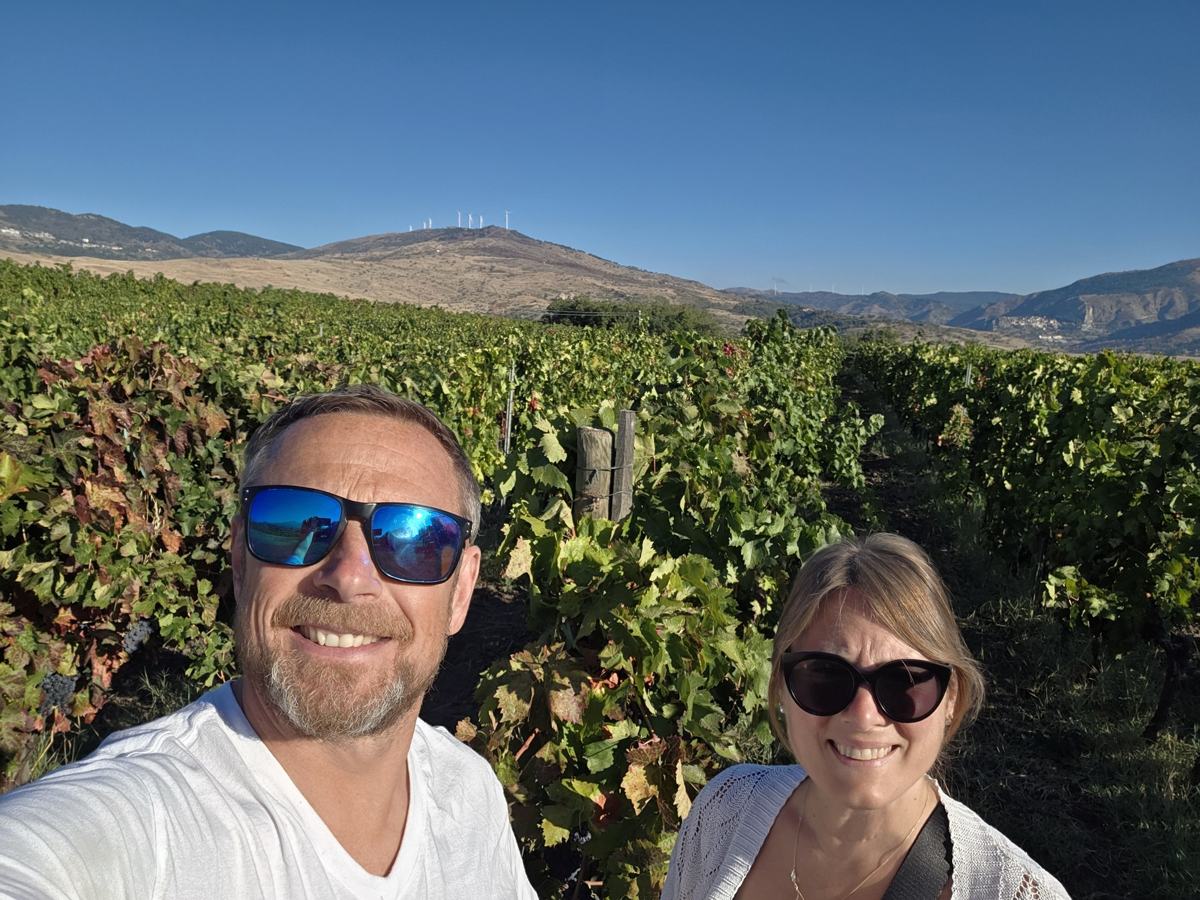
Together in the vineyard before continuing our journey.
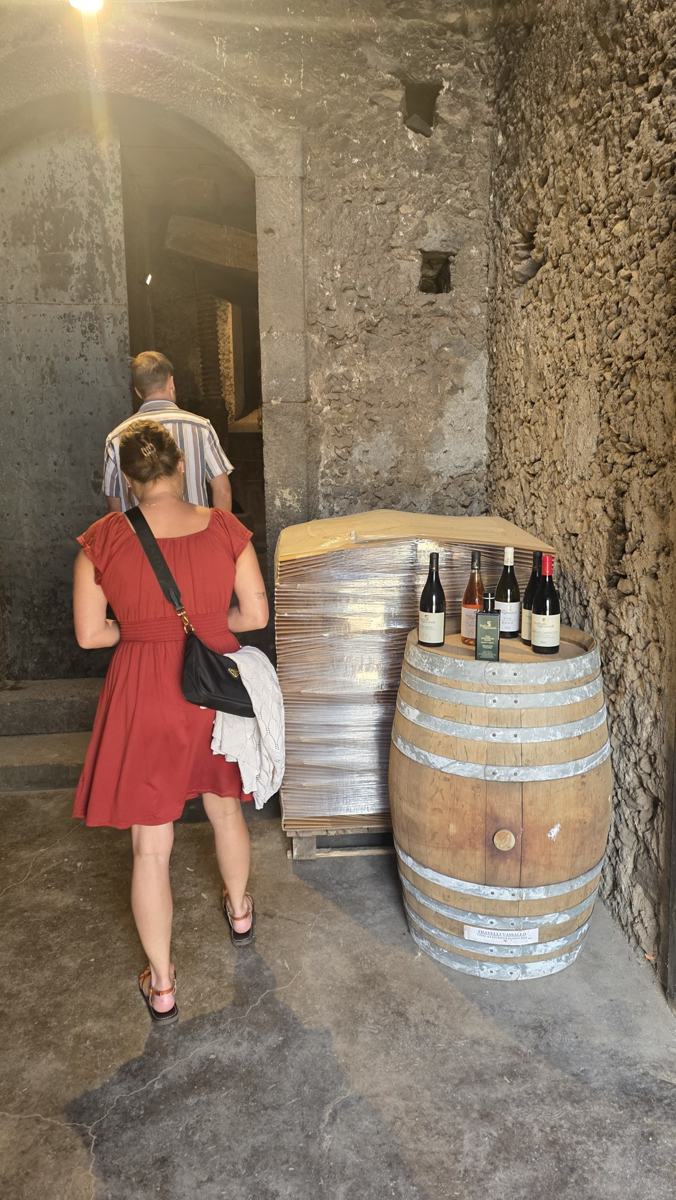
Beginning the wine experience at Feudo Vagliasindi.
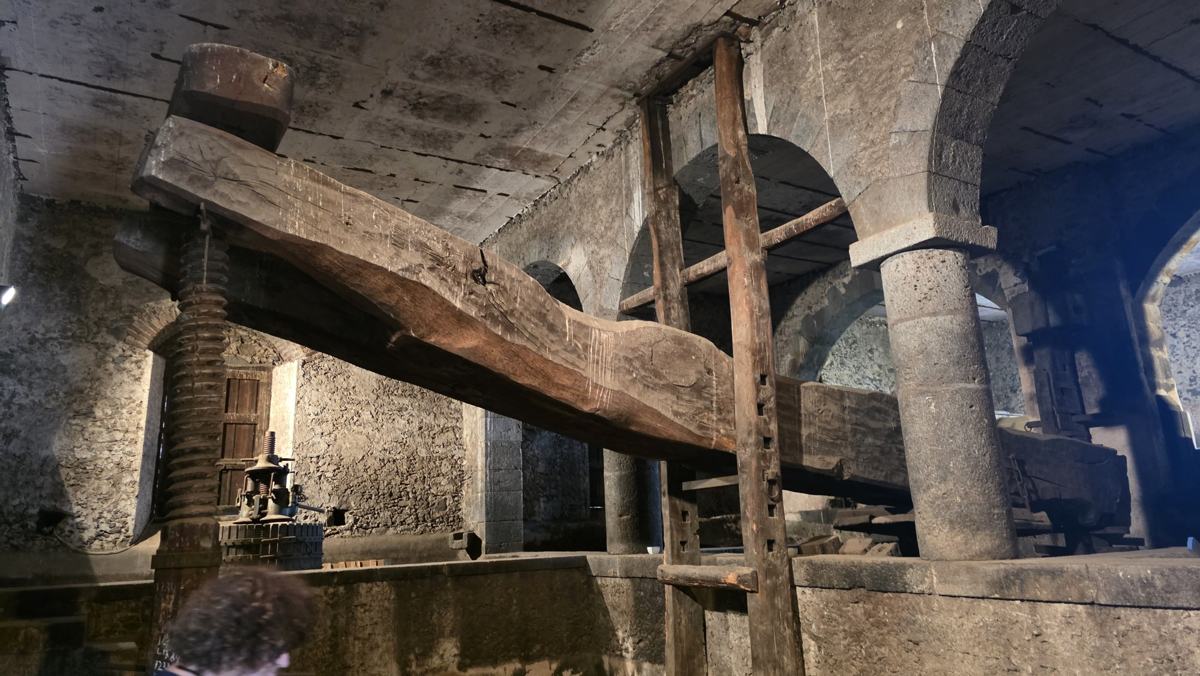
The large wooden press inside the historic winemaking space.
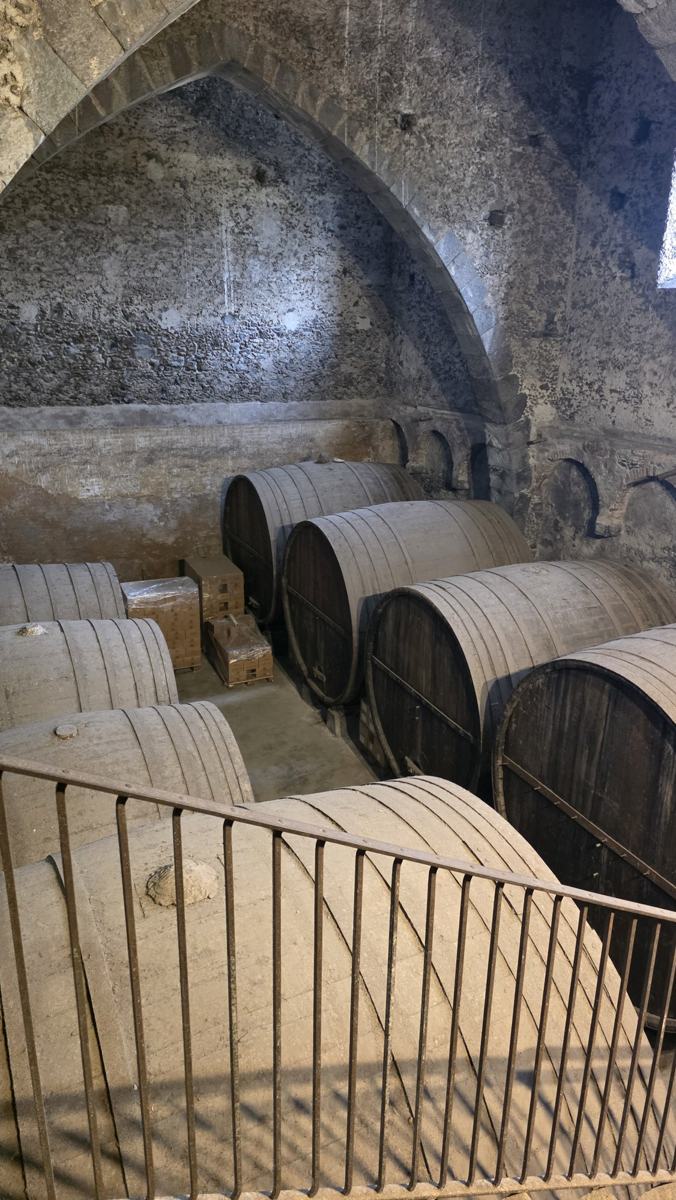
Barrels beneath the stone arches.
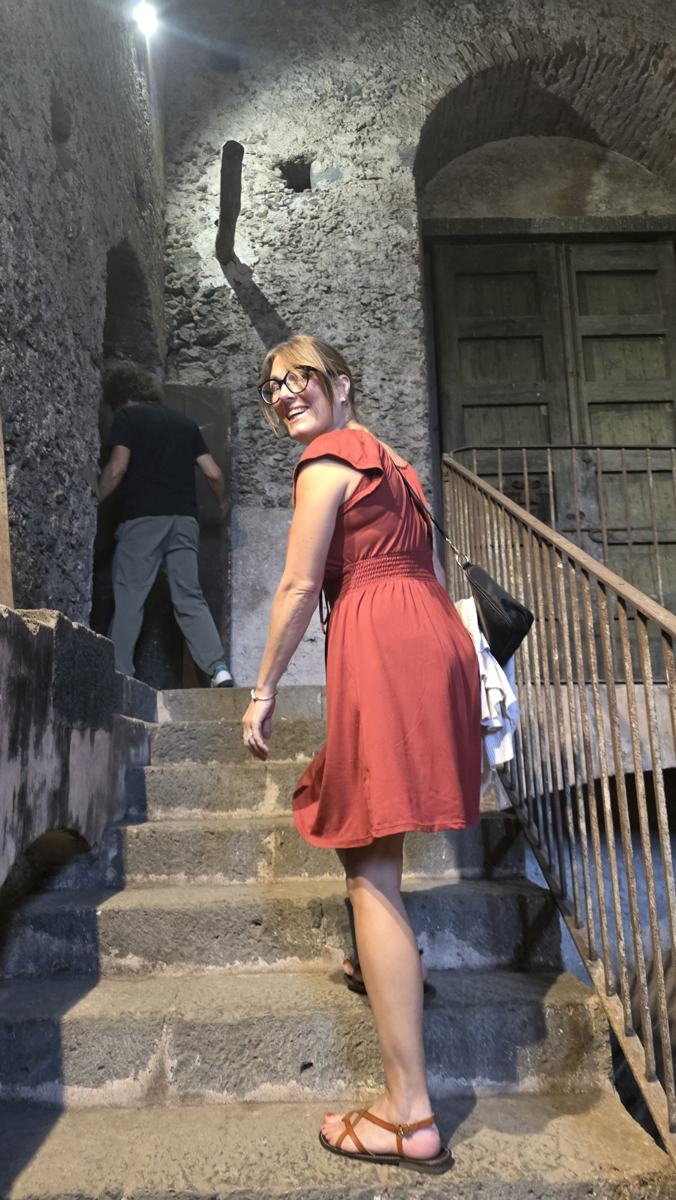
Exploring the cellar during the visit.
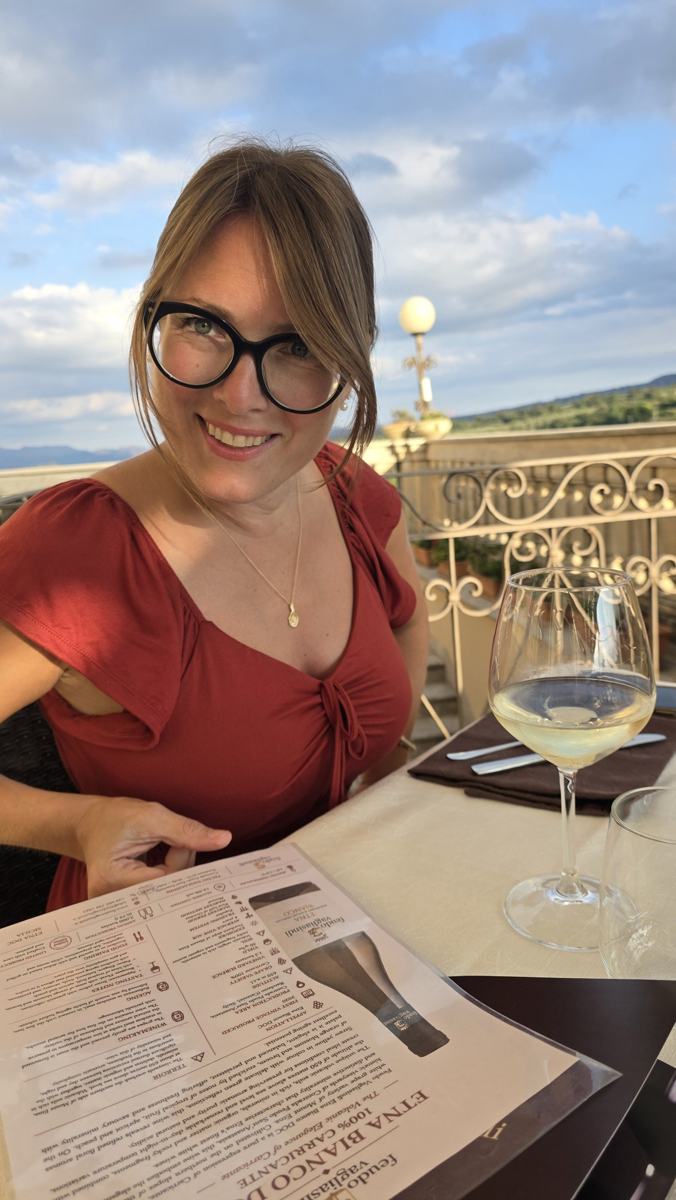
Jenn at the tasting table.
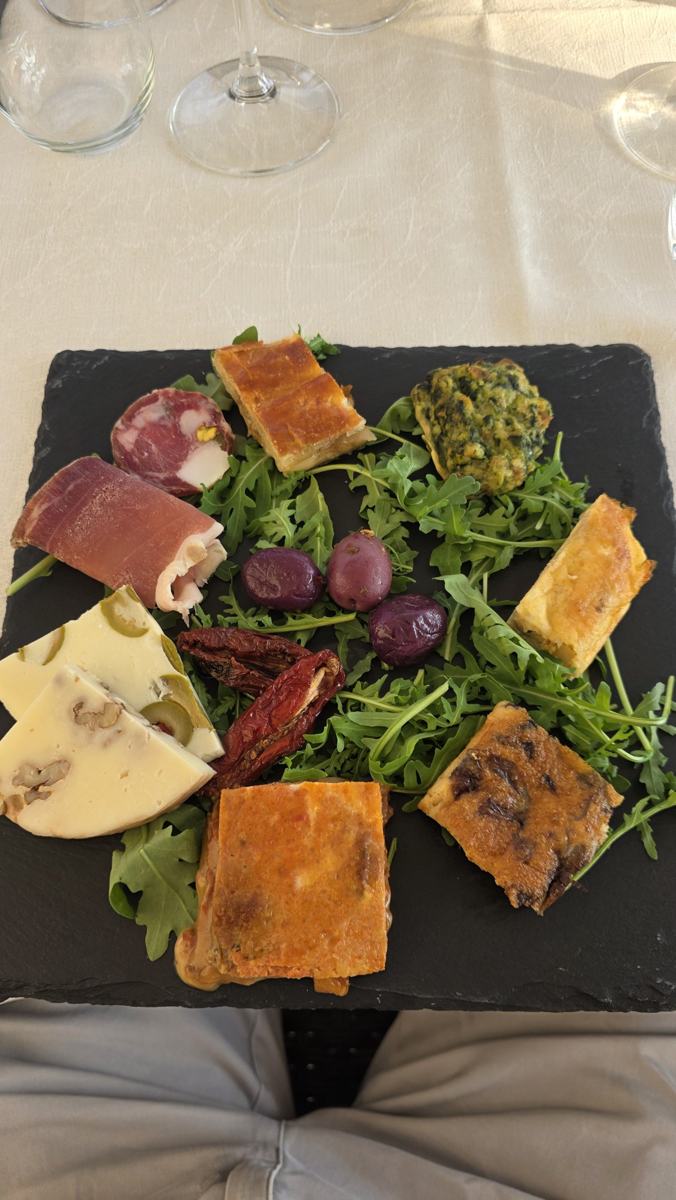
Cheese, cured meats, olives and savoury bites alongside the tasting.
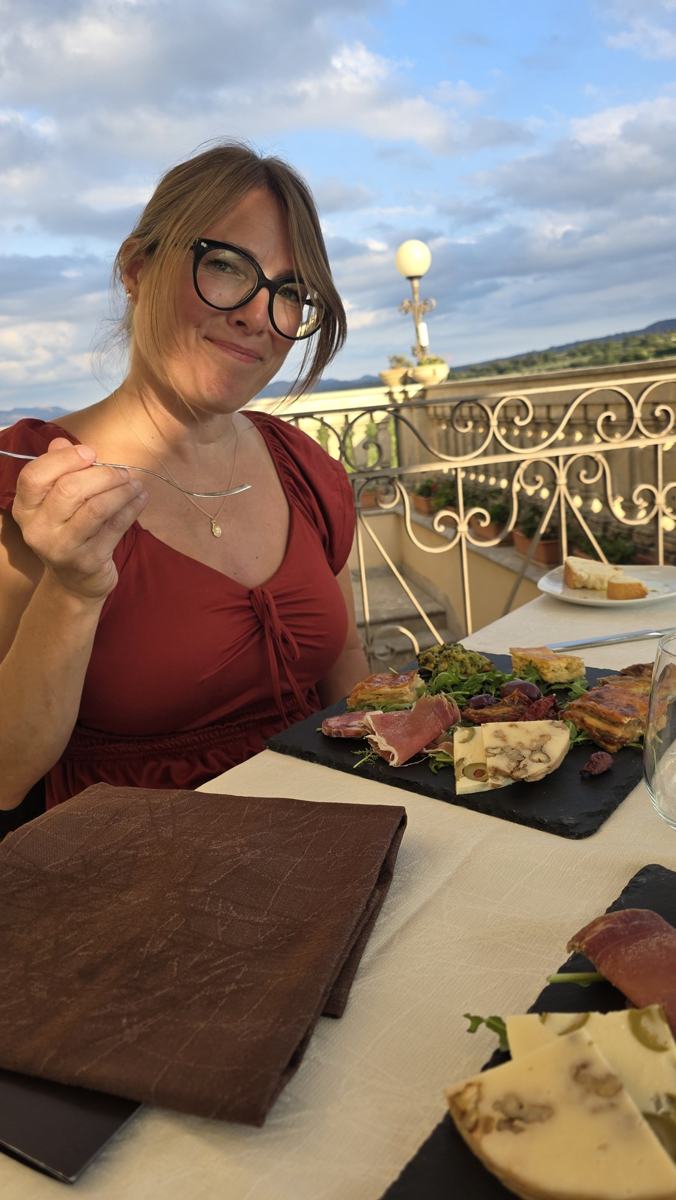
Taking our time over the food and wine.
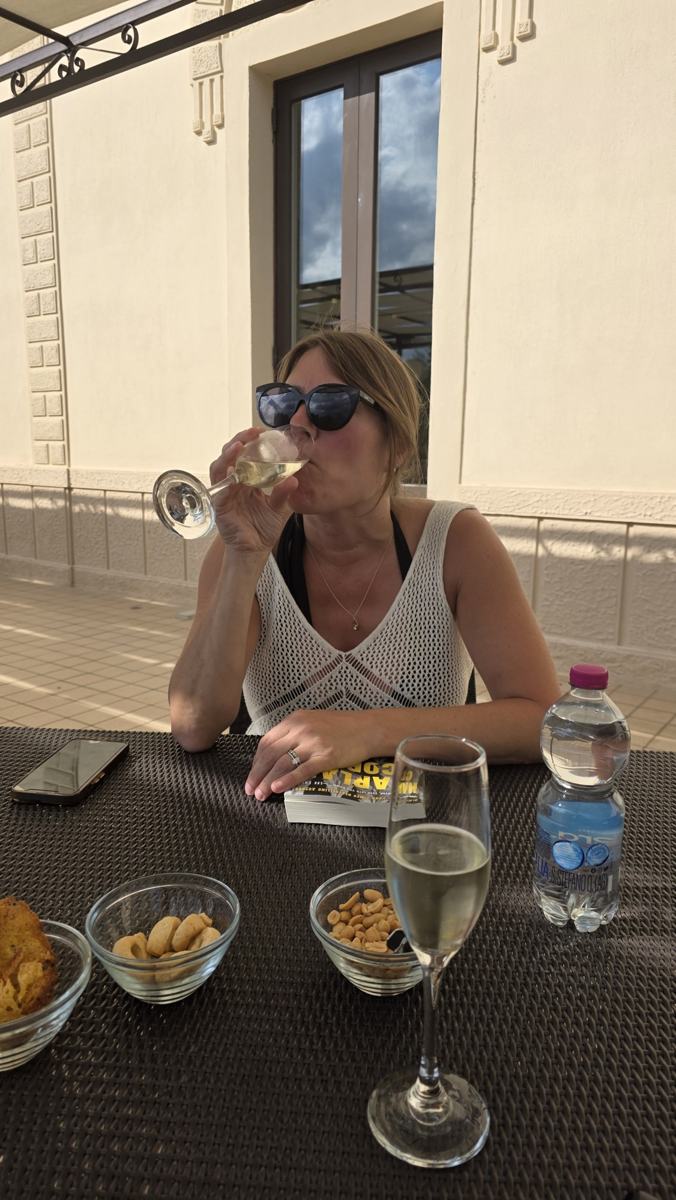
A relaxed glass of wine during our Feudo stay.
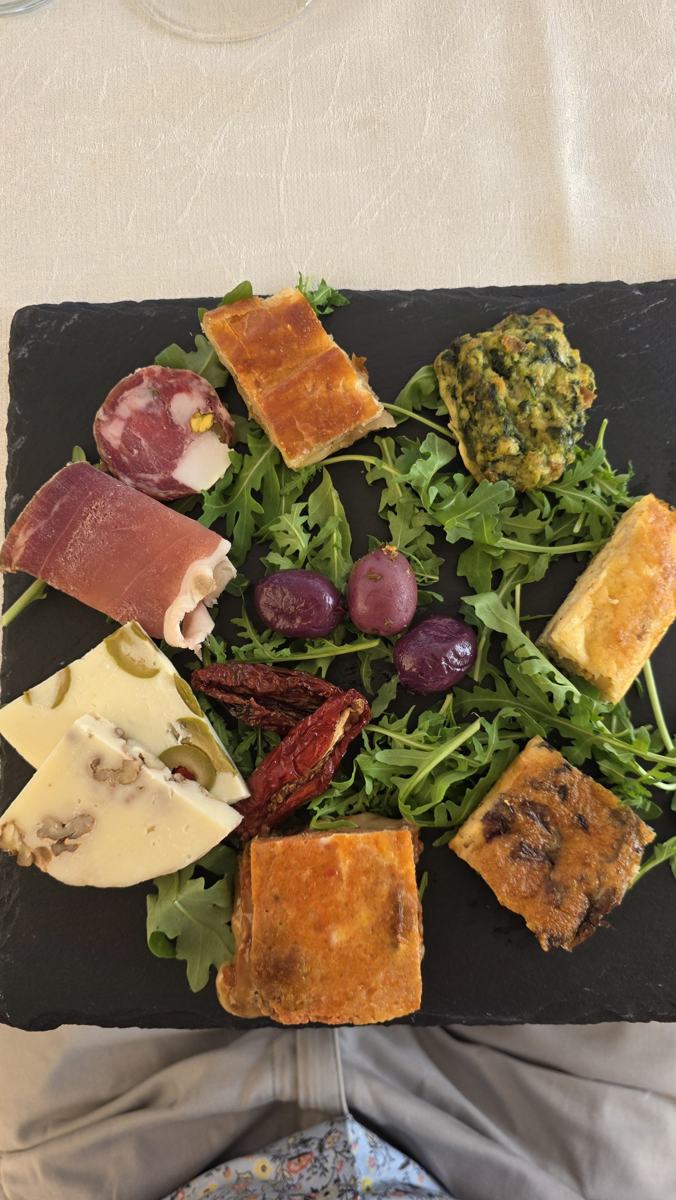
A closer look at the food served with the Feudo tasting.
On this route, wine was a reason to stop: on Ischia, above the Amalfi Coast and around Etna.
Milazzo deserves time before the boats
Milazzo is often introduced as a gateway to the Aeolian Islands. Our stay included more than the port: the castle, the waterfront and Ngonia Bay Boutique Hotel.
The castle and the waterfront
Castello di Milazzo gave us another historic site with a strong coastal setting. As at the other castle visits, allow time for the ground you will cover and the views along the way. Check the current access information if avoiding steps or steep terrain is a priority.
For a day with a car, the castle visit and the port area are separate parking decisions. Choose where to leave the vehicle for each part rather than assuming one space will serve the whole day comfortably. Leave room for the waterfront afterward; it gives Milazzo a different atmosphere from the fortress.
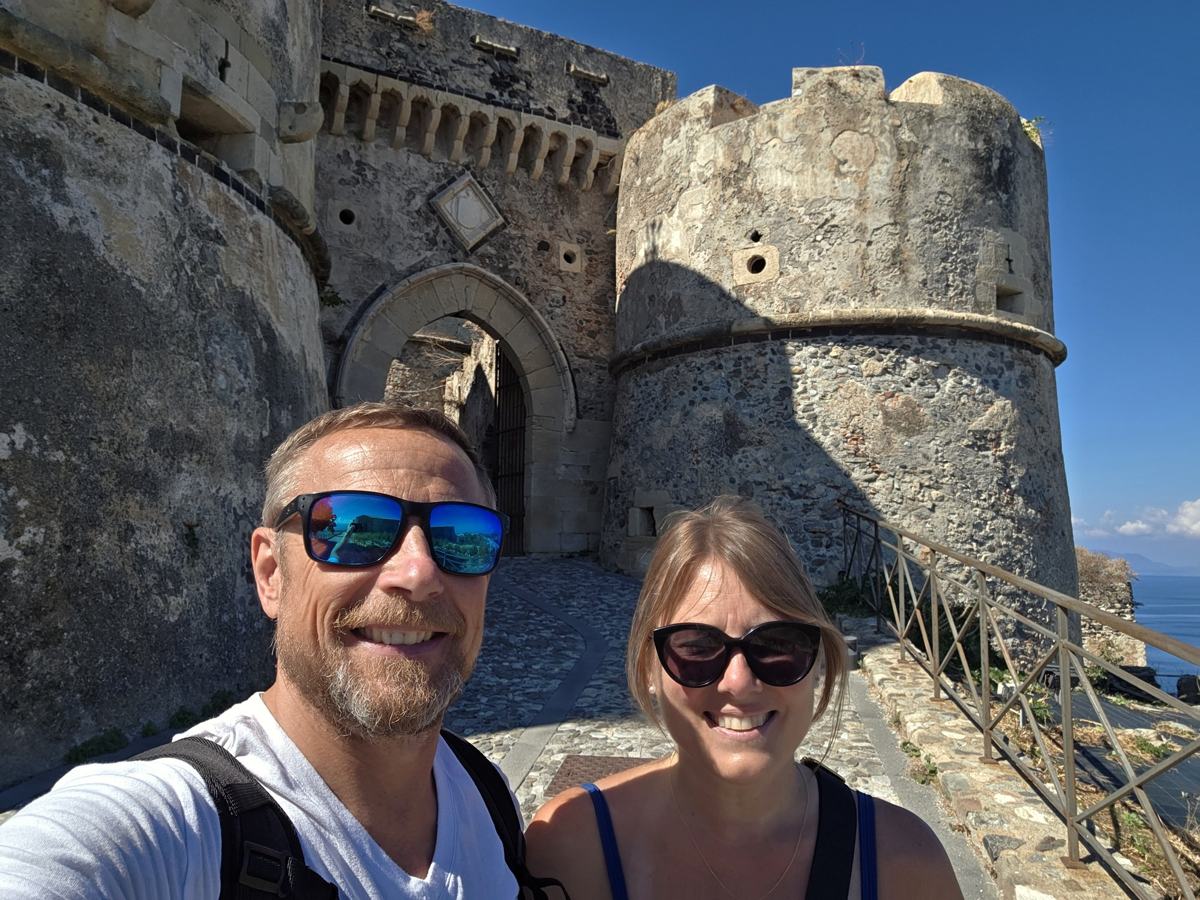
Together at Castello di Milazzo.
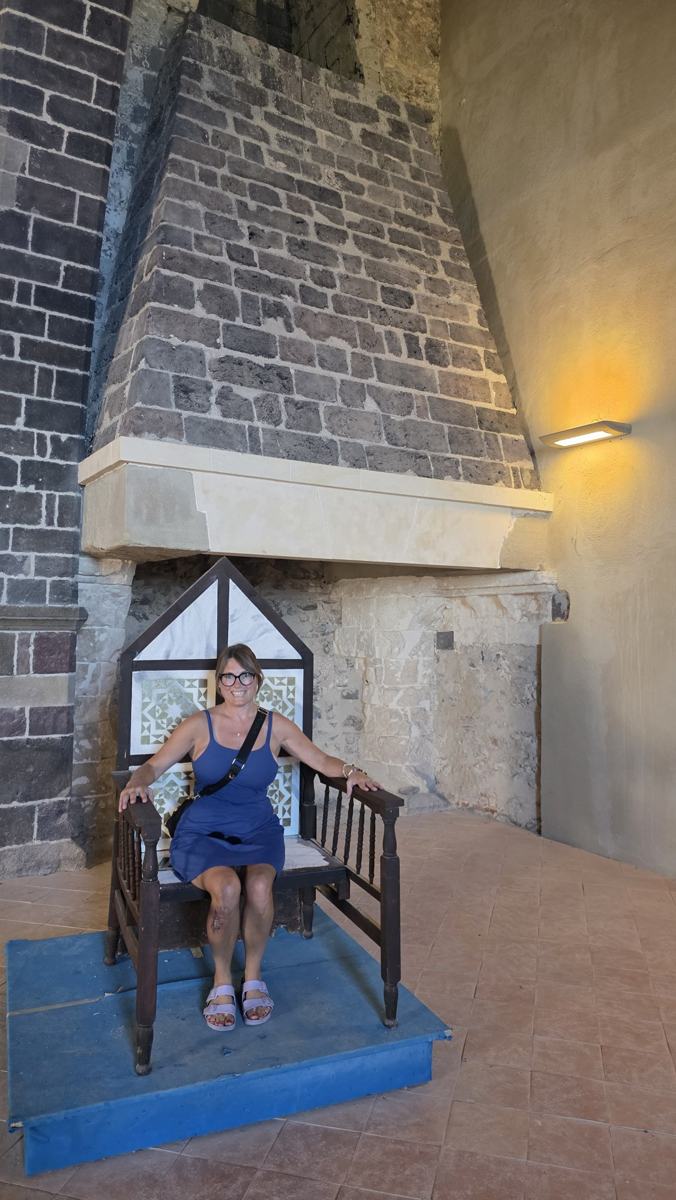
Jenn inside the castle.
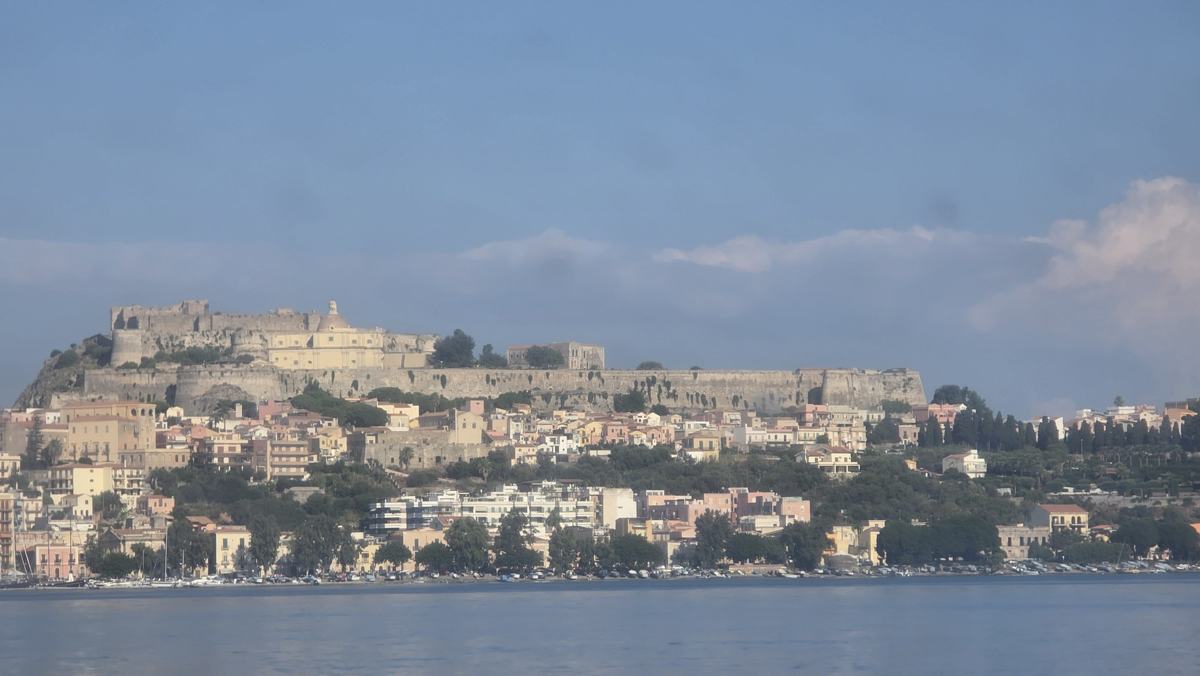
Milazzo and its hilltop fortress from the water.
Where we stayed Ngonia Bay Boutique Hotel
Ngonia Bay was another standout accommodation choice for us. Alongside Palazzo Pascal, it was one of the stays we loved most. It was our Milazzo base, with the bay setting becoming part of our final evening there. The hotel's official description places the property within the landscape of the Milazzo promontory. [13]
That distinction matters for planning. A stay by the bay is a different choice from a hotel immediately beside the hydrofoil terminal. Ask about parking and the drive to the port, and decide how you will handle the early part of an island day.
Give the stay its own photographs: the exterior, the room or pool if you photographed them, the bay and the final-night setting. A hotel should appear as somewhere you actually spent time, not merely a name dropped into an itinerary.
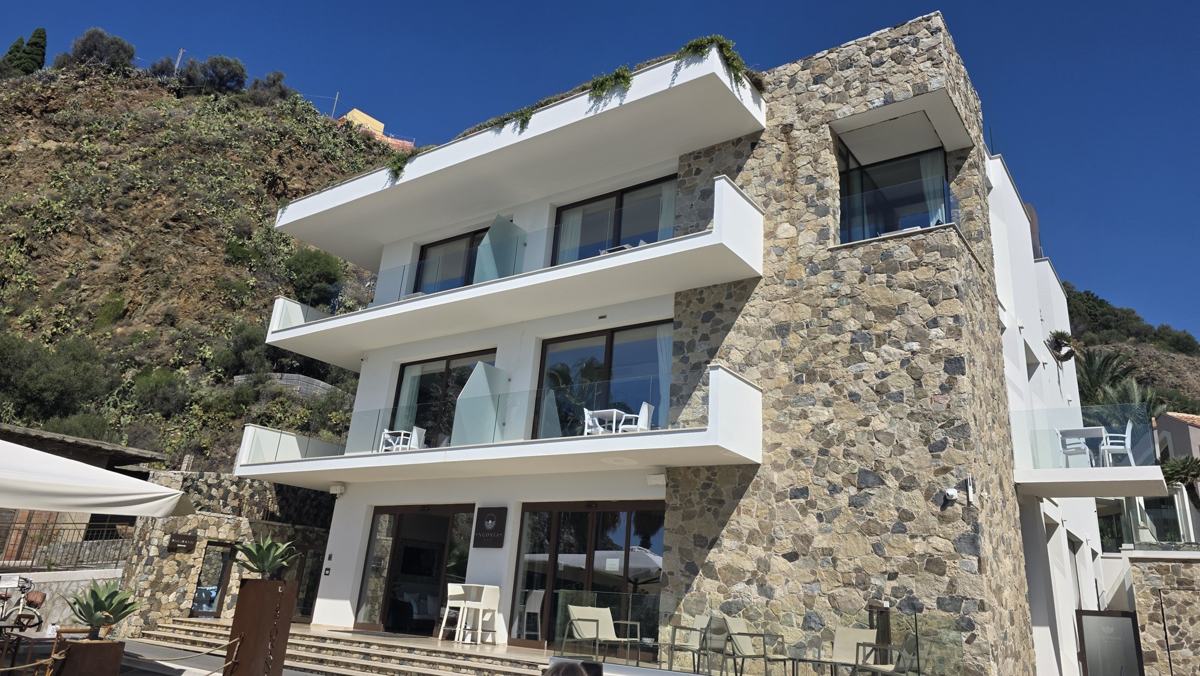
Ngonia Bay Boutique Hotel, our Milazzo base.
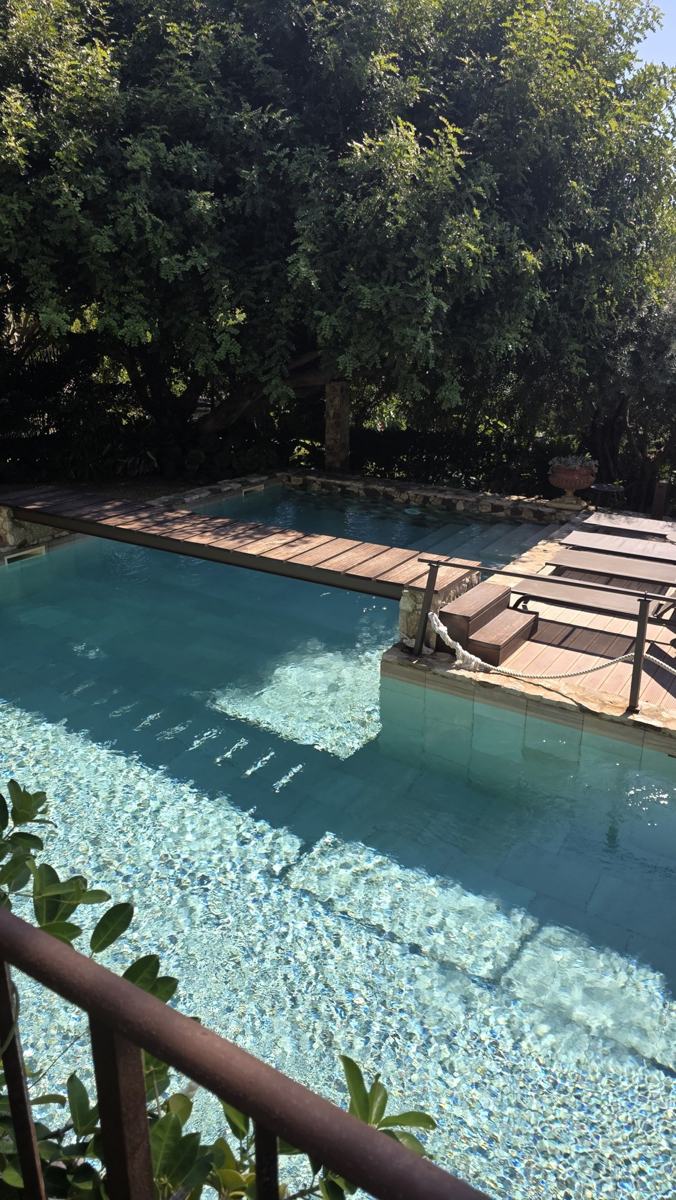
The pool at Ngonia Bay.
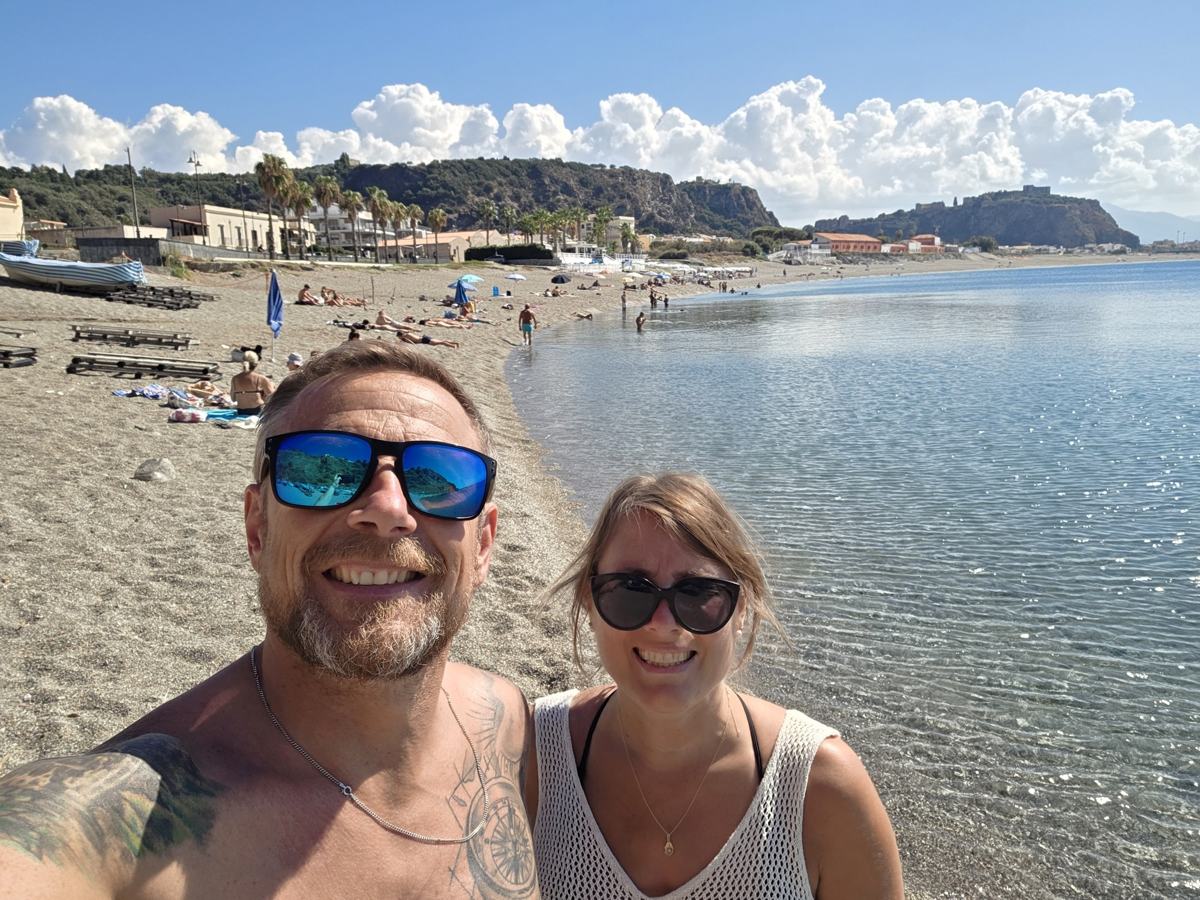
Beach time in Milazzo.
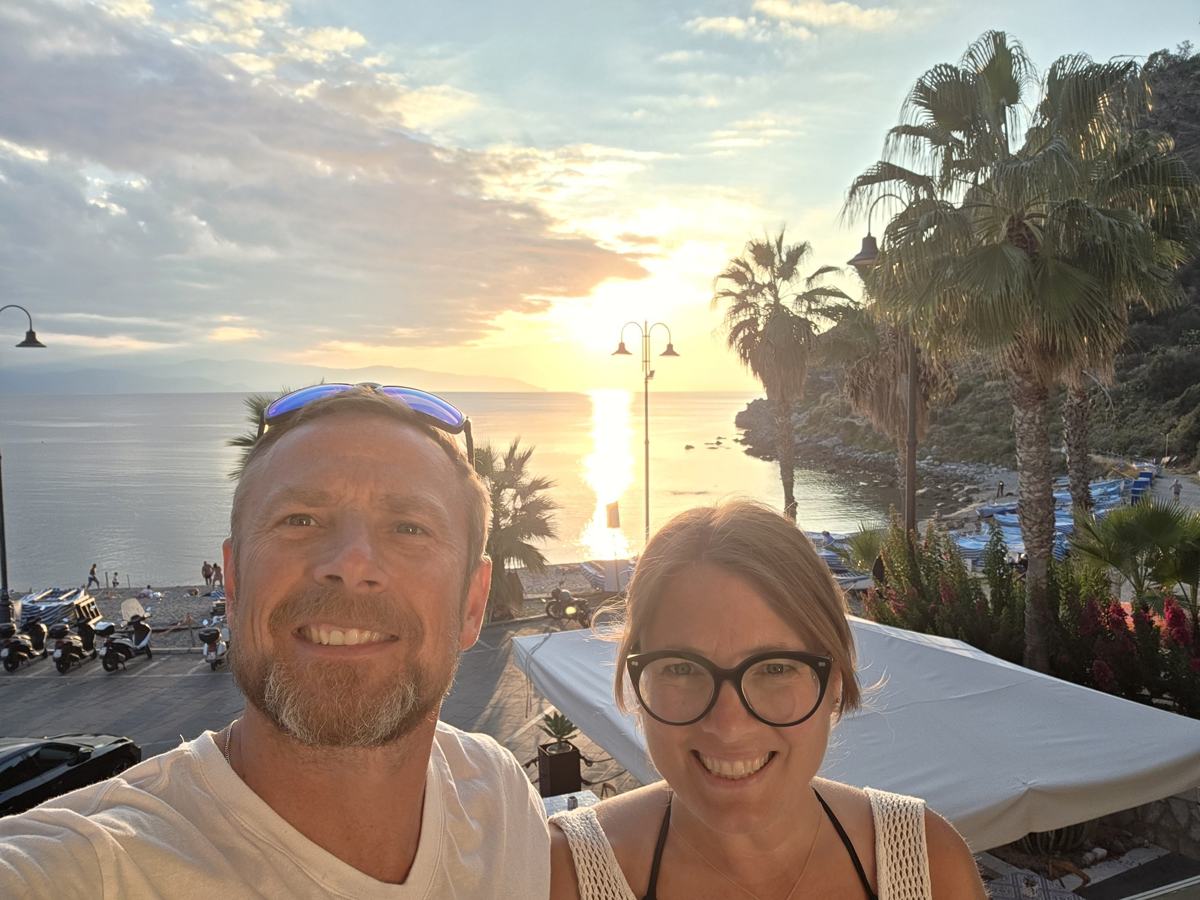
Together as the sun drops toward the sea.
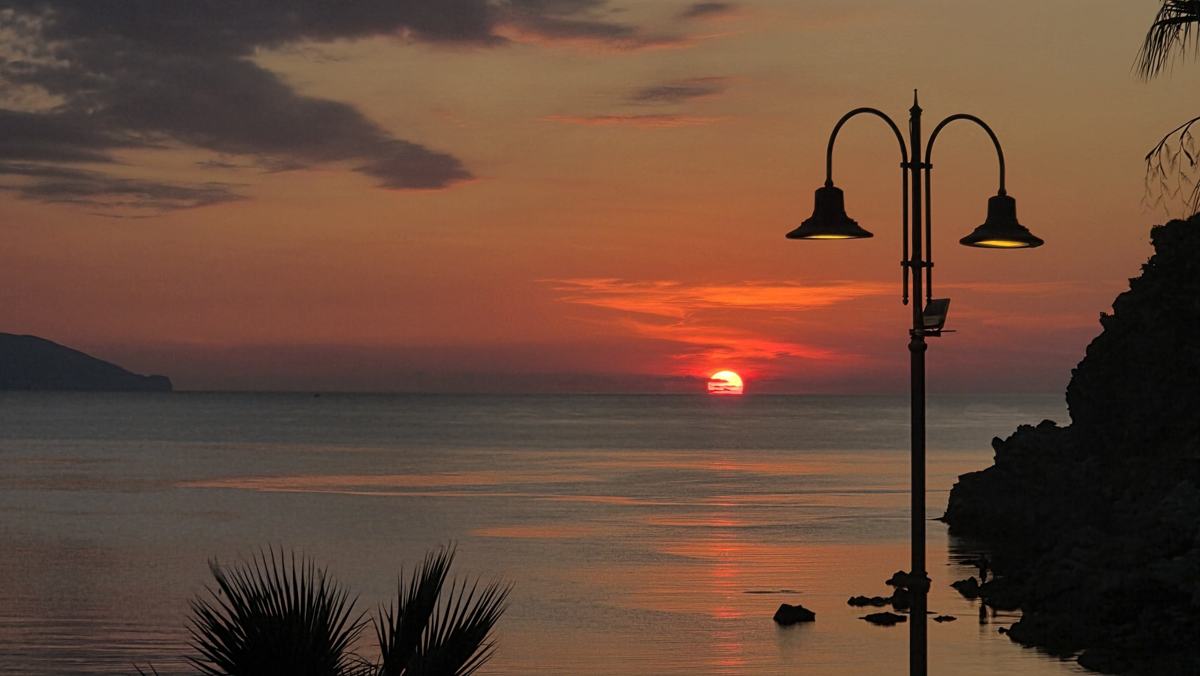
Sunset beside Ngonia Bay.
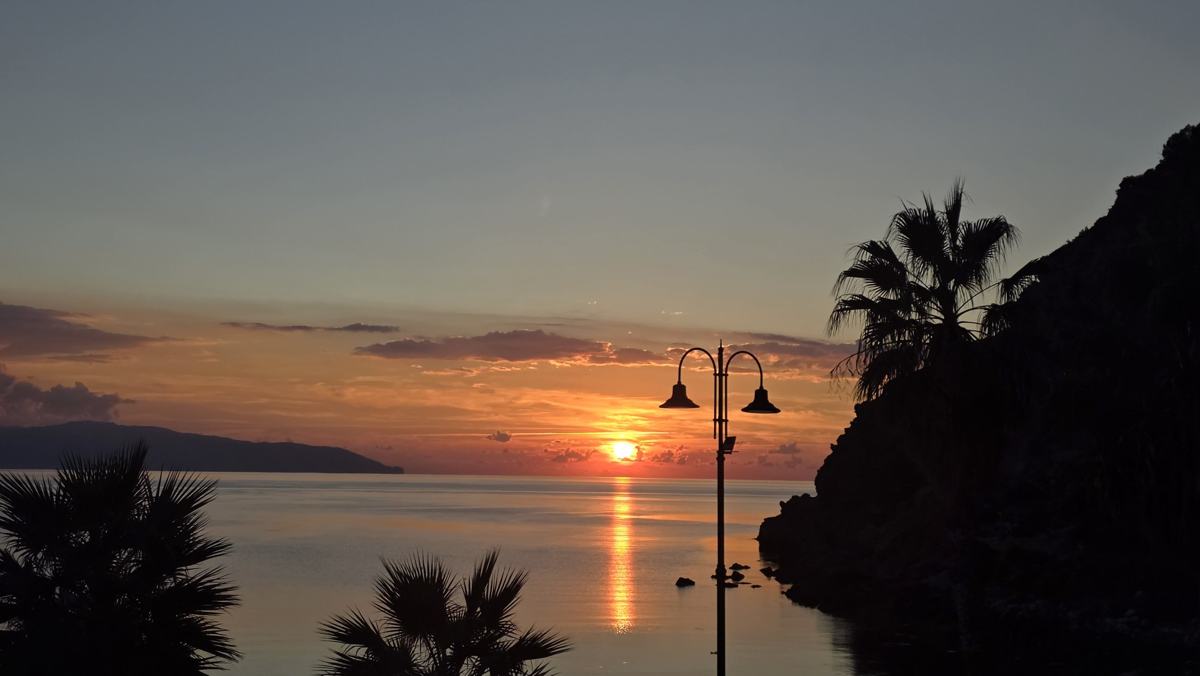
Back for another sunset after our island day.
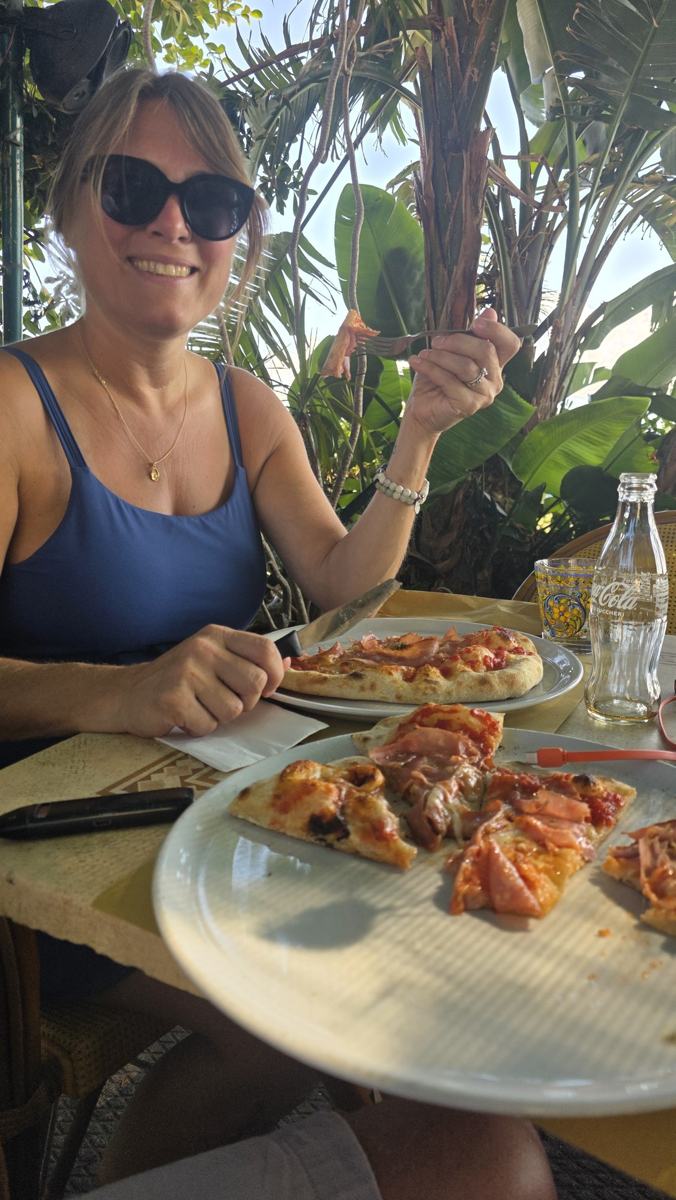
Pizza during our Milazzo day.
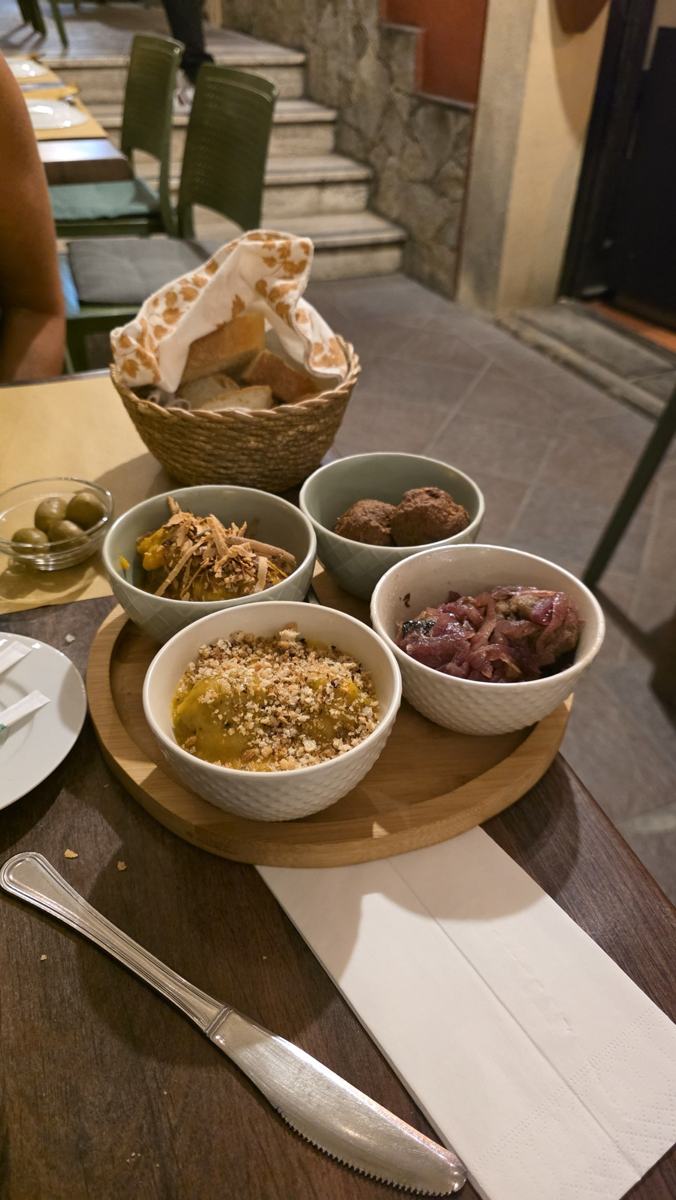
An evening food stop in Milazzo.
Lipari and Vulcano in one island day
We travelled from Milazzo to the Aeolian Islands with Liberty Lines, combining Lipari and Vulcano in a day. A hydrofoil made that possible, but the return schedule was as important as the outbound one.
Lipari and a lunch worth making room for
Lipari gave the day a town-and-food chapter before the black sand and volcanic setting of Vulcano. Ristorante Filippino was one of our favourite meals of the entire trip, and a highlight of our day on Lipari. The Michelin Guide currently lists the restaurant for its Sicilian cooking. Guide inclusion is the accurate distinction here; it should not be described as a Michelin star. [14]
Make a meal reservation work with the boat schedule. Allow time to reach the restaurant, eat without rushing and get back to the departure point. If you want to explore beyond Lipari town, you will need to plan the extra transport and time rather than imagining the whole island as a short walk from the pier.
For a day with several boat connections, a proper sit-down lunch needs space in the itinerary. Let the meal be part of visiting Lipari rather than a hurried pause before the next sailing.

Boarding Liberty Lines for our island day.
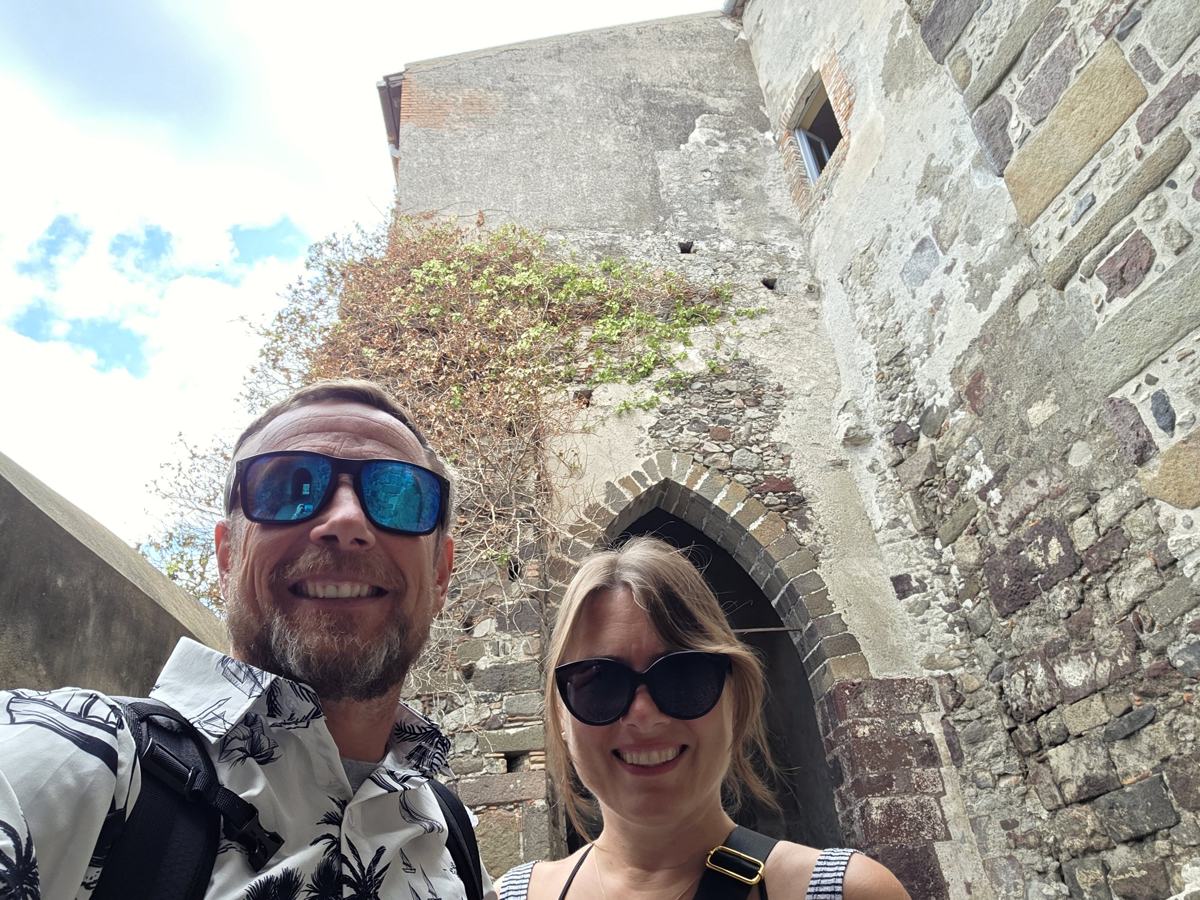
Exploring Lipari’s fortified old town.
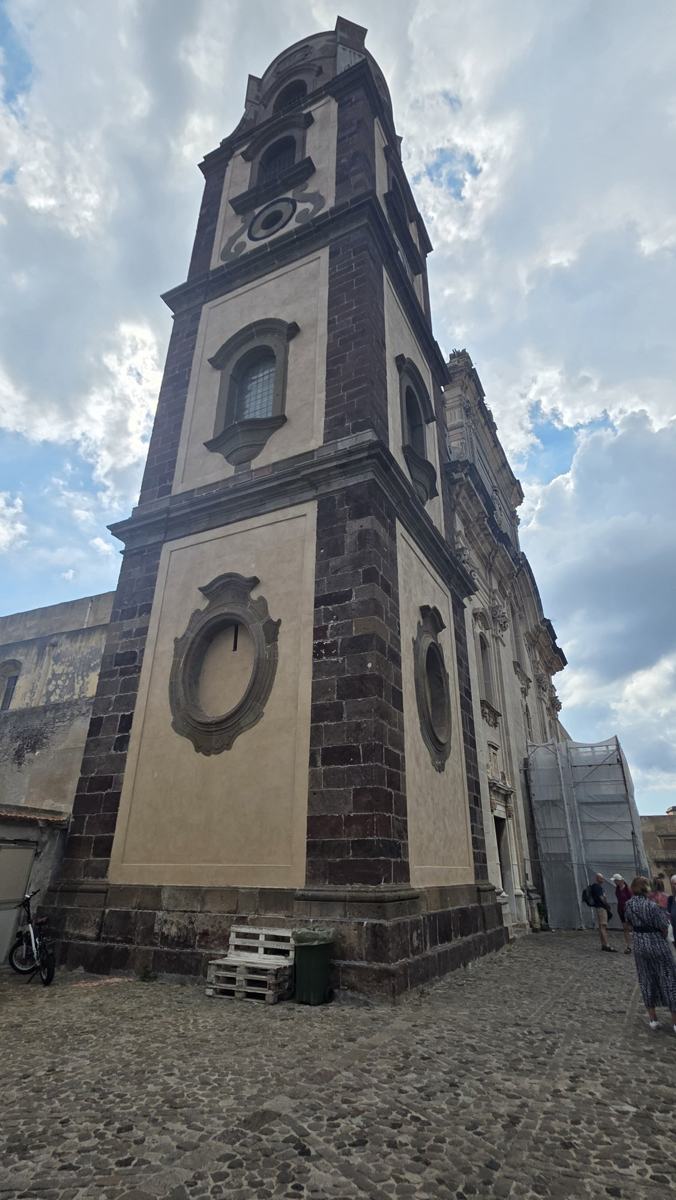
The bell tower on our Lipari walk.
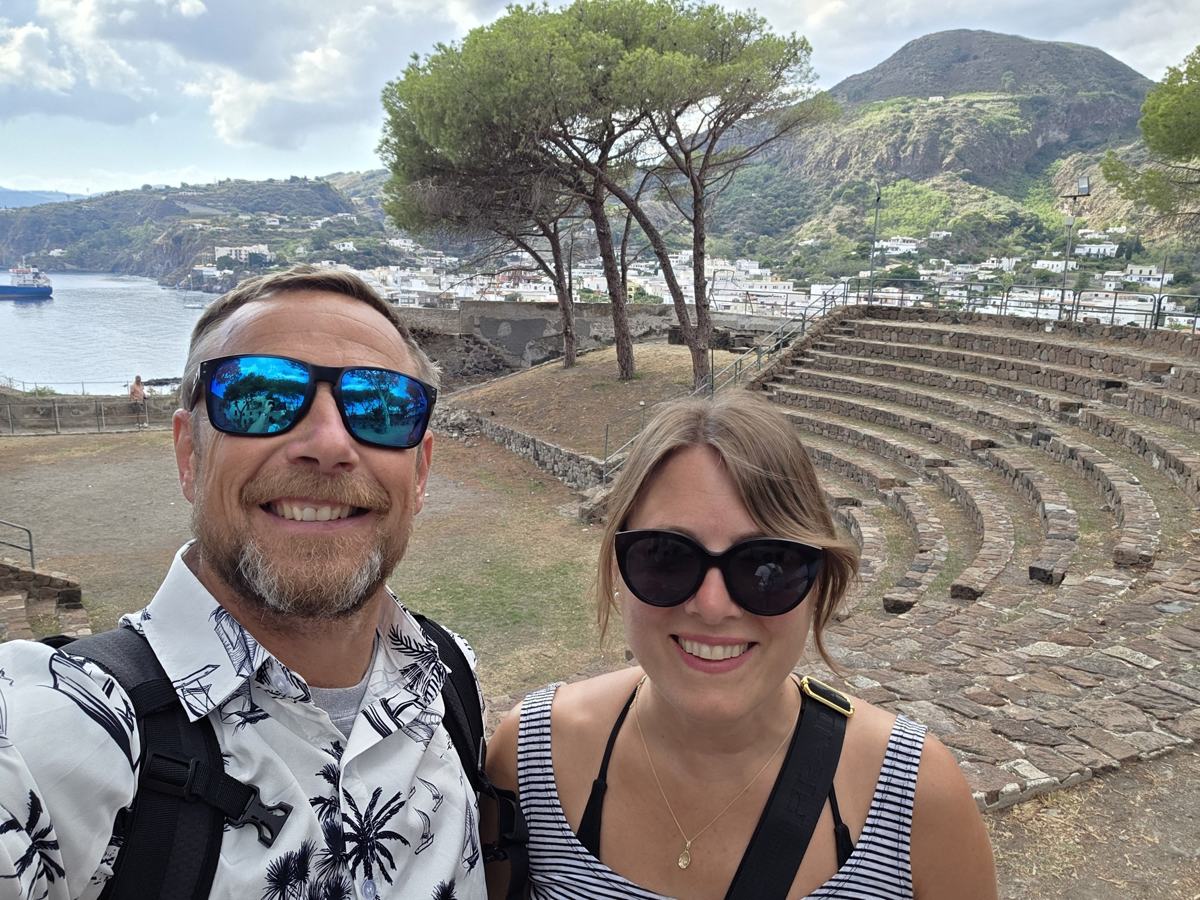
Together above the waterfront in Lipari.
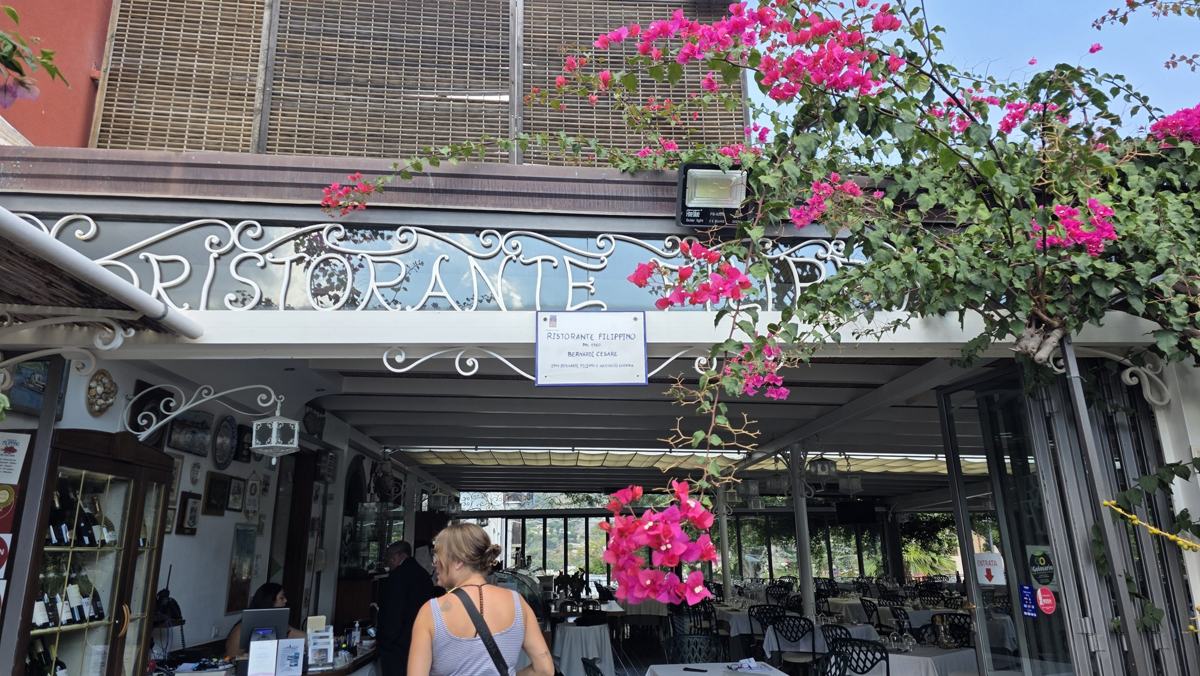
Arriving for lunch at Ristorante Filippino.
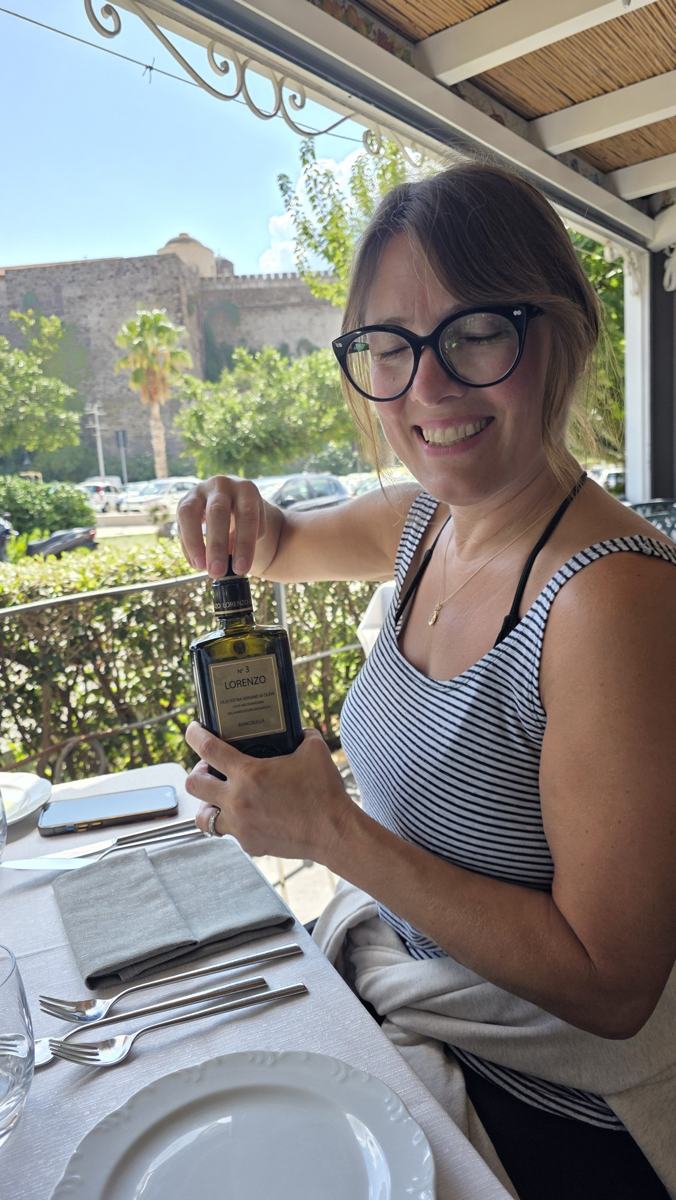
Jenn at our Filippino lunch table.
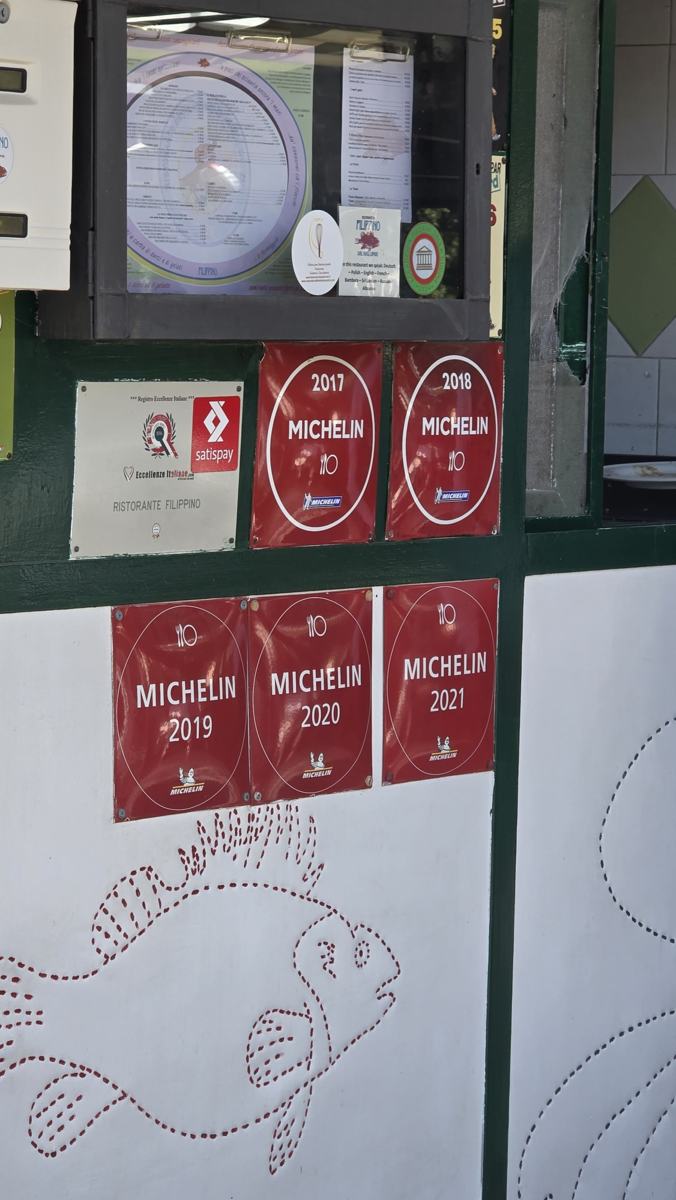
Michelin plaques dated 2017–2021 displayed at Filippino; these do not establish a Michelin star.
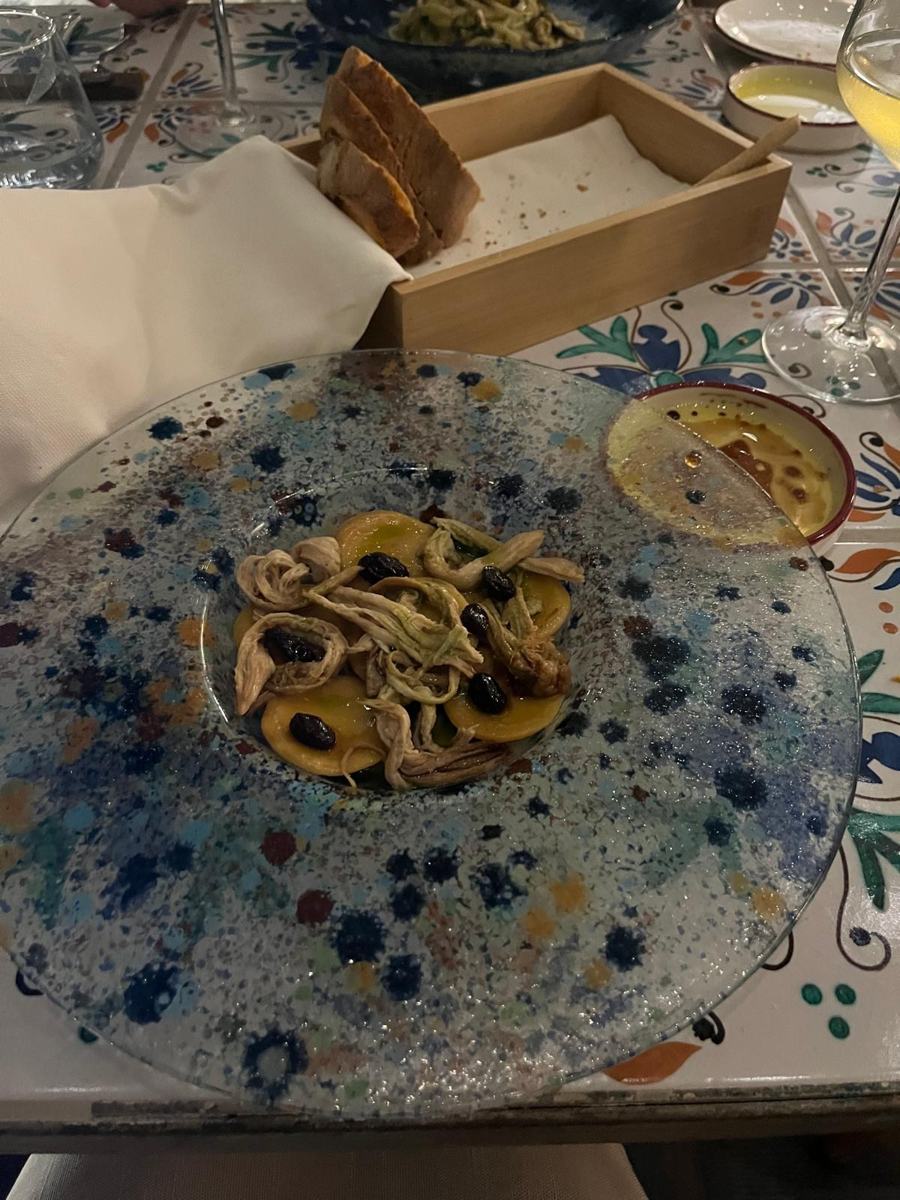
A plate from our Filippino lunch, one of our favourite meals of the trip.
Vulcano and the black-sand coast
Vulcano changed the day again: black sand, the sulphurous smell and the island's geothermal character. Our visit included the mud-bath experience and time around the warm coastal water.
For future visitors, those experiences are conditional. Check current access to mud areas, coastal geothermal sites and walking routes. Do not assume that a past traveller's experience is available or permitted on your date. Civil Protection identifies volcanic gases as a hazard on Vulcano, including gases that cannot be detected by smell. Follow closures and local instructions. [15]
The black-sand beach is a strong visual contrast with the other coastlines in this trip. Show the sand texture as well as the wide view, and bring water shoes where they suit the footing. Do not enter closed geothermal areas to recreate a photograph.
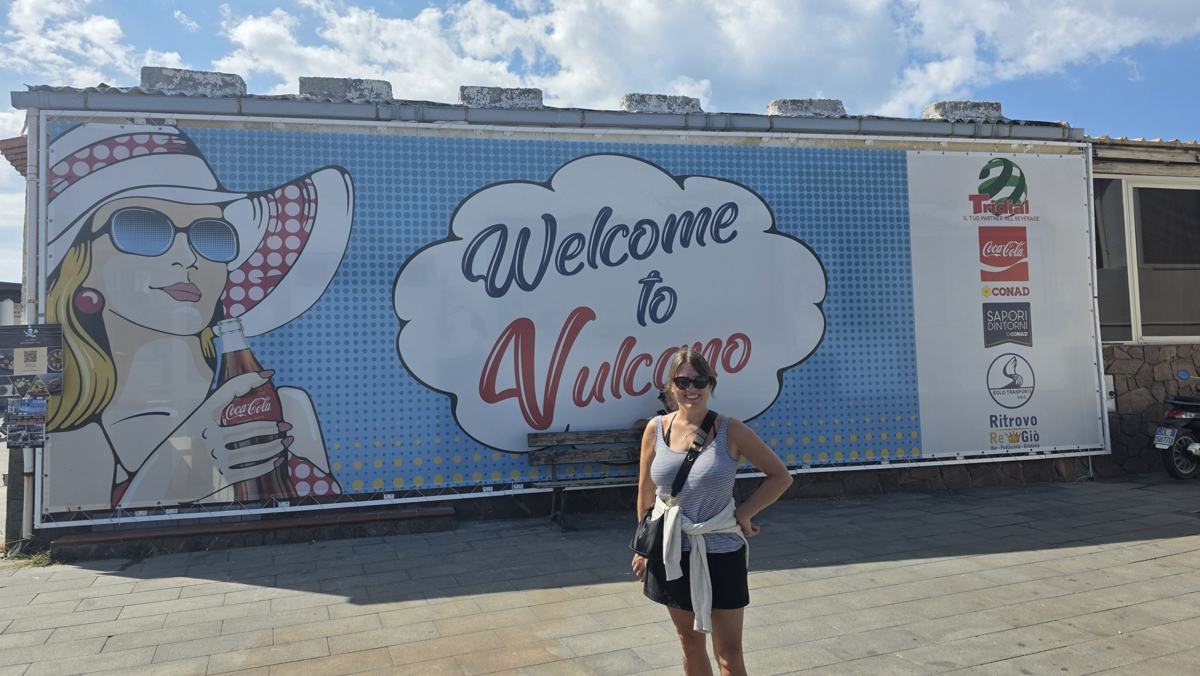
Arriving on Vulcano.
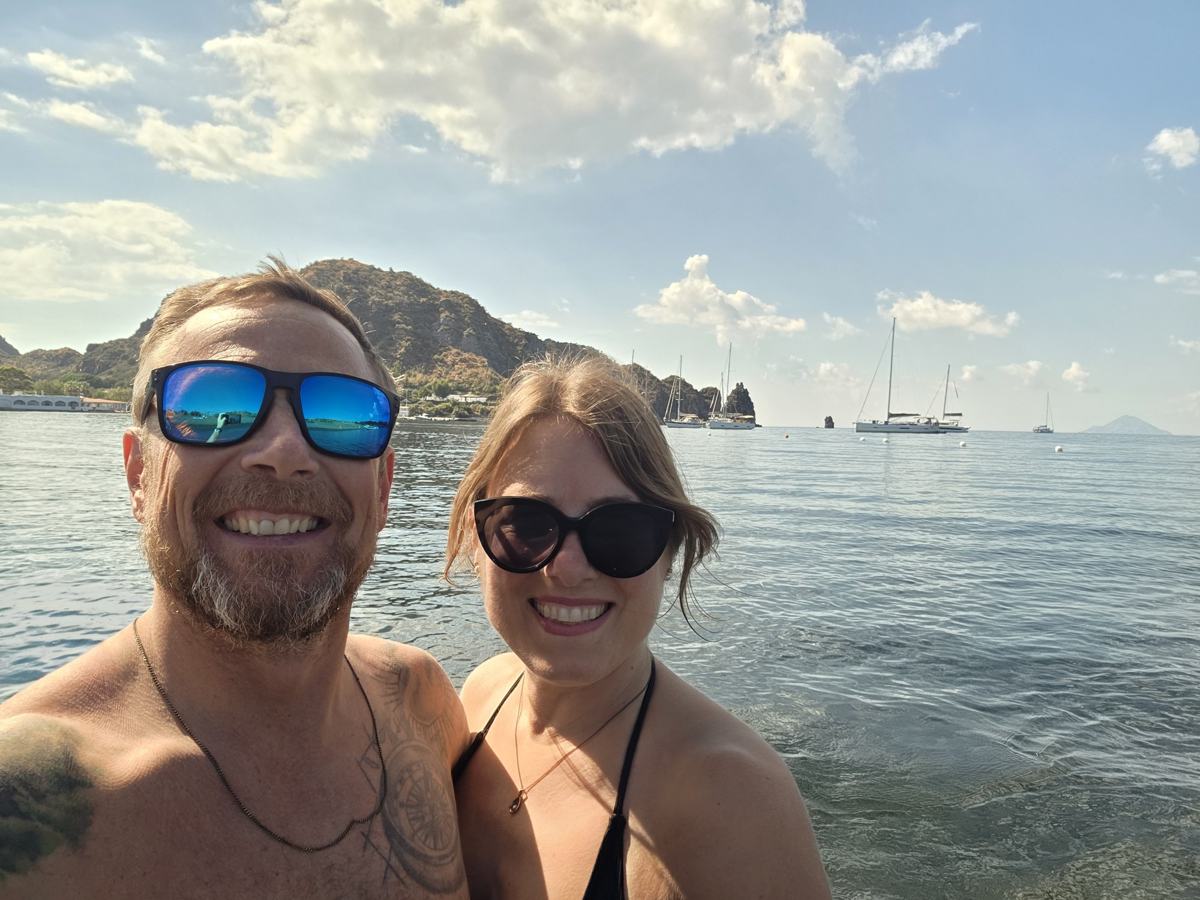
A swim during our Vulcano visit.
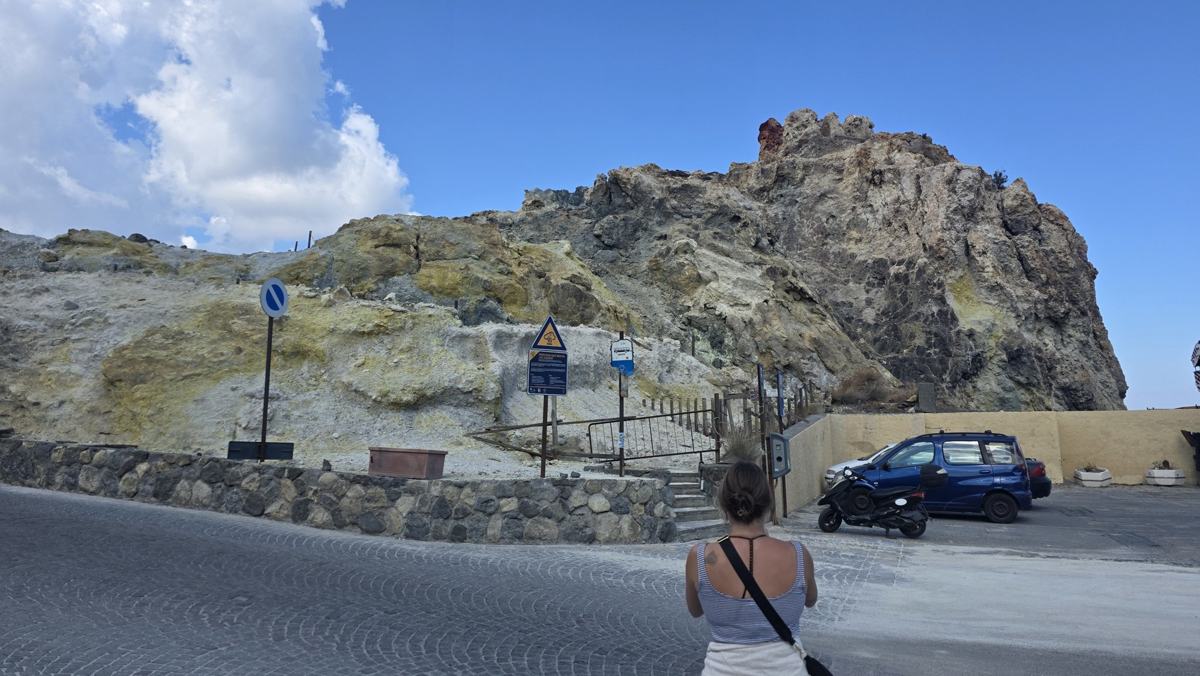
The volcanic setting near the mud-bath area.
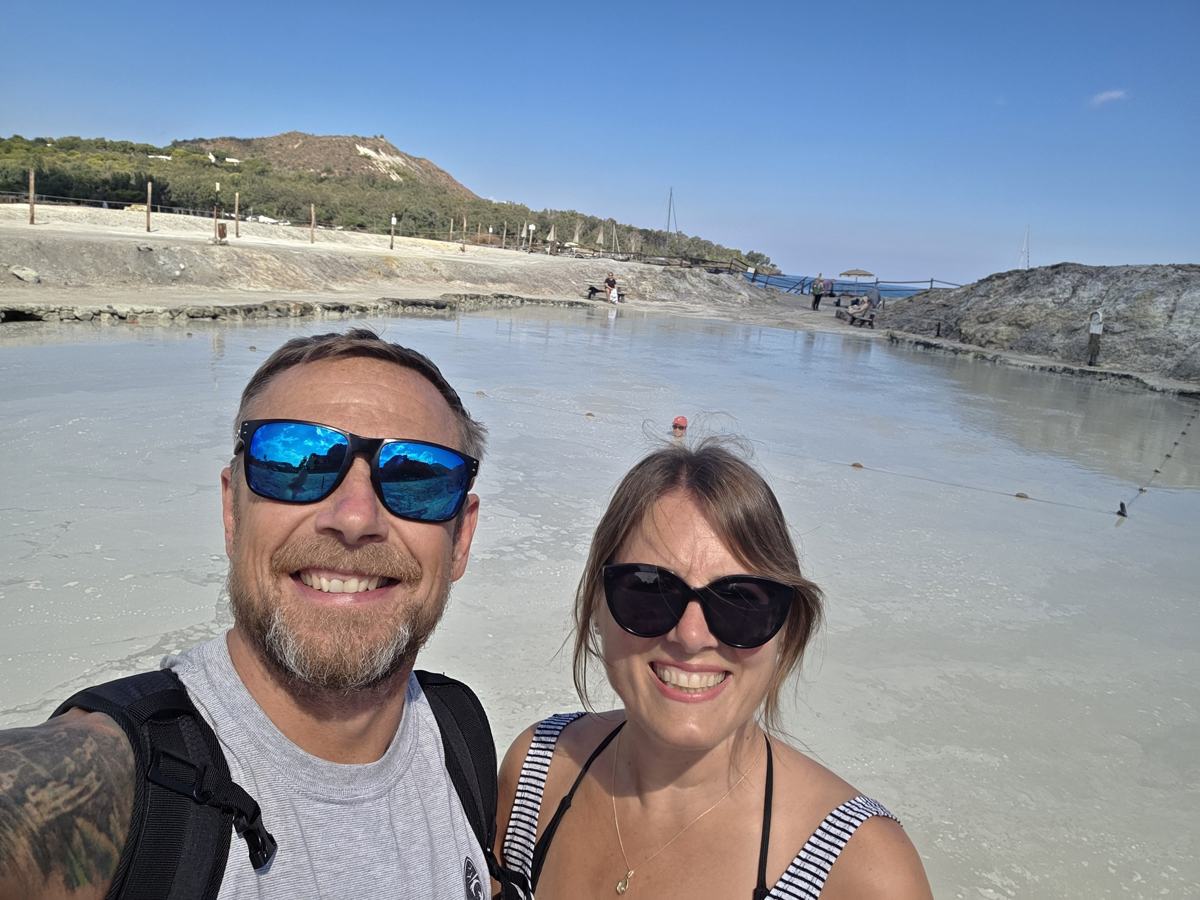
Together beside the mud baths.
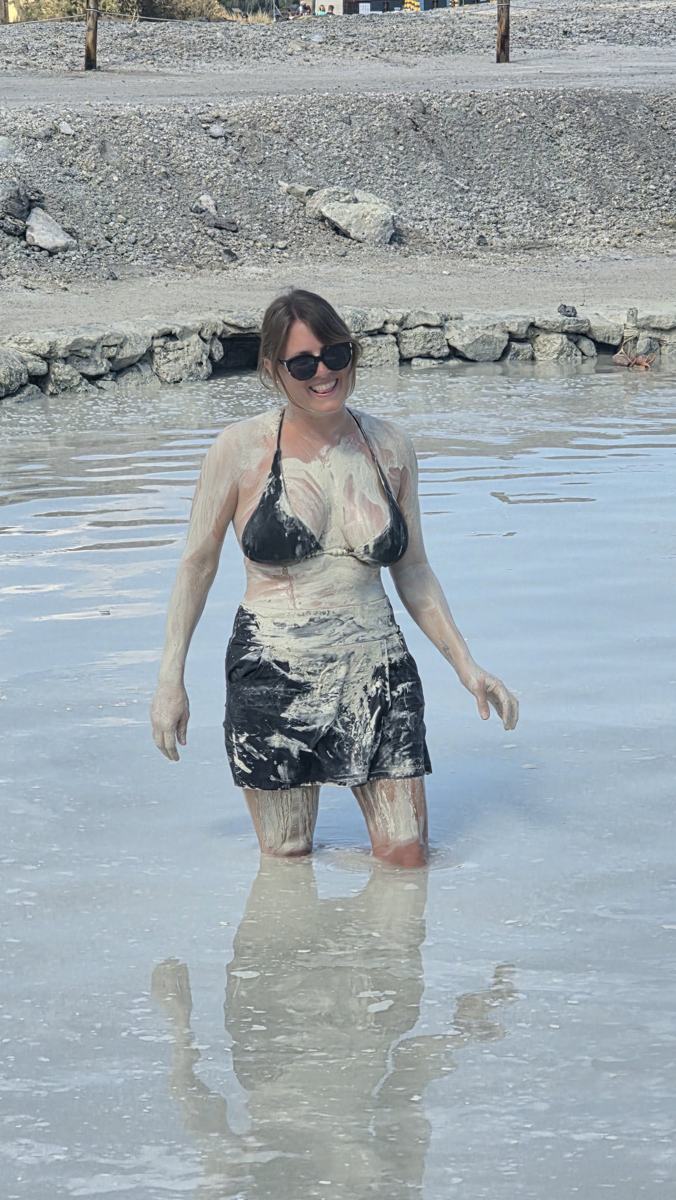
Jenn trying the mud bath during our visit.
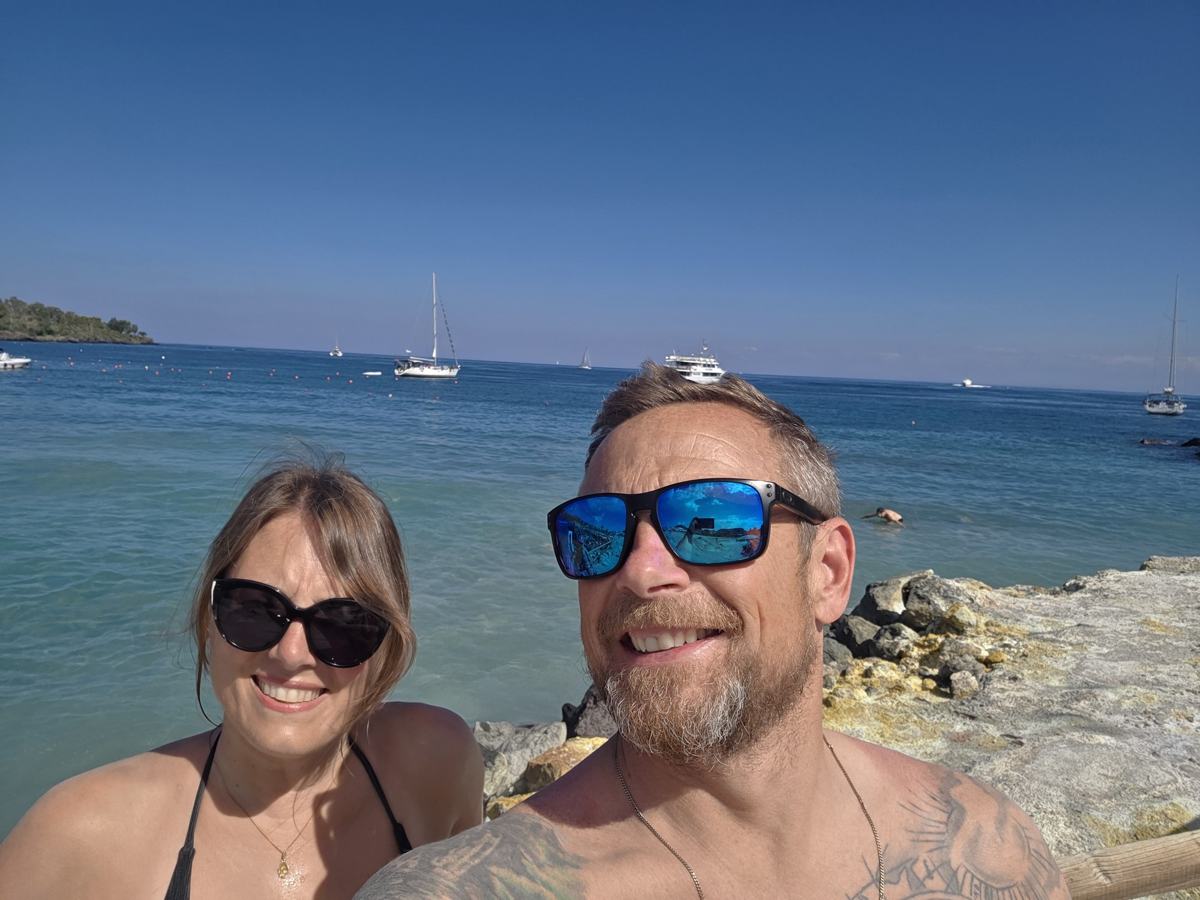
Back beside the sea on Vulcano.
The boat logistics that make the day work
Check Liberty Lines' current timetable and live departures for all three legs: Milazzo to Lipari, Lipari to Vulcano, and Vulcano to Milazzo. Confirm the actual departure pier and be there with the boarding margin required for your sailing. [16]
Book the last leg before shaping the rest of the day. An attractive lunch or an extra hour on the beach is not worth losing the practical return option. Weather can affect crossings; if conditions or the service pattern make two islands awkward, choose one.
Leave the rental car in legal parking in Milazzo. Hydrofoils are passenger services rather than a way to take your car to the islands. Carry the water, sun protection and layers you need for a full day, and keep tickets accessible.
Messina and Taormina on the way south
Our drive from Milazzo toward Ortigia included Messina, Taormina and beach time in the Taormina area. It was a varied travel day, with the kind of route that needs a realistic limit on each stop.
A short Messina stop
For a brief Messina visit, choose a focused city-centre walk rather than an itinerary spread across the city. Parking, walking to the main sights and returning to the car all count within the stop. If a cathedral visit is your priority, verify the day's access instead of relying on a general opening pattern.
Messina belongs here as a stop on our route, not as an attempt to tell the whole city's story in a couple of hours.
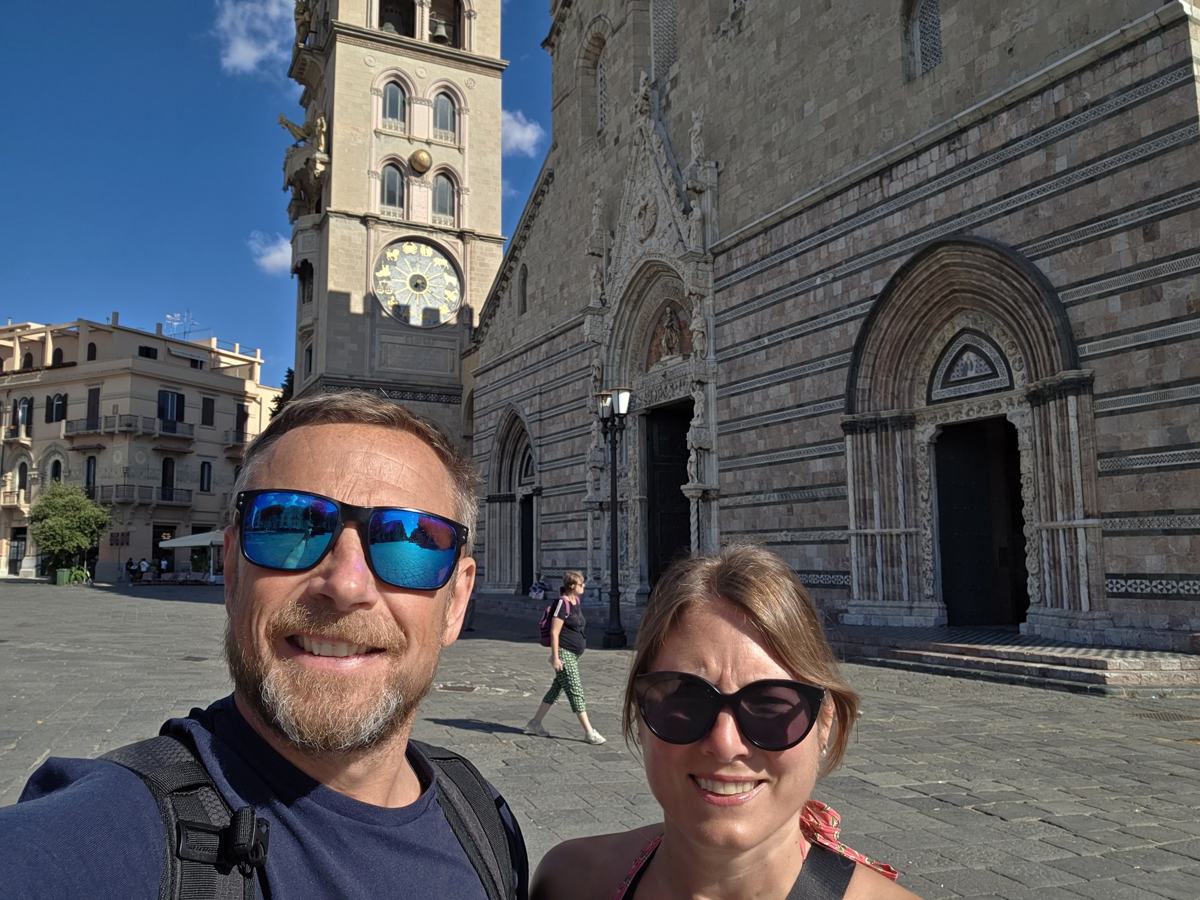
Together outside Messina Cathedral.
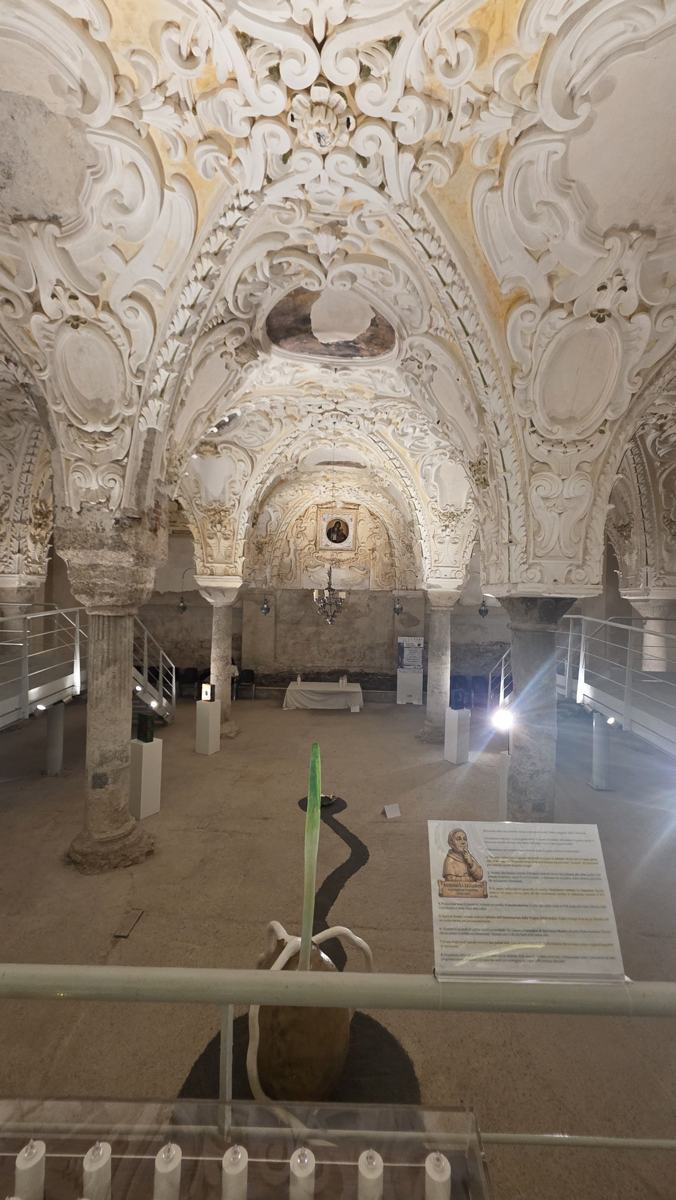
An ornate interior during our Messina visit.
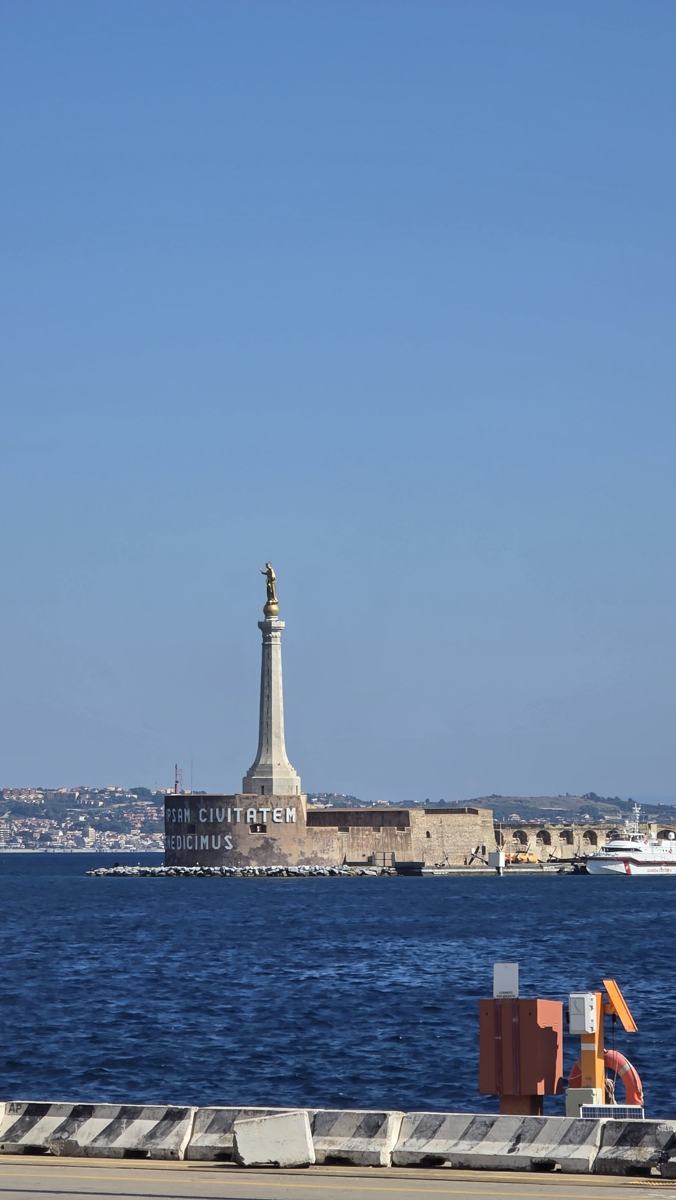
The monument at the entrance to Messina’s harbour.
Taormina's theatre and a beach break
The ancient theatre was the centrepiece of our Taormina visit. It has the combination this trip kept returning to: history and a view beyond it. Frame the theatre itself, then the landscape it opens toward, so the reader can see both reasons for stopping.
Taormina town and the beaches below are separate parts of the day. Choose the car park and transfer plan before heading into the historic centre. If using the cable car toward Mazzarò, check current operating information and the journey back.
Isola Bella is one of the best-known scenic beach choices in this area, but it should not be confused with an effortless sandy stop. Think about the approach, the pebbly footing, weather and the return climb or transport. For a short swim, convenience matters as much as the famous name. [17]
When continuing to Ortigia, remember that arriving in the city is not the same as reaching your accommodation. You still have parking, unloading and a walk through the old town ahead. Leave time for that arrival.
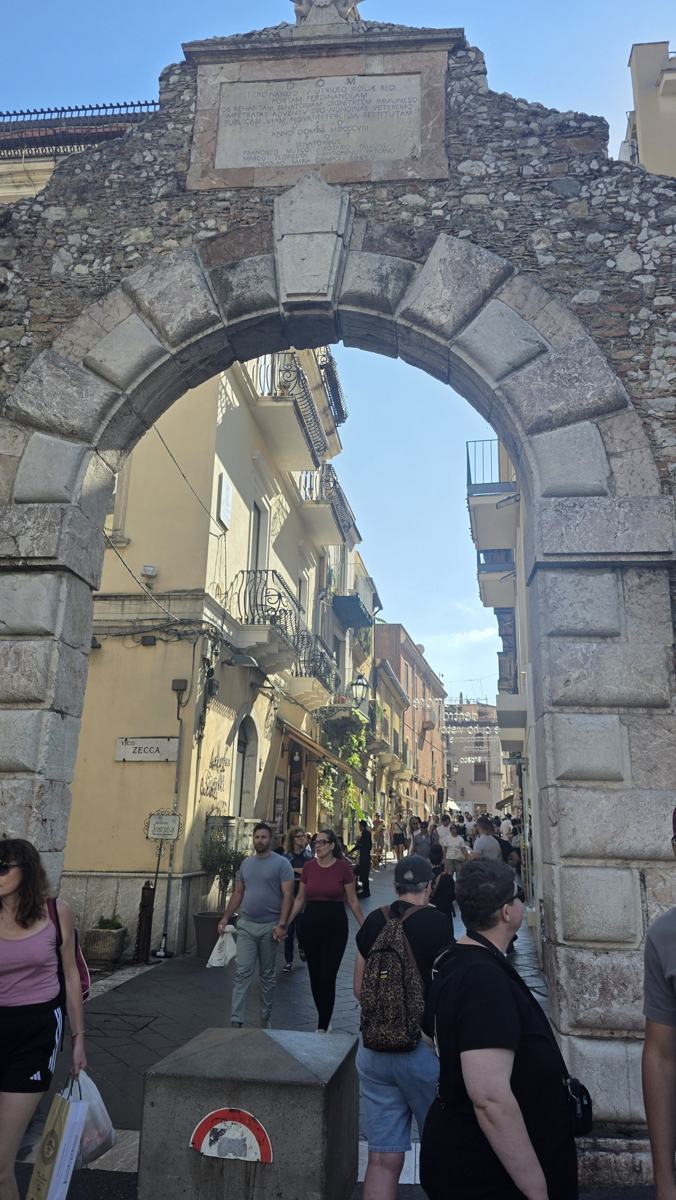
Entering Taormina through its old gateway.
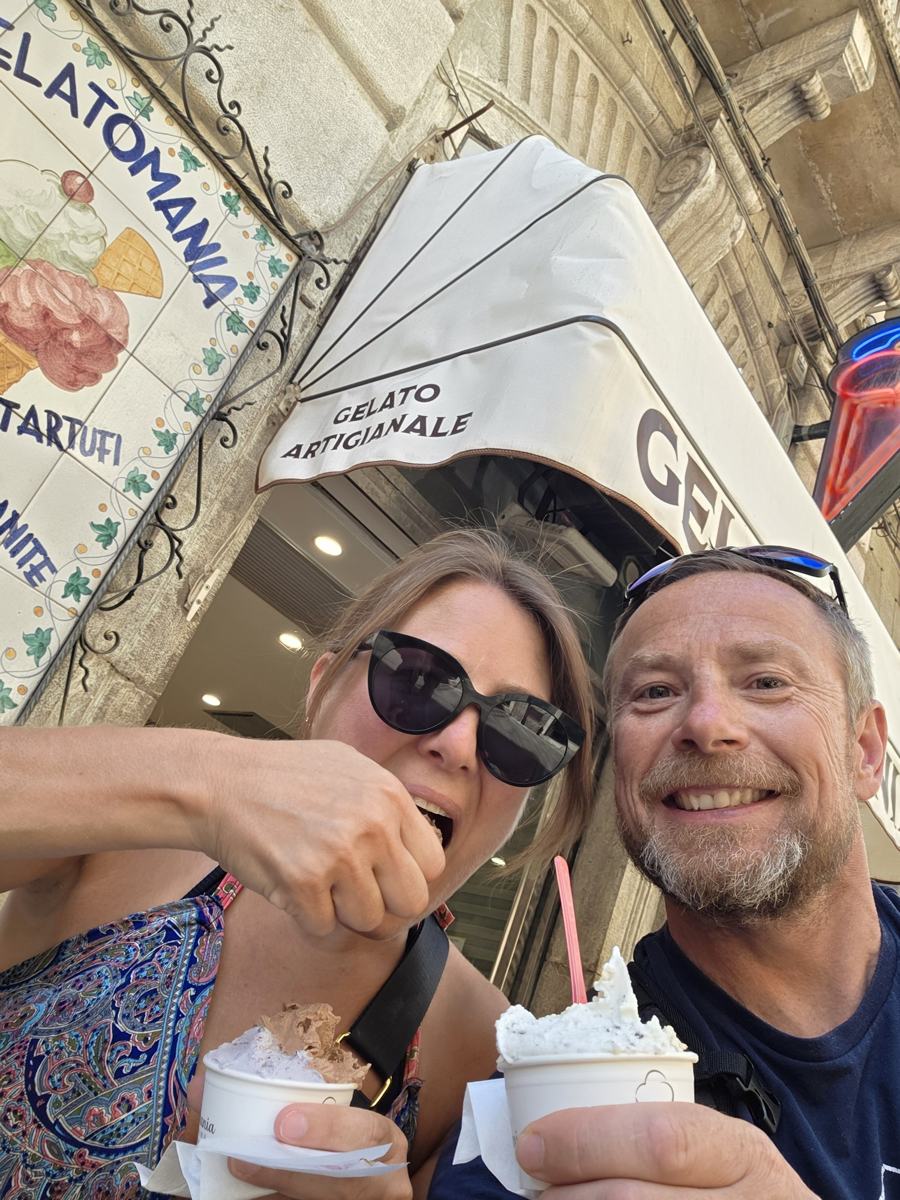
A sweet stop while exploring Taormina.
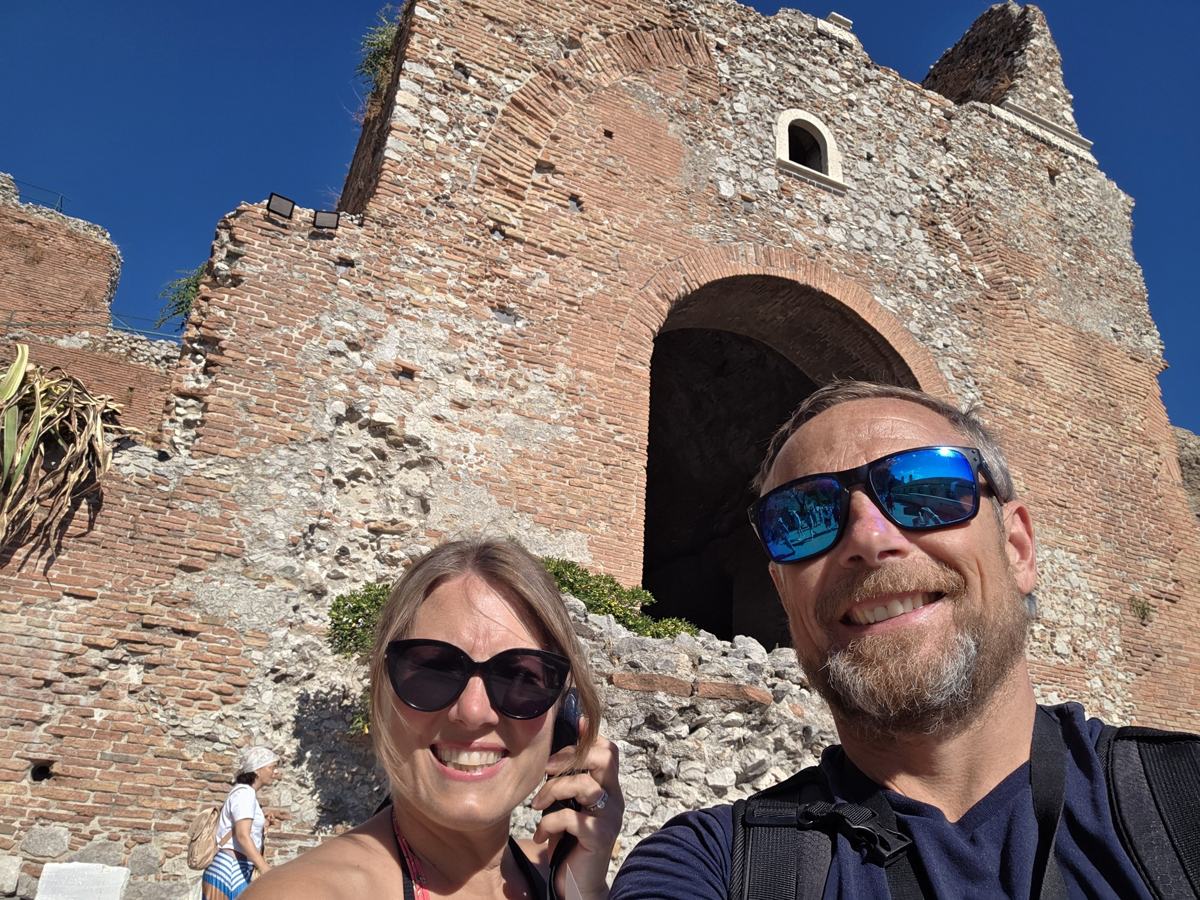
Together at Taormina’s ancient theatre.
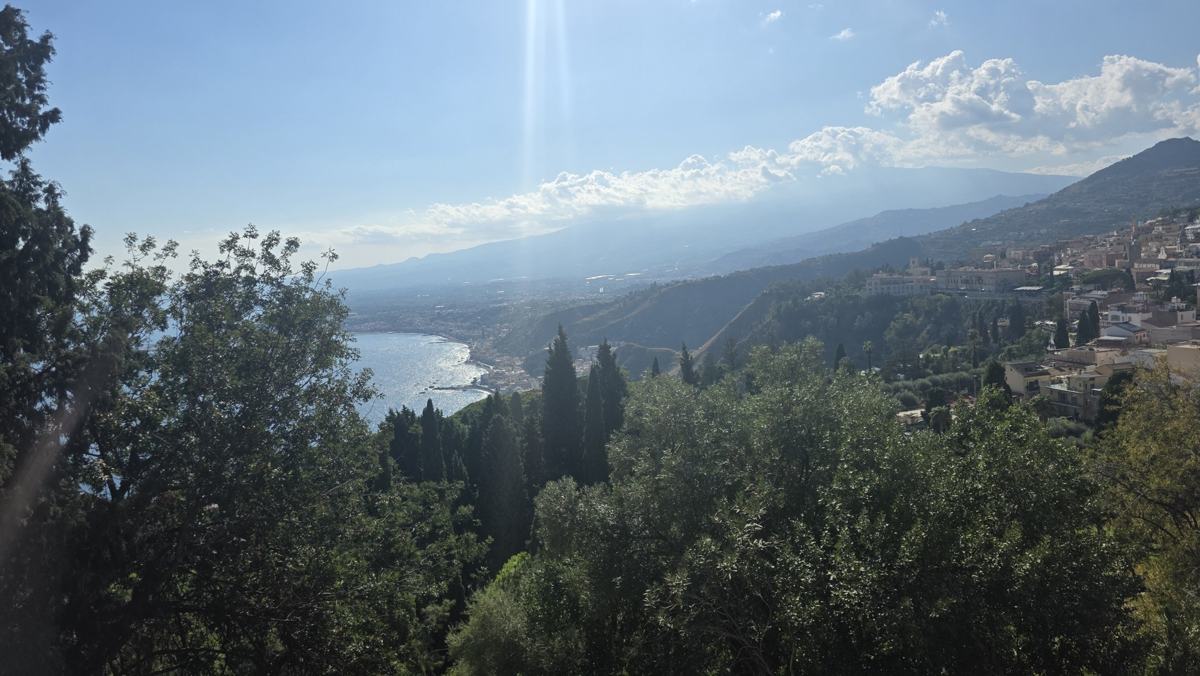
Coastal views from above Taormina.
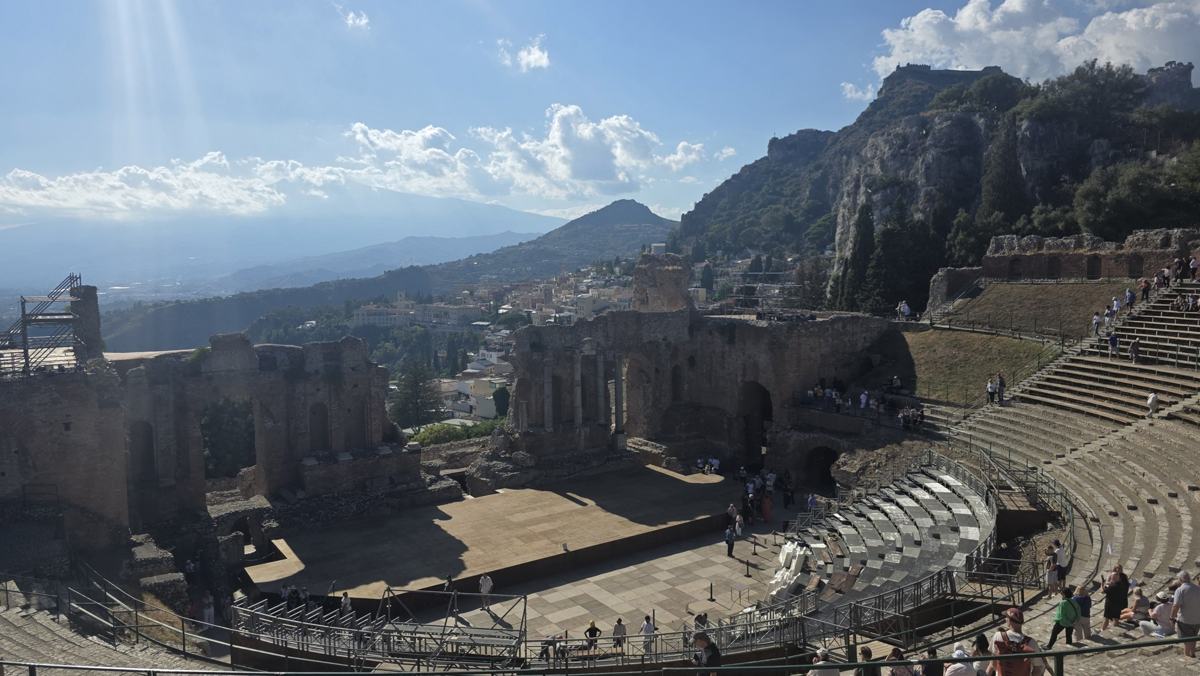
The ancient theatre and its extraordinary setting.
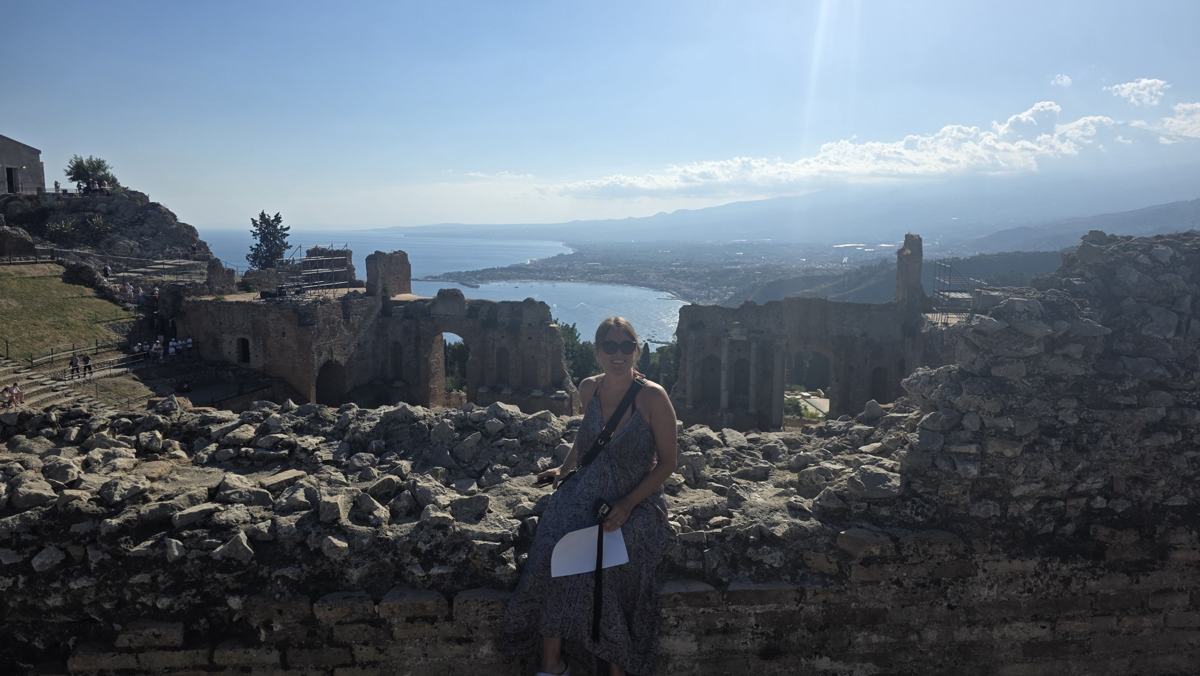
Jenn looking out across the theatre.
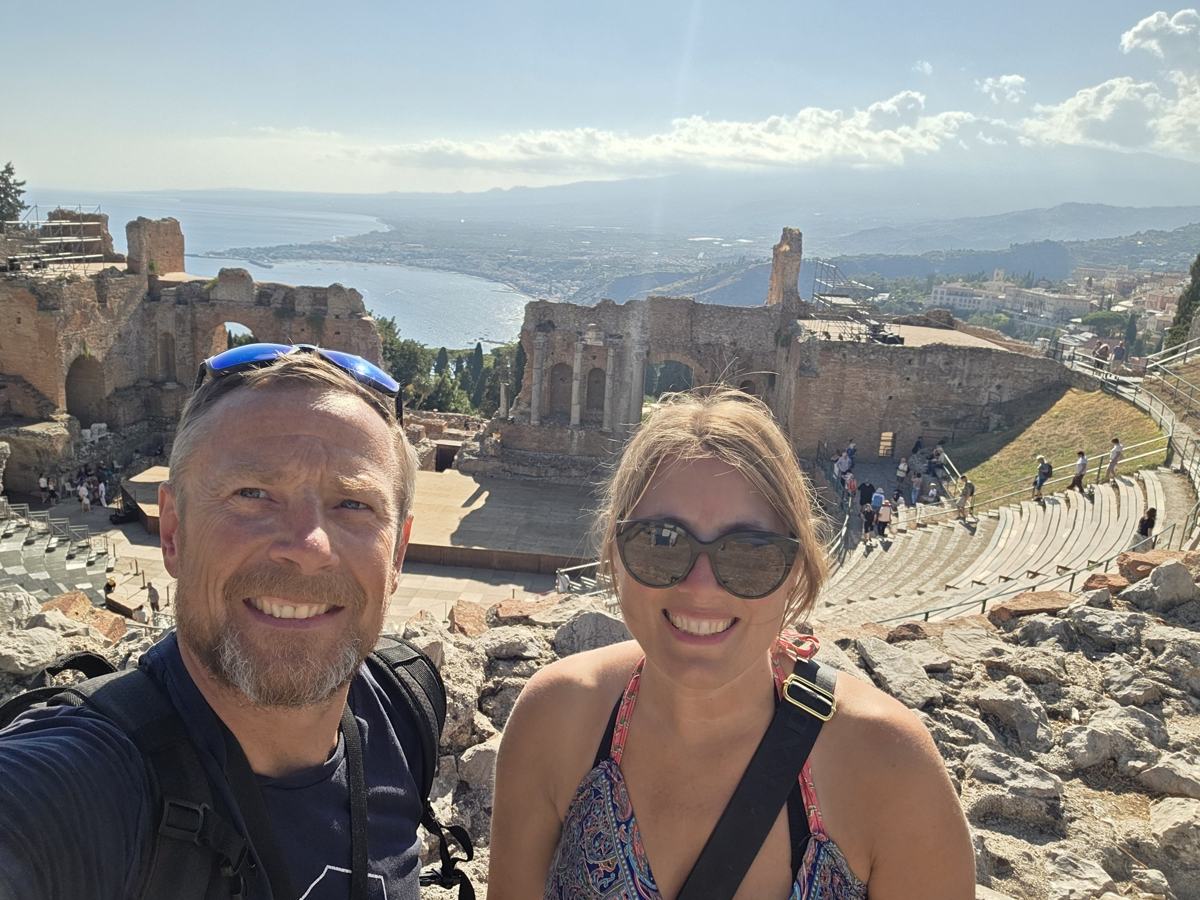
Together above the theatre seating.
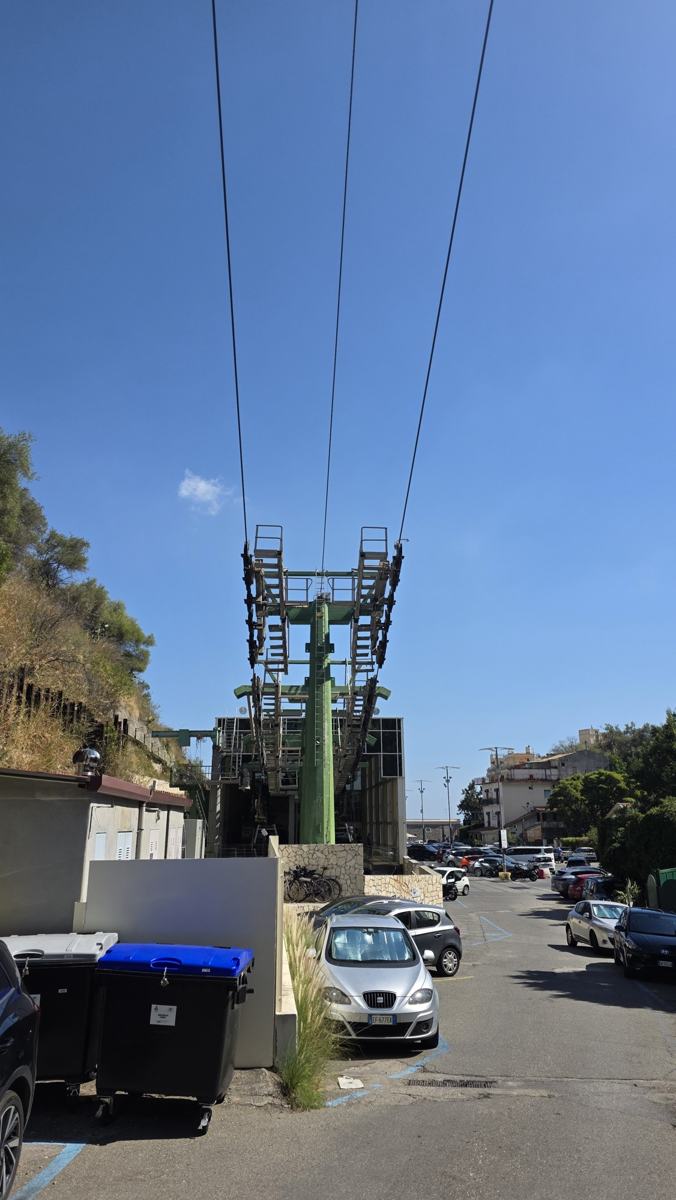
The cable-car connection between the coast and Taormina.
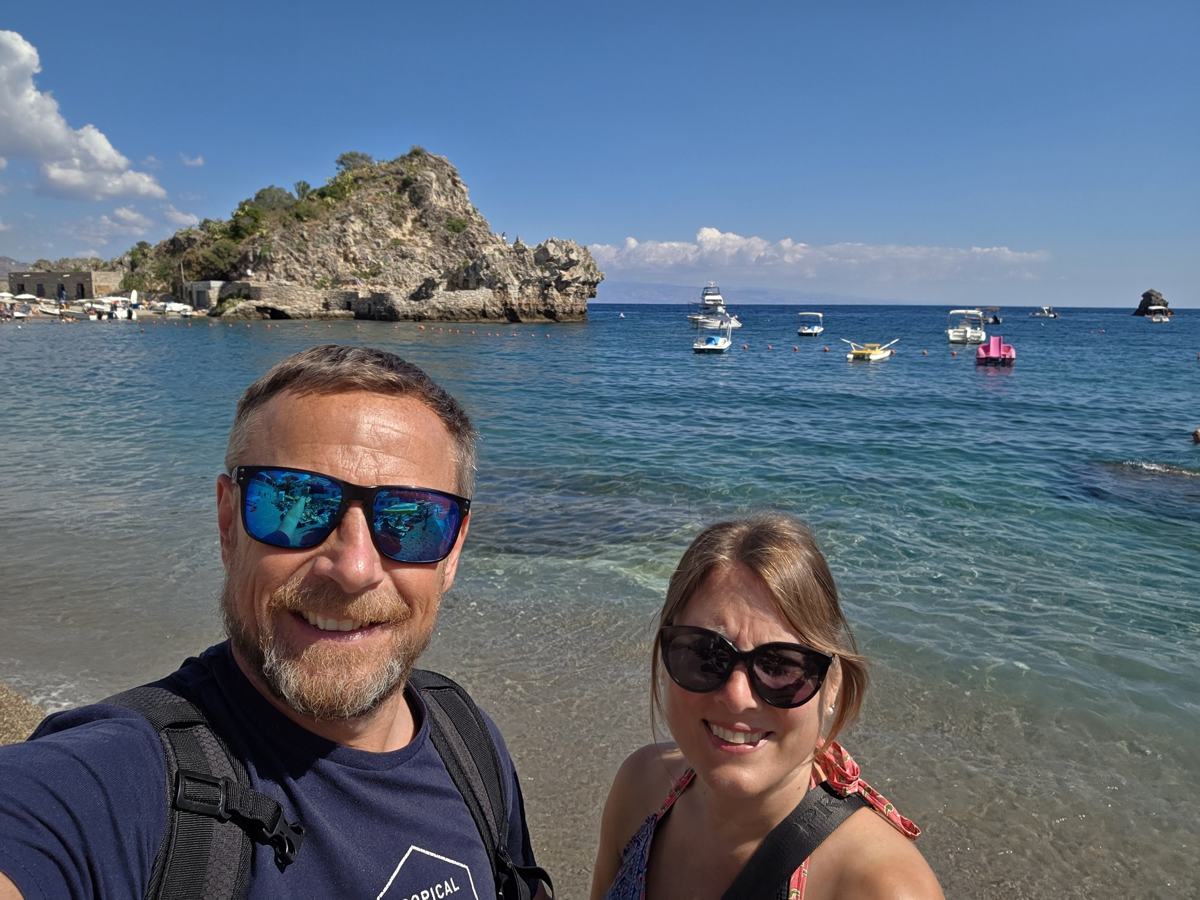
Together at the coast below Taormina.
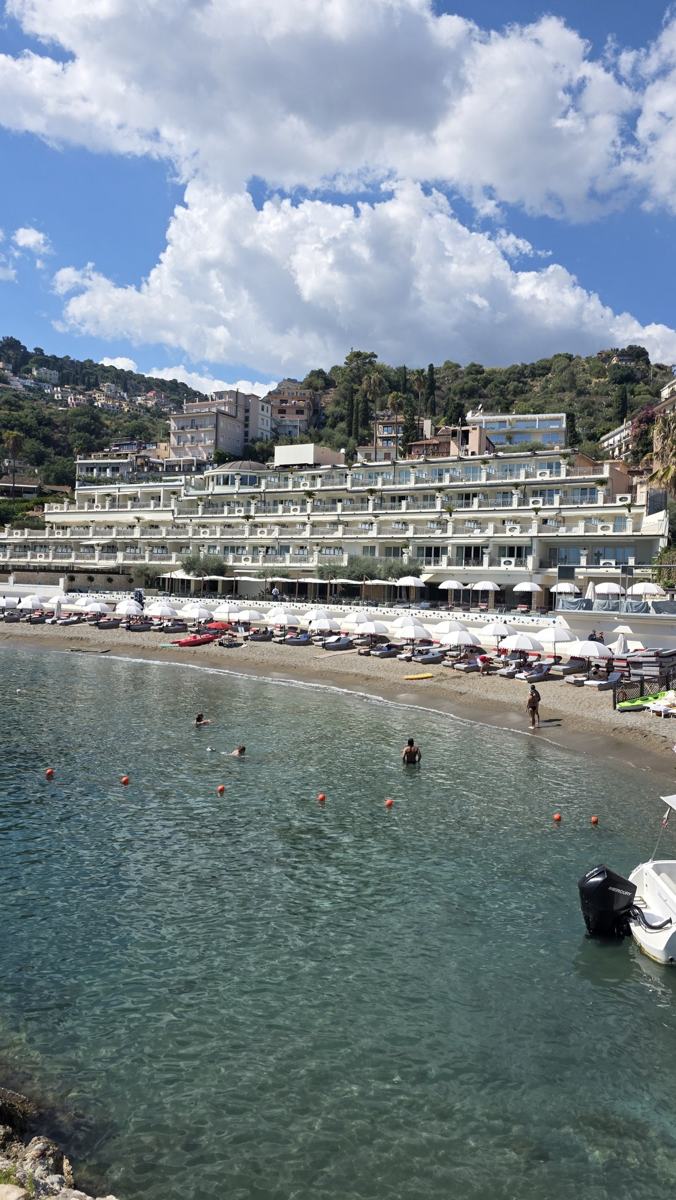
Beachfront views during our Taormina stop.
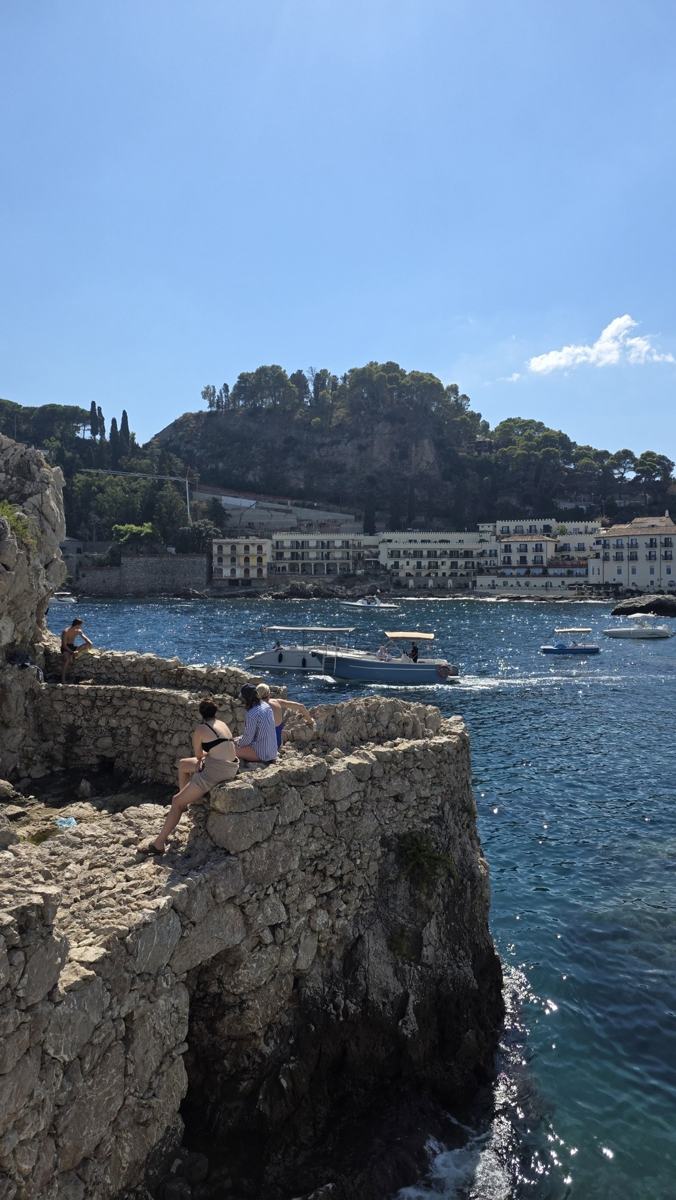
Boats and clear water in the bay.
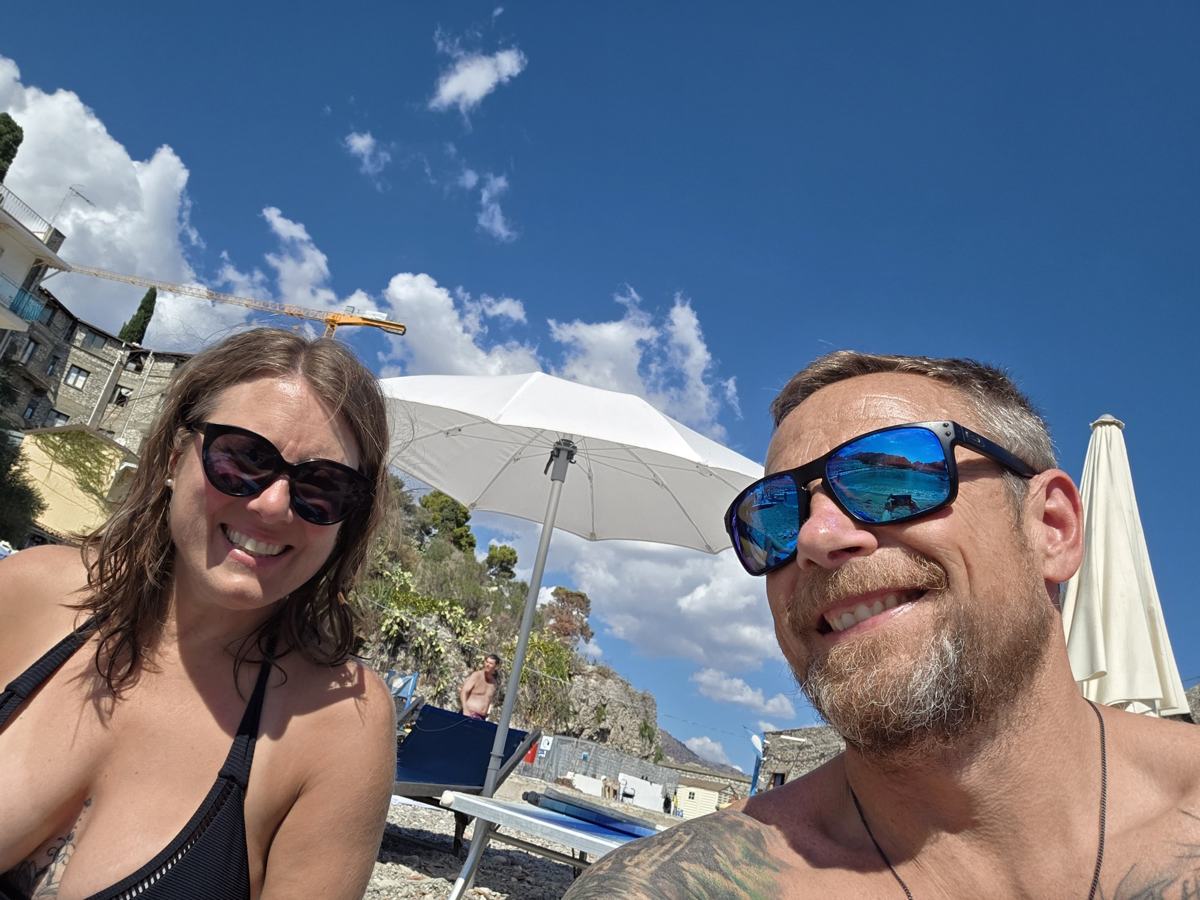
Taking a beach break before exploring town.
Ortigia gives the journey its final chapter
Our last base was Ortigia, where we stayed for two nights. After the movement of the earlier trip, the old town gave the finish a more concentrated setting: streets to walk, the waterfront, the market, a castle visit and a day linking archaeology with the beach.
Park first then enjoy the island on foot
We planned around Talete for parking. It is one of the municipal options to investigate, but always check current availability, charges and restrictions before arrival. Ortigia has a ZTL, a restricted-traffic zone; a reservation at an accommodation does not automatically authorise a drive to the door. Ask the host about unloading and any registration process before entering. [18]
In our case, the accommodation location was on Via del Crocefisso. The practical question was therefore how to park and reach the stay with luggage, rather than how to drive through the smallest streets. A compact bag and an agreed arrival plan are more useful here than an optimistic navigation instruction.
For the first evening, let the waterfront and old-town streets do the work. A late arrival does not need to become another full sightseeing day.
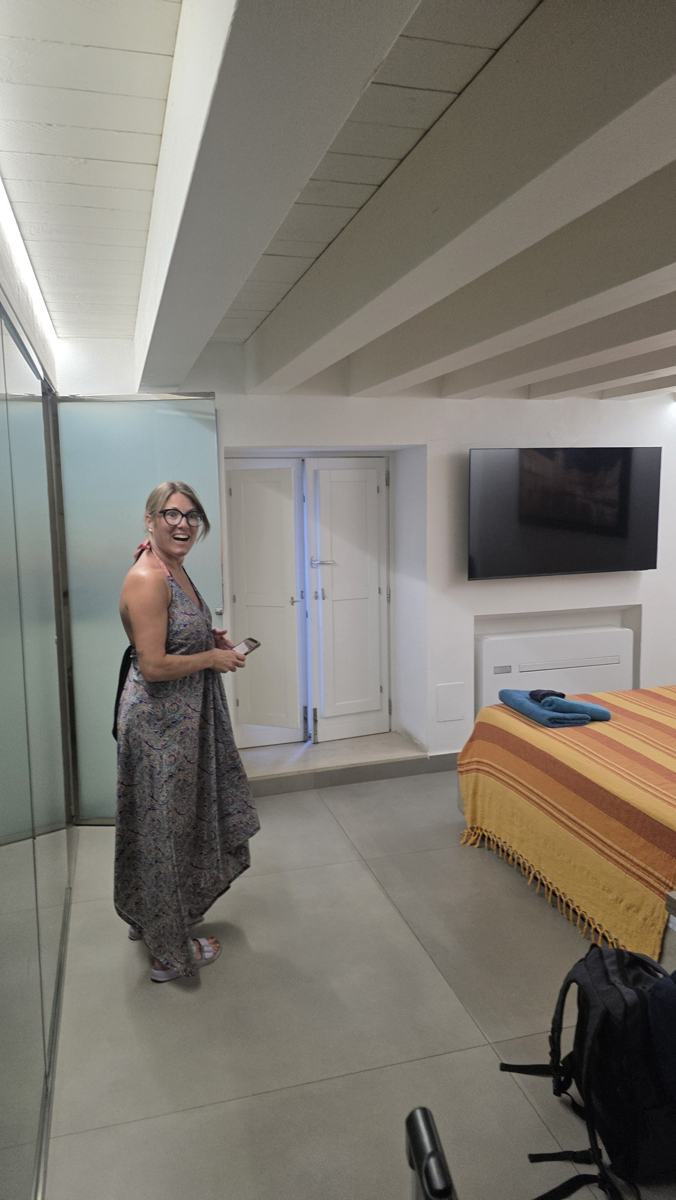
Settling into our Ortigia accommodation.
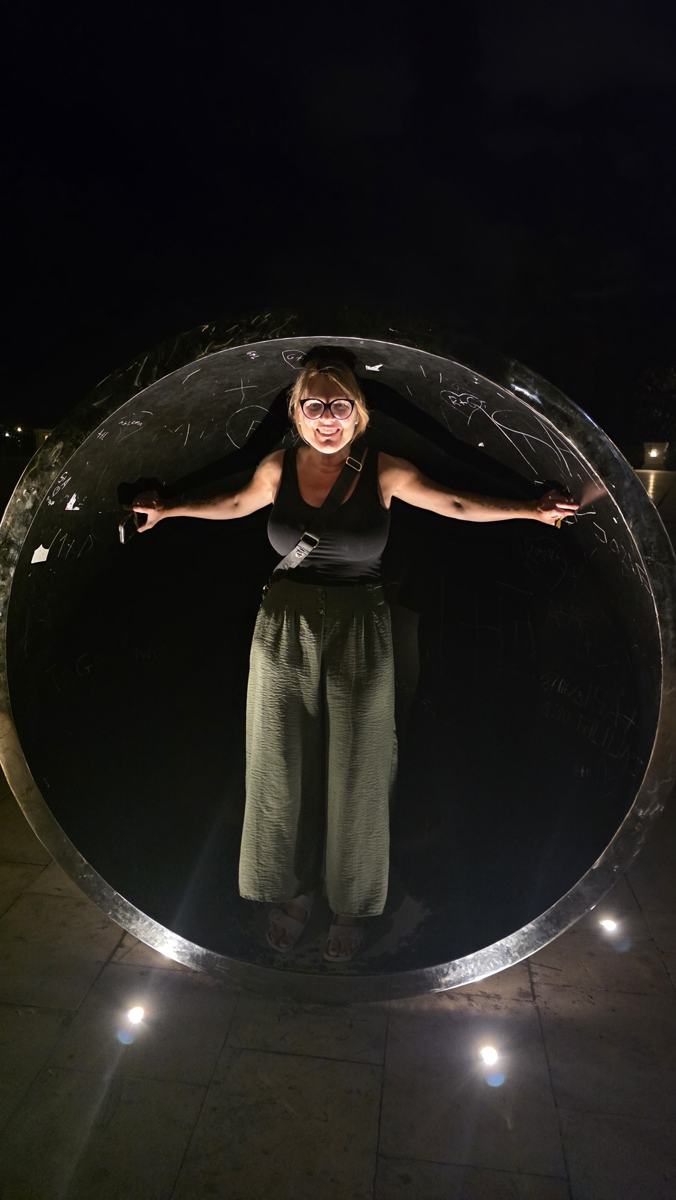
Jenn during our first evening walk.
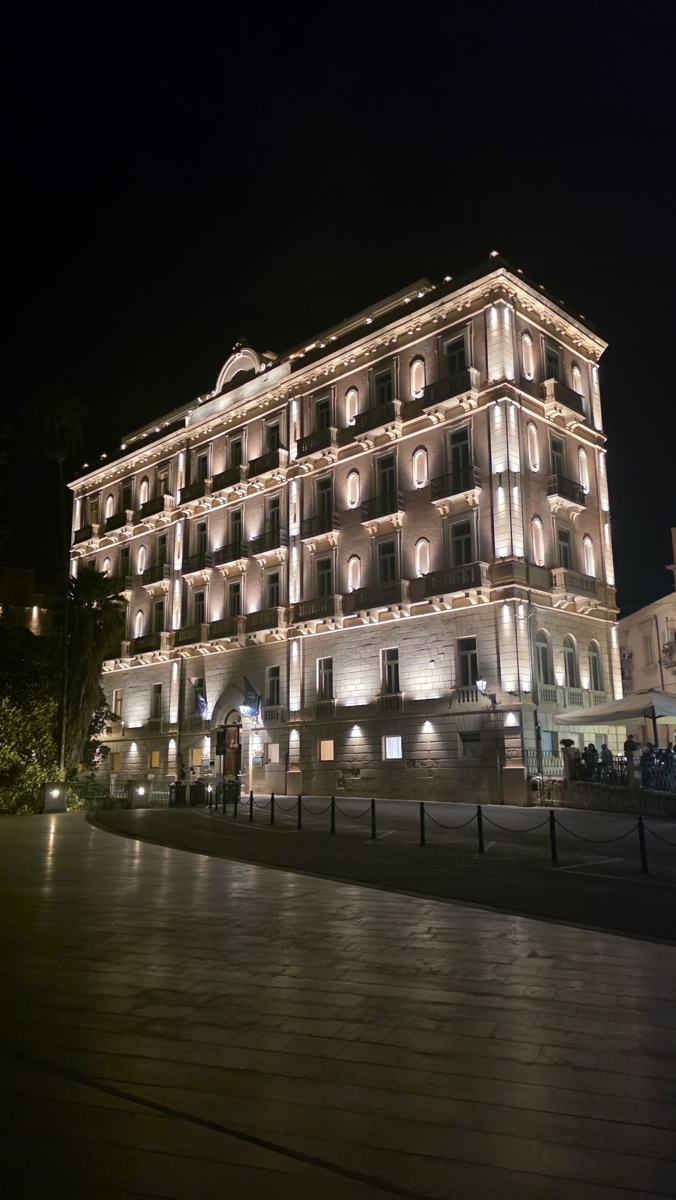
Ortigia’s waterfront buildings illuminated after dark.
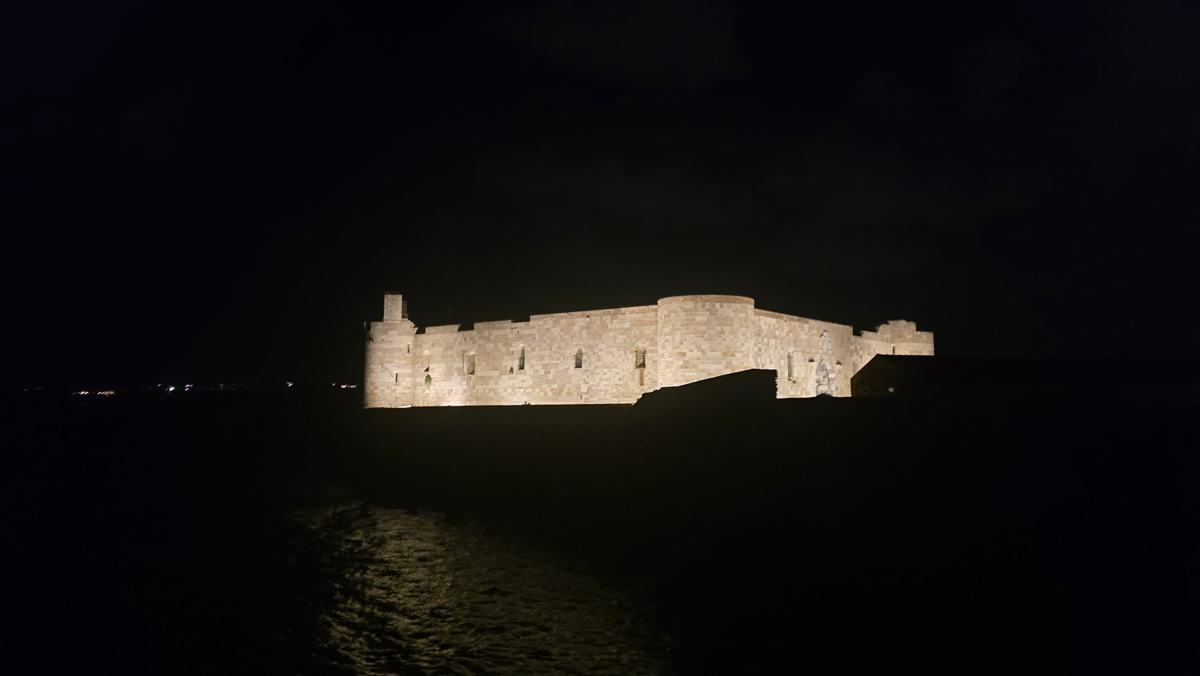
Castello Maniace at night.
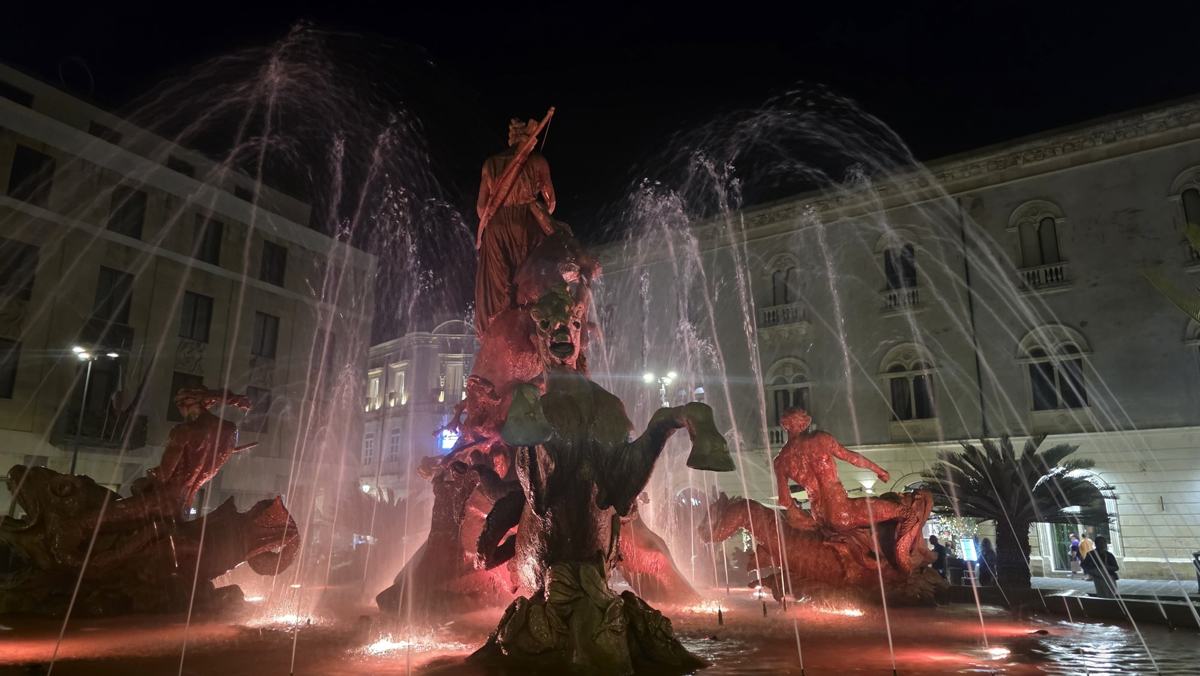
The fountain lit up during our evening walk.
The market and Castello Maniace
The old market gives the Ortigia chapter a food focus: stalls, produce, the exchange between sellers and customers and the ingredients behind the menus. Visit in the morning and confirm trading days and hours for your dates.
Photograph a broad market scene and a few details, asking before making a close portrait of a vendor. If you buy something memorable, photograph it before eating and keep its name. That turns a picture into a useful recommendation later.
Castello Maniace fits naturally into a walk toward the end of Ortigia, but give it a separate block of time. Check ticketing and the day's last entry before making it the final stop.
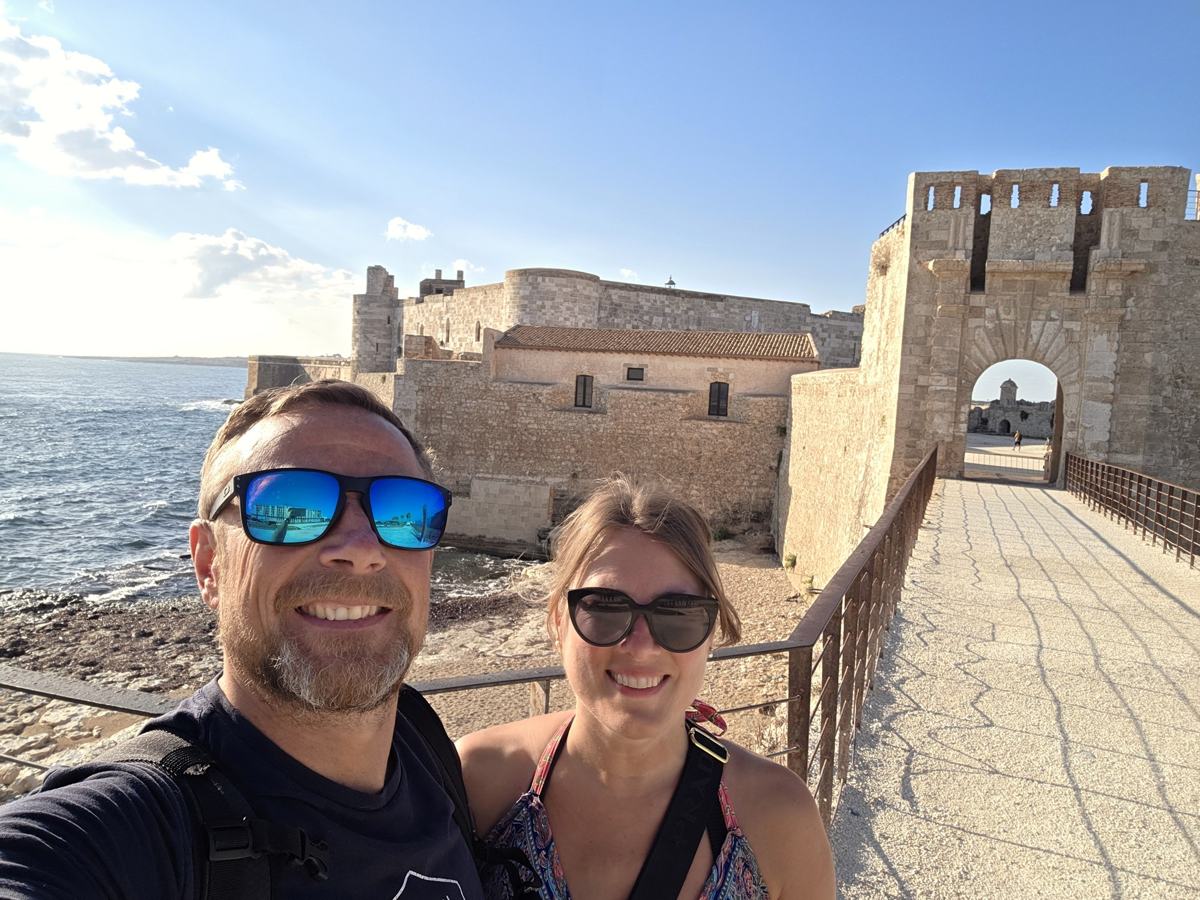
Together at Castello Maniace the next morning.
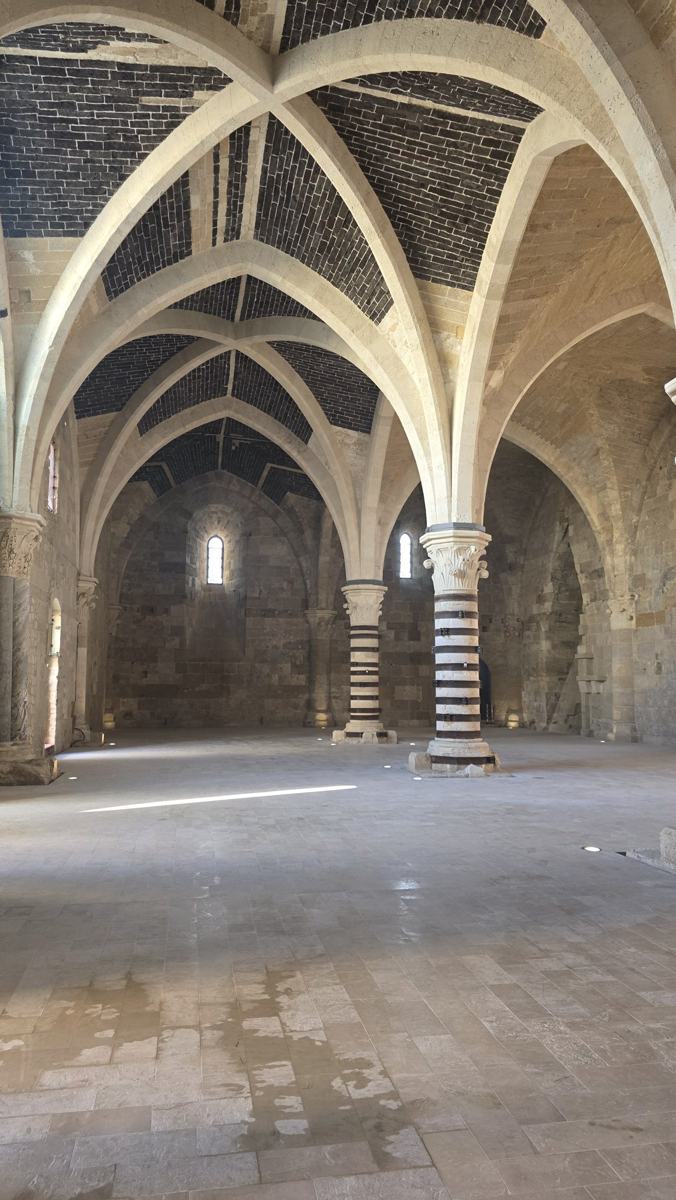
Vaulted stonework inside Castello Maniace.
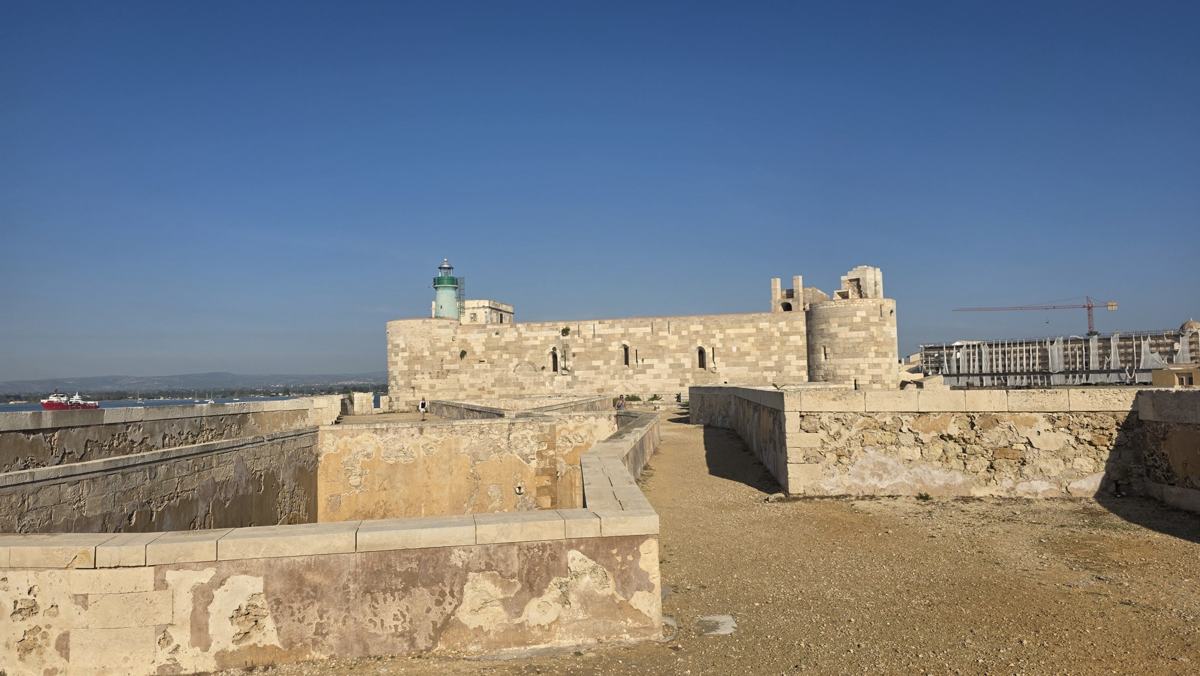
The castle ramparts in the morning light.
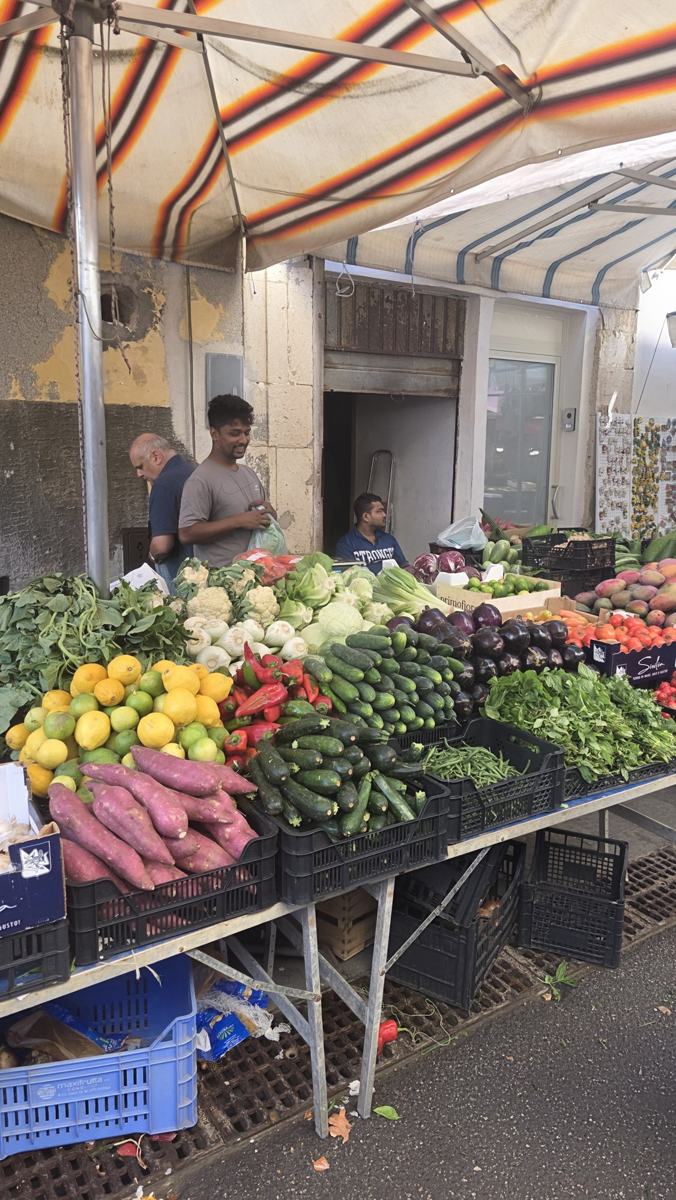
Fresh produce at Ortigia’s market.
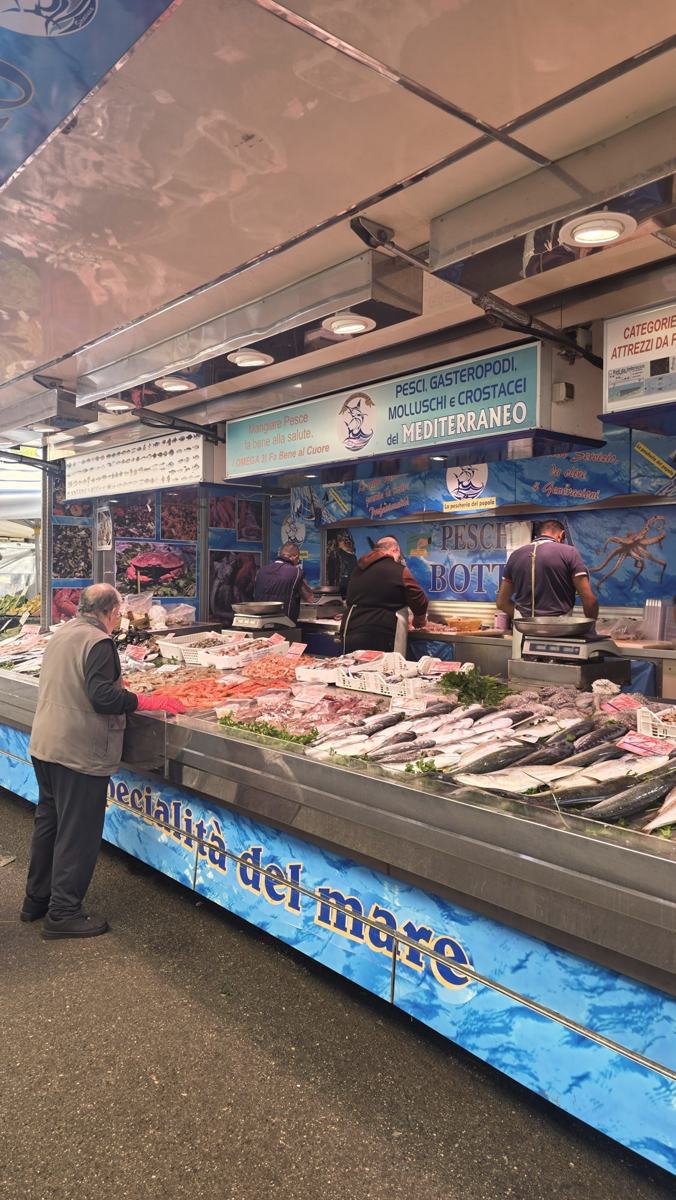
The seafood stalls during our market visit.
Neapolis then a sandy beach
Our final Syracuse-area chapter combined archaeology and beach time. For anyone copying it, be careful with the place names: the Archaeological Park of Neapolis is in Syracuse; the Necropolis of Pantalica is a different destination outside the city. They are not interchangeable map pins. [19]
A practical day begins with the market, then collecting the car and driving to the archaeology visit, followed by the beach. It avoids adding a long walk between Ortigia and the park to an already active day. Check the park's current opening arrangements and which areas are accessible before booking.
Fontane Bianche is a useful sandy-beach option to investigate for this route. Sicily's tourism information describes its fine white sand. Check parking and the public or lido section you intend to use; do not assume free parking or beach-club facilities from a photograph alone. [20]
The beach belongs in the ending because this journey was never only about the sights. Some time with nothing more demanding than the water is a good way to finish a busy trip.
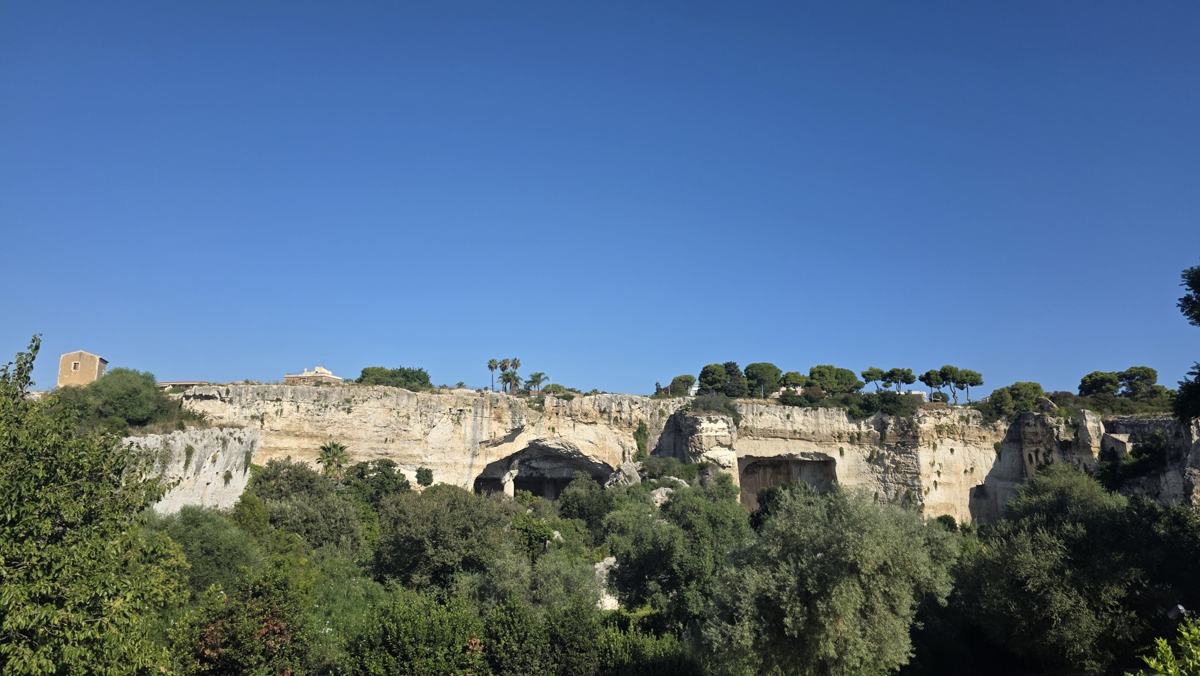
The quarry landscape at Neapolis.
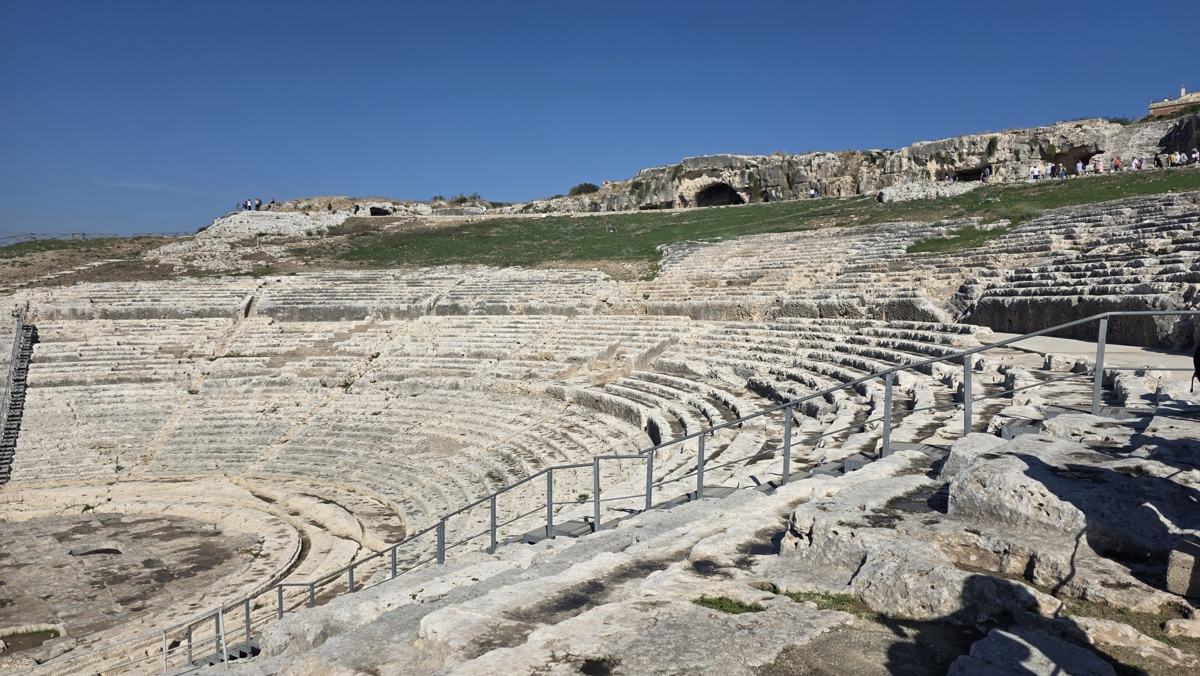
The Greek theatre at Neapolis in Syracuse.
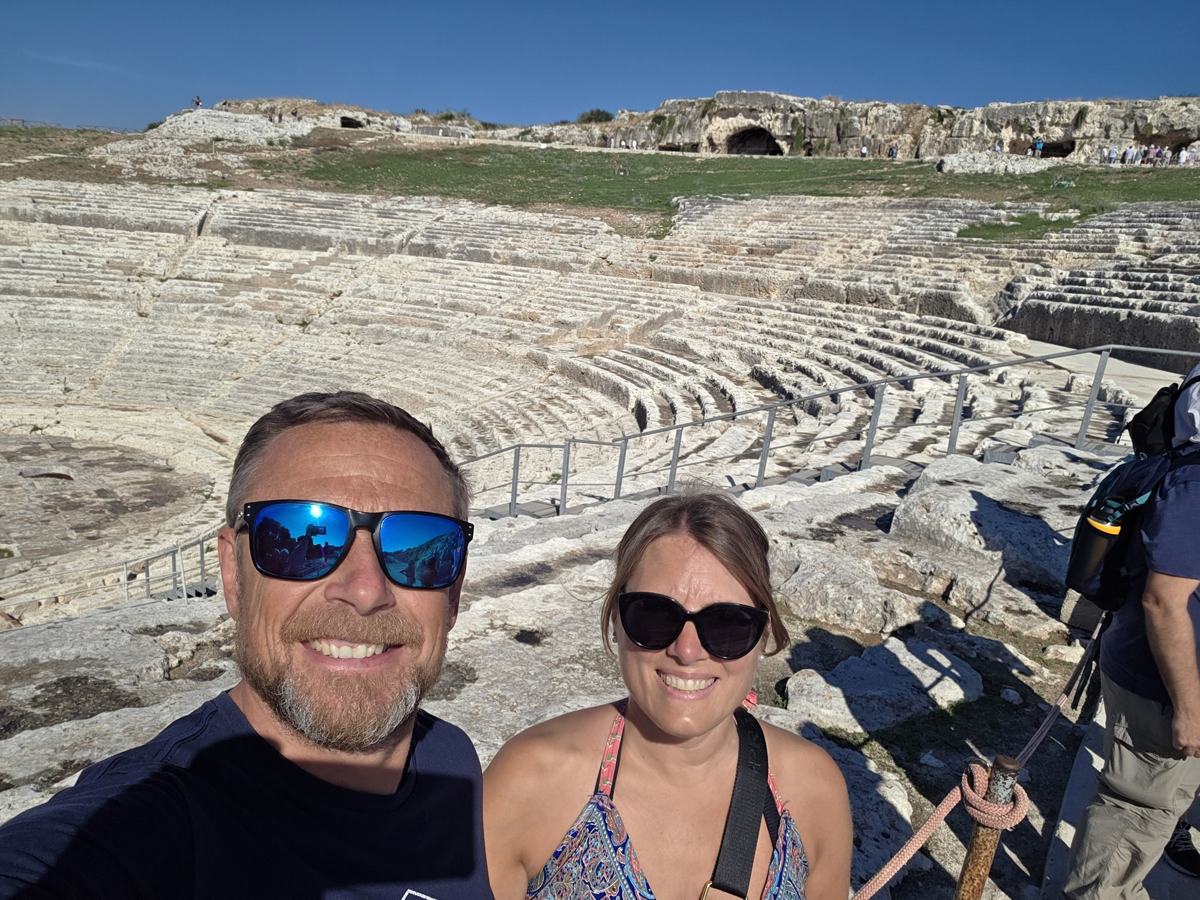
Together beside the ancient theatre.
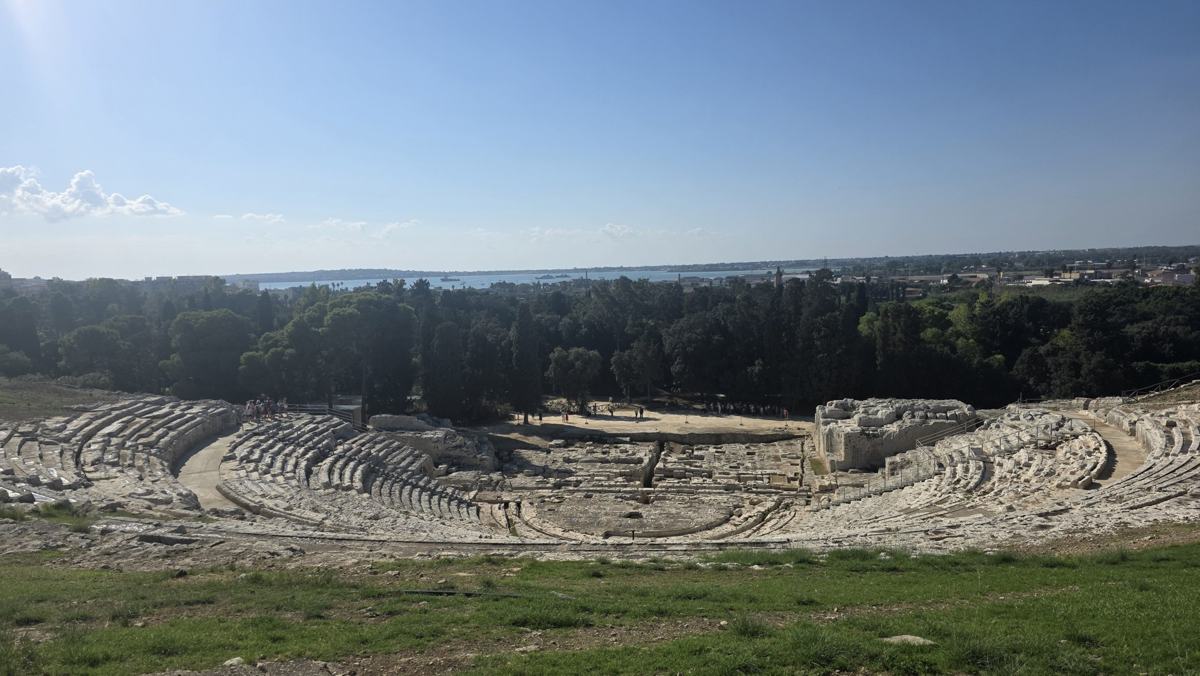
A wider view over the theatre seating.
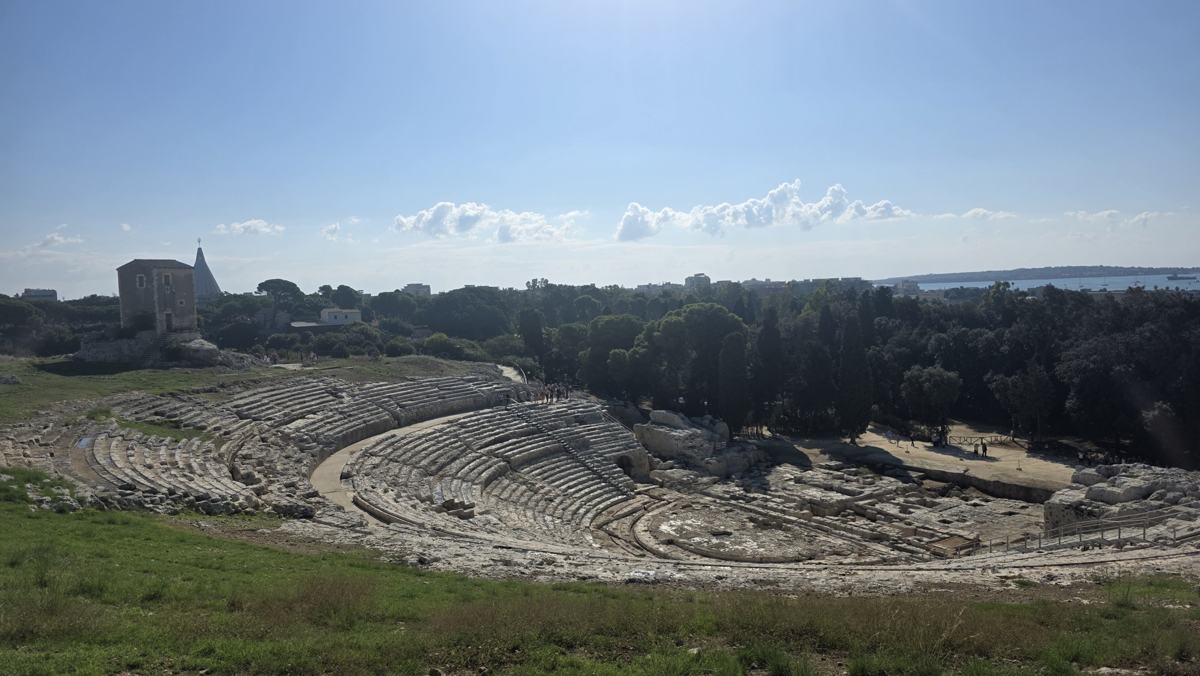
Ancient stonework and greenery at Neapolis.
The pasta in Ortigia was another favourite meal of the trip. Alongside our lunch at Filippino, it belongs among the food memories we brought home: a good reason to leave time for the table as well as the sights.
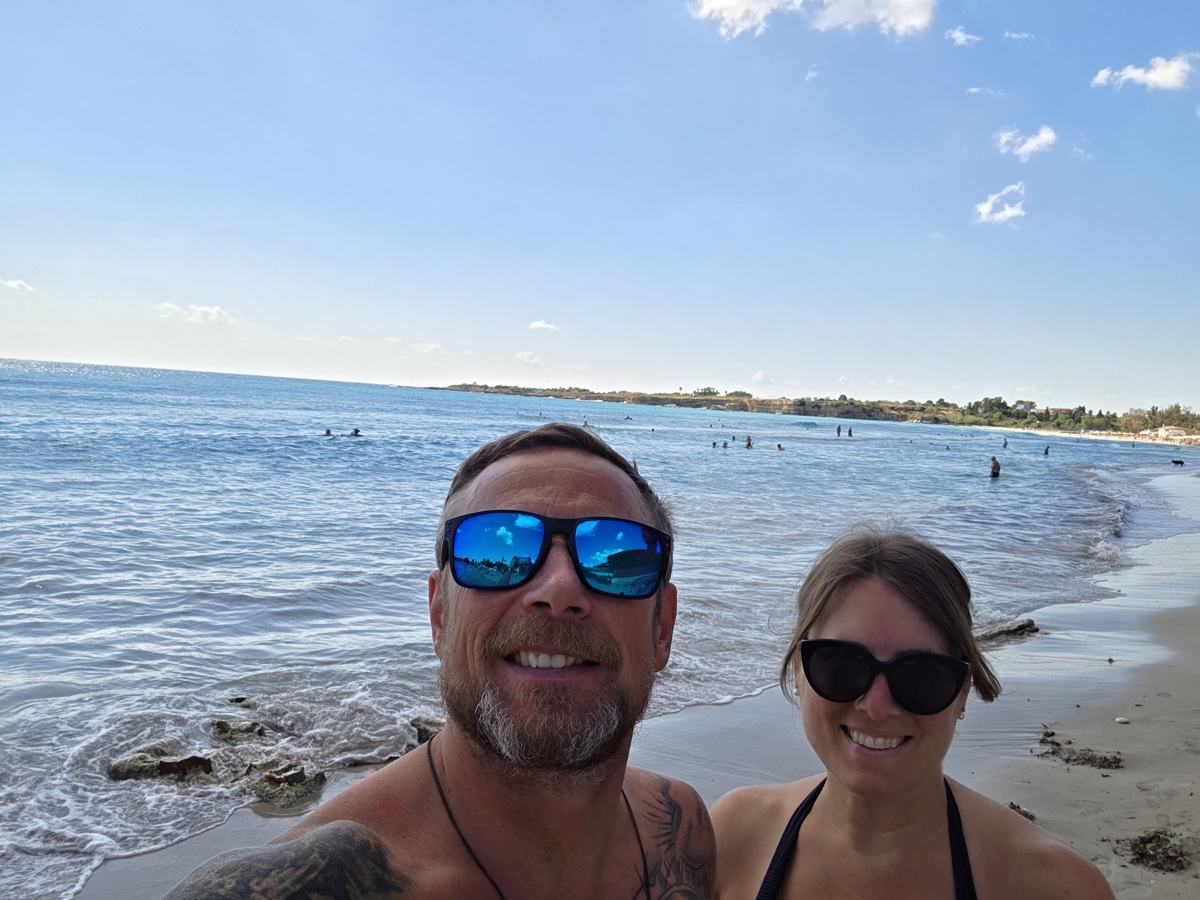
Together at our final beach stop near Syracuse.
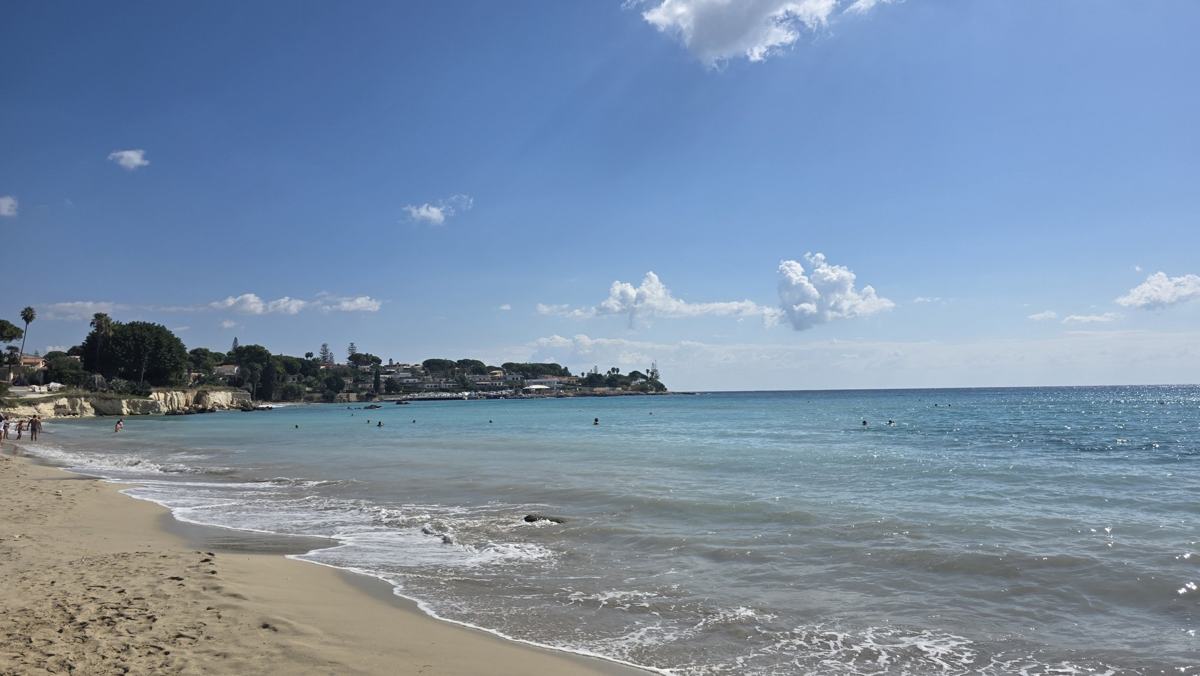
Sand and calm water on the last beach day.
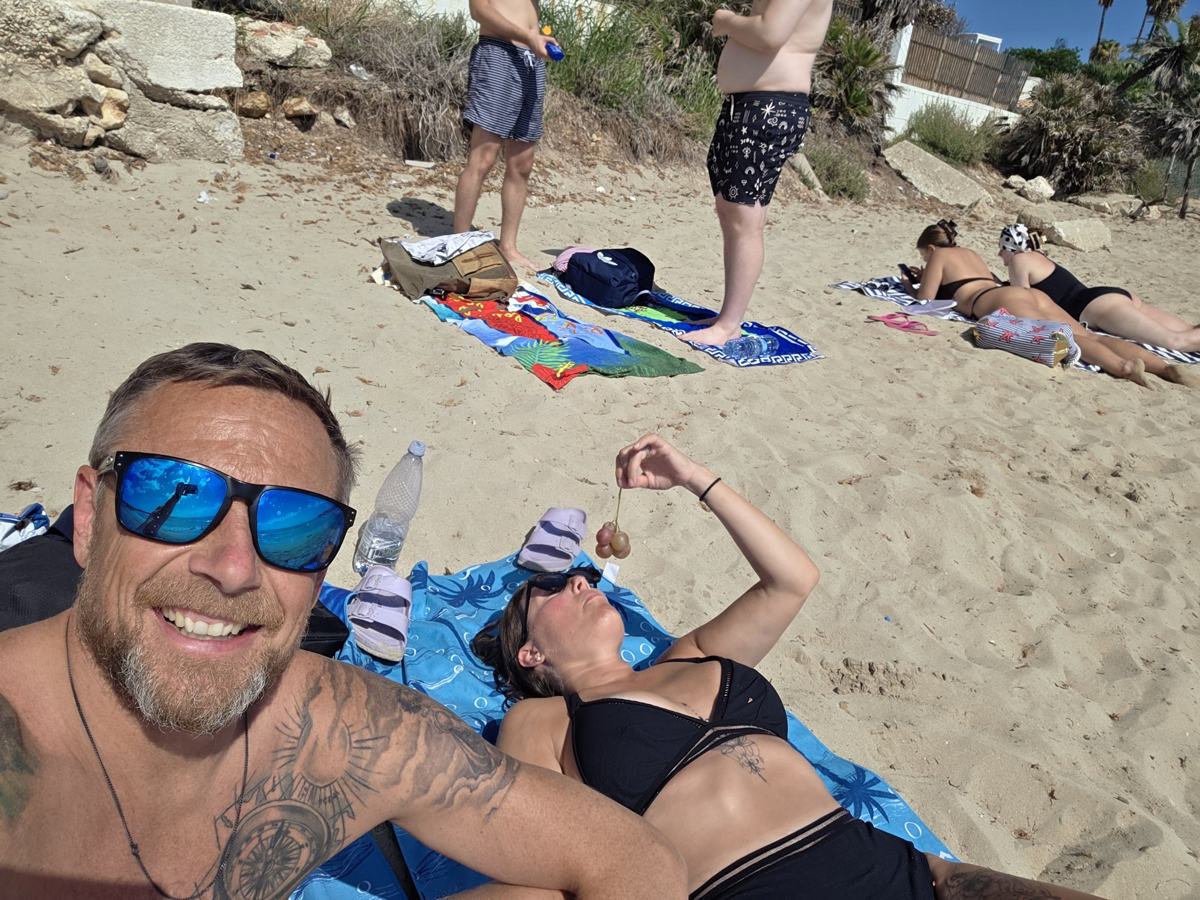
A pause on the sand after sightseeing.
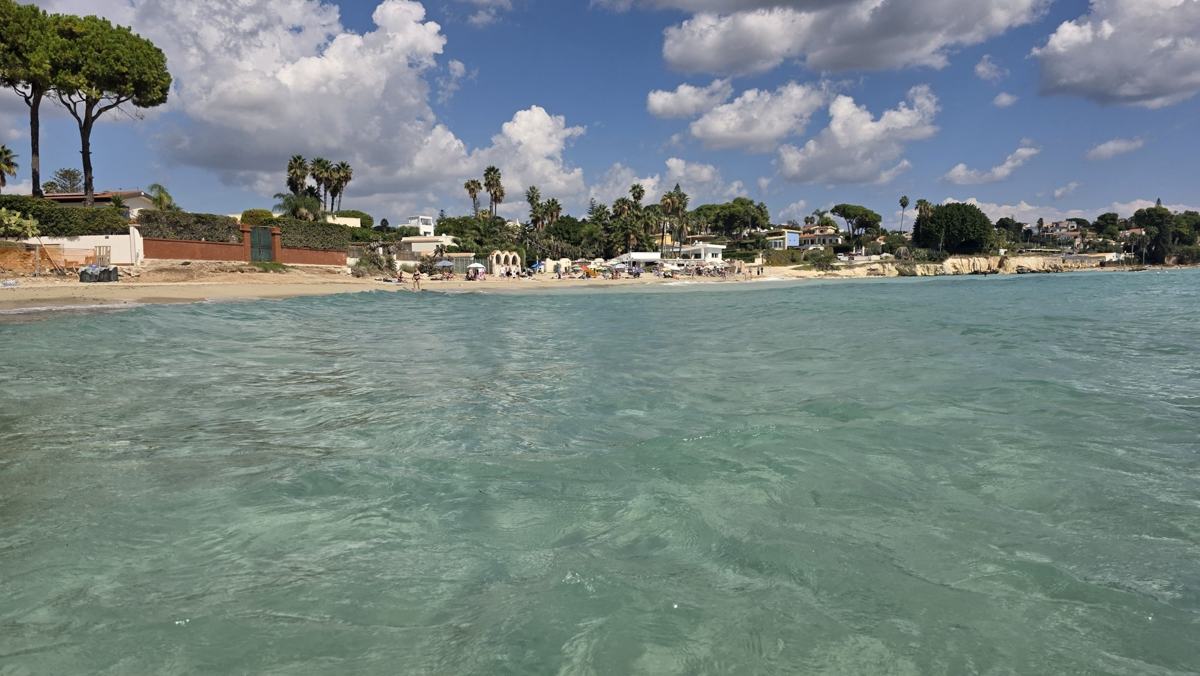
Clear water looking back toward shore.
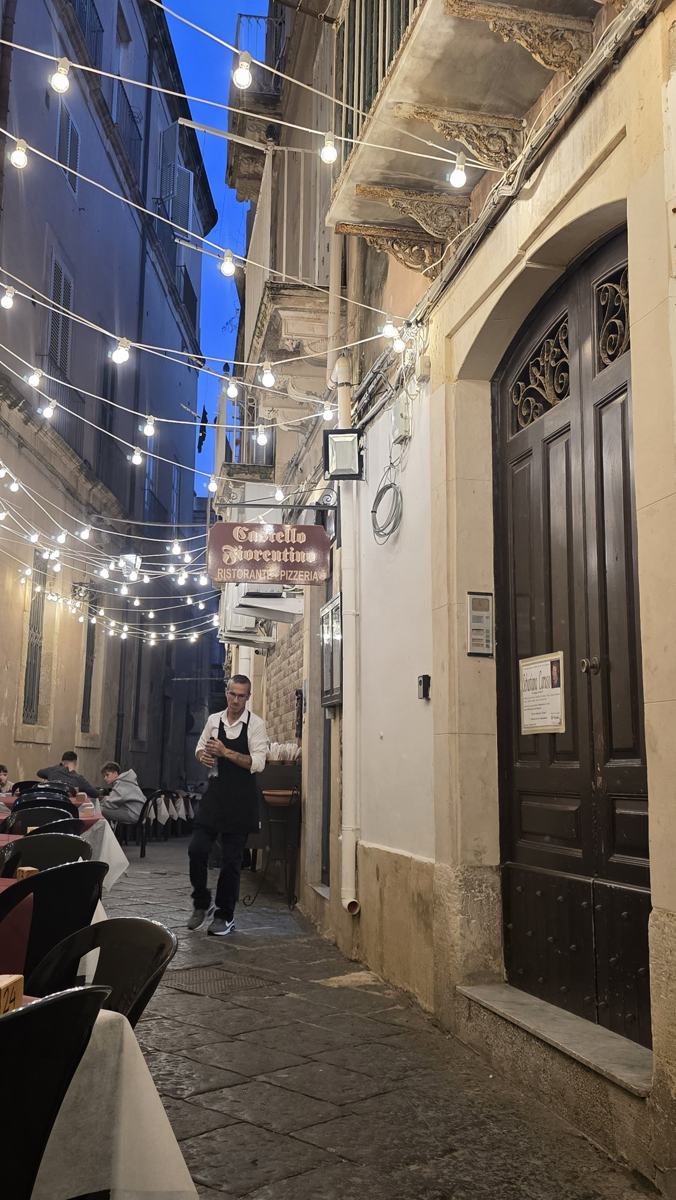
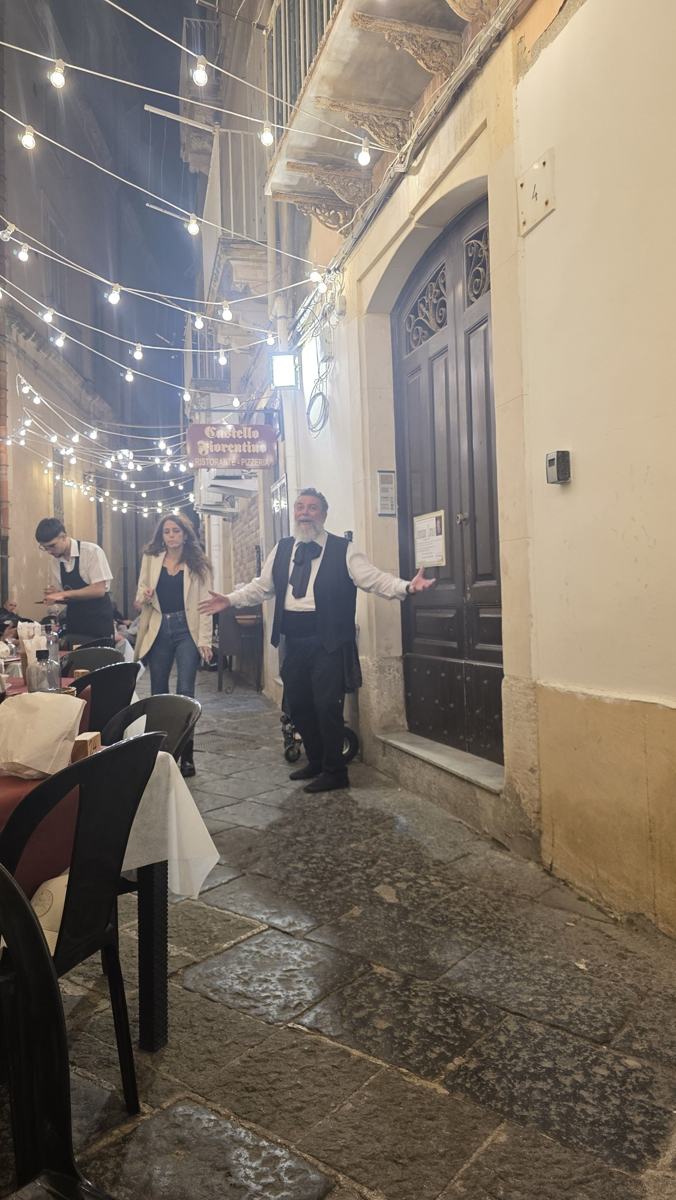
An Ortigia lane strung with lights on our last evening.
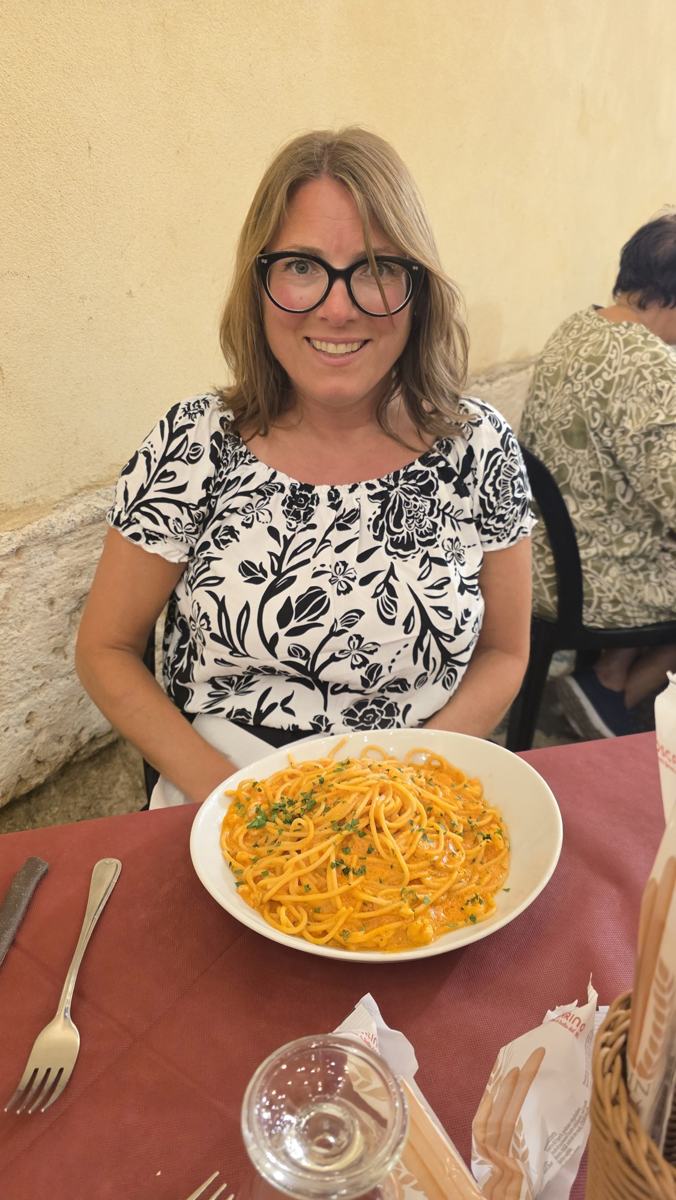
Jenn with a plate of pasta at our final dinner.
One more evening scene to close the trip.
Food and wine are part of the route
Looking at the full journey, food and wine have their own geography. Rome opens the appetite. Naples turns cooking into an activity. Ischia introduces island wine. The Amalfi Coast gives the story a hillside wine experience at Palazzo Pascal. Etna adds a winery stay. Lipari brings a restaurant stop into the island day, and Ortigia finishes with the market.
That is a better way to plan meals than saving all the food decisions for the moment you are hungry. Choose a few experiences worth organising, then leave plenty of ordinary meals unplanned.
| Region | What to look for on menus | How it fits this trip |
|---|---|---|
| Rome | Roman pasta dishes, pizza and gelato | Keep meals close to your sightseeing route |
| Naples | Neapolitan pizza and sfogliatelle | Our cooking class gave food its own chapter |
| Ischia | Local wines and island cooking | Casa D'Ambra was our favourite wine-and-food experience |
| Amalfi Coast | Seafood, lemon flavours and Campanian wines | Palazzo Pascal and the wine experience shaped our stay |
| Etna area | Etna wines and local produce | Feudo Vagliasindi combined accommodation and tasting |
| Lipari | Sicilian seafood and island flavours | Filippino was one of our favourite meals |
| Catania and Ortigia | Pasta alla Norma, arancini, granita and market produce | Build space for city meals and morning market visits |
The menu suggestions above are ideas for readers, alongside the cooking class, wine experiences and restaurant stop from our own trip.
Reserve destination meals and tastings ahead, especially when they must fit between boats or other bookings. Ask whether a tasting includes food. Check the bill for a cover charge or other stated fees, and decide whether a waterfront location or the cooking itself is the priority for that meal.
Most of all, make the wine plan fit the transport plan. Stay where you taste, arrange a driver or choose a genuinely alcohol-free designated driver. That lets the experience remain part of the holiday rather than a problem afterward.
The beach choices that suit this route
There is no single best beach for every day of this itinerary. The right choice depends on whether you want a photograph, a sandy swim, a thermal setting or a quick break without a long detour.
| Beach or coastal setting | Best reason to choose it | What to check |
|---|---|---|
| Sorgeto on Ischia | A natural thermal-water setting | Rocks, hot water, access effort and sea conditions |
| Maiori or Minori | A waterfront break during the coast chapter | Public space, lido charges and parking |
| Praiano-area coves | A scenic coastal setting | Steps, approach and a realistic return route |
| Seiano waterfront | A mainland seaside pause | Access and airport-day time margin |
| Ngonia Bay area | Time by the water near our Milazzo stay | Footing and conditions on the day |
| Vulcano black-sand beach | A distinctive volcanic shoreline | Current restrictions, sea conditions and hot sand |
| Isola Bella area | Taormina's celebrated coastal scenery | Pebbles, stairs and town-to-coast transport |
| Fontane Bianche | A sandy option for the Syracuse chapter | Parking, lido arrangements and the drive back |
The table includes both settings from our trip and nearby options for planning your own visit. Do not choose a distant beach for a two-hour break unless the journey itself is something you want to do.
September and early October weather
We chose a trip stretching from September into early October, a period that can still support beach time while giving the cities and historic sites a different feel from high summer. Sicily's tourism board describes autumn as a season for coastal swimming, outdoor visits and food traditions. That is seasonal guidance, not a promise of clear weather on every day. [21]
The route also includes very different environments. A sheltered city street, a windy hydrofoil crossing, a hillside terrace and an Etna excursion do not ask for the same clothing.
Plan sightseeing and swimming with flexibility. Use a good beach day when it arrives; keep a city walk, a meal or a tasting as an alternative when conditions change. Check the mountain forecast separately from the forecast for Catania. Sea conditions can matter more than sunshine for a boat day.
Leave some flexibility in the itinerary: a warm afternoon by the sea and a cold, windy mountain excursion can belong to the same trip.
What to pack for this kind of Italy trip
The challenge is not packing for one destination. It is packing for stone streets, religious sites, the beach, a winery meal, a mountain excursion and repeated vehicle changes.
Clothing and footwear
- Two pairs of comfortable walking shoes if space permits, with one suitable for uneven outdoor surfaces.
- Lightweight everyday outfits that mix easily, plus one outfit for a special dinner.
- Clothing that covers shoulders and knees for religious sites.
- A warm layer and a windproof or rain-resistant outer layer for Etna and boat days.
- Swimwear, a quick-drying towel, beach footwear and water shoes where appropriate.
- A sun hat and sunglasses.
Everyday travel kit
- A compact day bag with secure closures and a refillable water bottle.
- Sun protection, personal toiletries and any essential medication in your cabin bag.
- Phone charger, power bank and a plug adapter compatible with your accommodation. Check appliance voltage before use.
- Offline maps, downloaded reservations and access to the operator's live ticket when required.
- A dry pouch for beach or boat essentials, without assuming it makes every device waterproof.
For car and scooter days
- Your original driving licence, the required international permit or accepted translation, and the rental documents. Italy's official tourism guidance explains the non-EU licence requirements; check the rental's vehicle-category rules too. [22]
- A phone mount and charging cable if not supplied by the car.
- Inspection photographs and written notes of existing damage.
- Only the luggage you can store securely; do not plan sightseeing around bags left visible in a vehicle.
We travelled with four bags. For a route with this many changes of transport, our practical suggestion is to reduce the luggage wherever you can and plan laundry rather than packing a separate outfit for every day. Stairs, cobbles, ferry boarding and parking away from the accommodation make the size of a bag matter.
Tickets queues and transport mistakes to avoid
Reserve the experiences that control the day
Book the Colosseum, Vatican Museums, any desired gallery visit, cooking class and wine experiences before trying to organise the smaller stops around them. Check cancellation terms and the exact meeting point. Keep names consistent with identification where required.
Advance entry does not remove every queue. Security, ticket checks, tour assembly and crowd movement still take time. Leave a margin rather than scheduling the next appointment against the advertised visit duration.
Understand the ticket in your hand
High-speed train reservations, paper regional tickets, digital regional tickets, local metro fares and ferry bookings do not all work the same way. Trenitalia's current Digital Regionale Ticket automatically validates at the scheduled departure of the selected train; that should not be confused with instructions for a paper ticket or another operator's service. Keep the live digital ticket available for inspection. [23]
Treat parking as part of the attraction
In Italy, blue markings generally indicate paid parking, but signs and local rules govern the space. Do not assume a white-lined bay is available to visitors; it may carry restrictions. ZTL access is separate from paying for parking. Follow official arrival instructions and never assume a navigation app has permission to send you into an old-town street. [22]
Plan the whole transfer
A train arriving in Naples is not a ferry departing from Naples. A hydrofoil reaching Milazzo is not a car ready at your hotel. A flight landing in Sicily is not a checked-in room. Write down the entire chain: arrival point, baggage, onward transport, parking and the final walk.
On this trip, different transport made sense in different places. Walking and metro are useful for Rome. Trains can handle the journey south. Ferries connect Ischia. A scooter gave us island exploration. Cars supported the coast and Sicily chapters. Hydrofoils took us into the Aeolians. The flight connected the mainland with Sicily, and the diversion introduced an unplanned bus journey. The goal is to choose the mode that suits the place, not to keep one vehicle for every problem.
Photographing the trip as a story
The strongest photo collection will show more than views. We want the cover image that makes someone stop, but also the pictures that explain why a place mattered: preparing the meal in Naples, the donkey wine collection, a vineyard label, the bus journey after the diversion and the final evening together.
For each main destination, aim for a wide establishing photograph, a human moment and one or two details. That combination works better than ten nearly identical panoramas.
Use early or late light when it suits the scene, but do not make every day revolve around a sunrise. A shaded street, a market stall and a table beside the water can photograph beautifully in the middle of the day too. Protect highlights in bright coastal scenes, keep horizons level and avoid heavy colour edits that make the water look unlike the place you visited.
Respect the venue's publication rules, avoid intrusive portraits and keep private details out of ticket or boarding-pass photographs. For driving scenes, use passenger photographs or park safely. We do not need a drone image to make this journal work.
What we would change next time
Some choices we would gladly repeat: Palazzo Pascal and Ngonia Bay for the accommodation, Casa D'Ambra for our favourite wine-and-food experience, and Filippino in Lipari and the pasta in Ortigia for memorable meals. Feudo Vagliasindi was also a good food-and-wine stop in a very different setting.
We would keep the journey's variety. The contrast between ancient cities, Ischia, the Amalfi Coast, Etna wine country, the Aeolians and Ortigia is the reason this route has so much to tell.
We would also protect more unscheduled time. A hotel with a view deserves an afternoon that is not immediately followed by another drive. A wine experience deserves enough room that dinner and transport do not become a calculation. An island day works better when one missed connection does not unsettle everything after it.
Our advice to anyone copying the route is to simplify the coast days, leave the first Sicily day open and decide which transfer-day stops you are comfortable dropping. If you want a slower holiday, remove a chapter rather than trying to make every stop shorter.
The places worth keeping are not only the famous names. They include the experiences that gave us something to do together: the Naples cooking class, Ischia by scooter, the wine stops and the Aeolian day. Those moments are what connect the itinerary to the memories.
From our backyard lakes to Italy's islands
We came home with a route we can talk about from experience: the places we visited, the stays that shaped the journey and the transport decisions that joined it together. We also came home with a reminder that a good trip needs room to change.
Our Sicily arrival changed. Some days were fuller than they looked on paper. The coast asked us to think about parking as well as views. But the journey gave us exactly the kind of material we want Lake to Latitude to share: real travel, with the beautiful parts and the useful details beside them.
If you are planning southern Italy and Sicily, start with the experiences you most want, choose bases that suit the way you travel and leave enough space to enjoy being there. The route is the beginning. What you notice along it becomes your story.
Explore our Lake to Latitude Experiences, browse our travel guides and planners, or get in touch to talk about building your own route.
Real Trips. Real Experiences.
Official planning sources
Practical information checked October 10, 2026. Recheck ticket rules, transport, opening arrangements and local restrictions for your travel dates.
1. Colosseum opening times and tickets
3. Vatican visitor and photography rules
5. Castello Aragonese official website
7. Casa D'Ambra
8. Pompeii official ticket information
13. Ngonia Bay
15. Civil Protection visiting Vulcano
16. Liberty Lines live departures
17. Sicily tourism Isola Bella
18. Siracusa ZTL and Talete parking
19. Sicily tourism Syracuse and Pantalica
20. Sicily tourism beach guide
21. Sicily in autumn